Distinguishing Single Cells With Nothing But Light
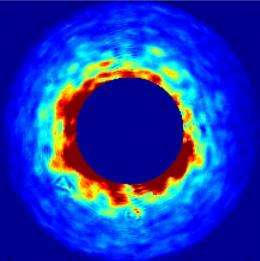
(PhysOrg.com) -- Researchers at the University of Rochester have developed a novel optical technique that permits rapid analysis of single human immune cells using only light.
Availability of such a technique means that immunologists and other cellular researchers may soon be able to observe the responses of individual cells to various stimuli, rather than relying on aggregate statistical data from large cell populations. Until now scientists have not had a non-invasive way to see how human cells, like T cells or cancer cells, activate individually and evolve over time.
As reported today in a special biomedical issue of Applied Optics, this is the first time clear differences between two types of immune cells have been seen using a microscopy system that gathers chemical and structural information by combining two previously distinct optical techniques, according to senior author Andrew Berger, associate professor of optics at the University of Rochester.
Berger and his graduate student Zachary Smith are the first to integrate Raman and angular-scattering microscopy into a single system, which they call IRAM.
"Conceptually it's pretty straightforward—you shine a specified wavelength of light onto your sample and you get back a large number of peaks spread out like a rainbow," says Berger. "The peaks tell you how the molecules you're studying vibrate and together the vibrations give you the chemical information."
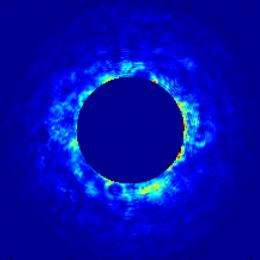
According to Smith, "Raman spectroscopy is essentially an easy way to get a fingerprint from the molecule."
Structural information is simultaneously gathered by examining the angles at which light incident on a sample is bumped off its original course.
Together the chemical and structural information provide the data needed to classify and distinguish between two different, single cells. Berger and Smith verified this by looking at single granulocytes—a type of white blood cell—and peripheral blood monocytes.
"One of the big plusses with our system is that it's a non-labeling approach for studying living cells," says Berger.
IRAM differs from most standard procedures where markers are inserted in, or attached to cells. If a marker sticks to one cell, and not the other, you can tell which cell is which on the basis of specific binding properties.
While markers are often adequate for studying cells at a single point in time, monitoring a cell over time as it changes is more problematic, since the marker can affect dynamic cell activities, like membrane transport. And internal markers actually involve punching holes in the membrane, damaging or killing the cell in the process.
"Our method uses only light to effectively reach inside the cell," says Smith. "We can classify internal differences in the cell without opening it up, attaching anything to it, or preparing it in any special way. It's really just flipping a switch."
Despite being relatively intense, the light used with IRAM does not harm or inhibit normal cell functionality. This is because the wavelength of the light can be precisely calibrated to minimize absorption by the cells. The near-infrared spectrum has proven particularly optimal for allowing almost all of the light to pass through the cells.
With the availability of a technique where making a measurement does not alter cellular activity, scientists will be able to better observe individual cell responses to stimuli, which Berger and Smith suspect may have far reaching implications for current understandings of cell activation and development.
"In the cell sensing community it's currently a pretty hot area to figure out how to analyze activation responses on a cell-by-cell basis," says Berger. "If individual information was available on top of existing ensemble data, you'd have a richer understanding of immune responses."
Perfecting IRAM has been a stepping stone process so far. Now that individual cells can be distinguished, Berger and Smith are actively investigating activation processes more explicitly. Preliminary IRAM experiments conducted on T cells have revealed perceivable differences between the initial resting state of a T cell and its state following an encounter with an invader.
The next step will be to use IRAM to gather data continuously so that scientists can effectively watch single cells undergo activation and react to stimuli in real-time. The ability to know not only about the aggregate responses of cells, but also be able to observe the earliest changes among individual cells, may be of profound importance in time-critical areas, such as cancer research and immunology.
"There's an obvious desire among cell researchers to be able to deliver a controlled stimulant to a single cell and then study its response over time," says Berger. "The clinical insights that might arise are currently in the realm of speculation. We won't know until we can do it—and now we can."
Provided by University of Rochester (news : web)


