House approves FDA regulation of tobacco products
(AP) -- The federal government would for the first time have regulatory powers over the tobacco industry under a bill the House approved Thursday after years of campaigning by anti-smoking forces.
The measure, passed 298-112, gives the Food and Drug Administration authority to regulate - but not ban - cigarettes and other tobacco products.
The Senate could take up its version of the bill later this month, and supporters have expressed confidence they can overcome expected resistance from tobacco-state senators. The White House supports the legislation, a shift from the Bush administration which threatened to veto a House-passed measure last year.
President Barack Obama has spoken publicly about his own struggles to kick a smoking habit.
"This vote brings us closer to putting a deceitful and dangerous industry under the watchful eyes of government regulators," American Heart Association CEO Nancy Brown said in a statement.
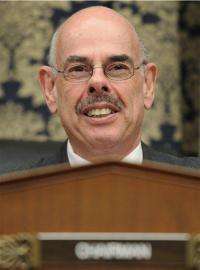
The bill was sponsored by Energy and Commerce Committee Chairman Henry Waxman, D-Calif., who in 1994 summoned the heads of big tobacco to a memorable hearing where they testified that nicotine was not addictive.
Waxman and his Senate counterpart, Sen. Edward Kennedy, D-Mass., have promoted legislation giving the FDA regulatory powers over tobacco products since the Supreme Court in 2000 ruled that the agency did not have that authority.
"We have come to what I hope will be an historic occasion, and that is finally doing something about the harm that tobacco does to thousands and thousands of Americans who die each year," Waxman said Wednesday as lawmakers debated his Family Smoking Prevention and Tobacco Control Act.
His bill wouldn't let the FDA ban nicotine or tobacco outright, but the agency would be able to regulate the contents of tobacco products, make public their ingredients, prohibit flavoring, require much larger warning labels and strictly control or prohibit marketing campaigns, especially those geared toward children.
Opponents from tobacco-growing states such as top-producing North Carolina argued that the FDA had proven through food safety failures that it's not up to the job. They also said that instead of unrealistically trying to get smokers to quit or prevent them from starting, lawmakers should ensure they have other options, like smokeless tobacco.
That was the aim of an alternate bill offered by Rep. Steve Buyer, R-Ind., who would leave the FDA out and create a different agency within the Health and Human Services Department. His proposal failed on a 284-142 vote.
"Effectively giving FDA stamp of approval on cigarettes will improperly lead people to believe that these products are safe, and they really aren't," Buyer said. "We want to move people from smoking down the continuum of risk to eventually quitting."
Major public health groups, including the American Lung Association and the American Medical Association, wrote to lawmakers asking them to oppose Buyer's bill, contending it would leave tobacco companies without meaningful regulation and able to make untested claims about the health effects of their products.
Rep. Mike Rogers, R-Mich., also was unsuccessful in changing a provision that allows the FDA to tap its general fund for about six months to get the new program started. He argued that money would be diverted from the agency's already overstretched food inspection and disease research budgets. Waxman countered that the user fees from the tobacco industry would pay for the new FDA office and that any money borrowed from the general fund would be paid back without affecting other programs.
Buyer pointed out that Waxman's bill is supported by the nation's largest tobacco company, Marlboro maker Philip Morris USA. Officials at rival tobacco companies contend the Waxman bill could lock in Philip Morris' market share.
Kennedy plans to introduce his version of the legislation after Congress returns from a recess later this month. Sen. Richard Burr, R-N.C., is expected to lead the opposition, but supporters are confident they can clear the 60-vote threshold needed to break a filibuster.
---
The bill is H.R. 1256.
On the Net:
Congress: http://thomas.loc.gov
©2009 The Associated Press. All rights reserved. This material may not be published, broadcast, rewritten or redistributed.


