NSF teams with NASCAR to reveal 'The Science of Speed'
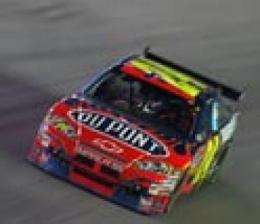
Science educators have a new way to engage science students in grades 8-12; they can turn to NASCAR. A new online series of videos called "The Science of Speed"--announced today at the Texas Motor Speedway (TMS) in Fort Worth--teaches science by revealing the sophisticated science and engineering underlying NASCAR racing.
"By exploring the range and depth of science that goes into something as wildly popular as NASCAR, we hope to harness the passion of its fan base and reignite interest in science and engineering among teachers and students," says Jeff Nesbit, director of the National Science Foundation's (NSF) Office of Legislative and Public Affairs, the organization that spearheaded the project.
"NASCAR is built largely on principles of science that produce speed and safety, which is why this marriage makes so much sense. We're trying to tap into the demographics and enthusiasm of those who follow it and inspire them to learn about science."
To bring the 12-module science video series to computer screens, NSF teamed with: NASCAR, the largest sanctioning body of motorsports in the United States; Diandra Leslie-Pelecky, physics professor at the University of Texas at Dallas and author of "The Physics of NASCAR;" and Santa Fe Productions, Albuquerque, N.M.
In the series of high-quality, easy-to-understand videos, fast cars double as science experiments that illustrate basic concepts of friction, safety, sound and other elements of racing at speeds up to 200 miles per hour. Deftly guided onscreen by Leslie-Pelecky, viewers glimpse the intricacies of NASCAR's rarely seen science.
Segments feature drivers, crew chiefs and engineers from numerous NASCAR garages including Jeff Gordon, Steve Letarte and Lisa Smokstad of Hendrick Motor Sports; Nick Hughes of Michael Waltrip Racing; Carl Edwards and Chris Andrews of Roush Fenway Racing; Josh Browne and John Probst of Red Bull Racing; Andy Randolph of Earnhardt Childress Racing and many others.
"All our technological advances in day-to-day life, which have made America the world's superpower, are built from science and engineering," said Brian Vickers, driver of the No. 83 Red Bull Toyota, who is featured in several segments. "But we've fallen behind, and in time, that will affect the economic and military strength of this nation. When schools are able to teach science to students in a way that they enjoy and can relate to it, they'll retain the information. I believe "The Science of Speed" can help," Vickers said declaring how proud he is to be part of the program.
According to a 2008 ESPN Sports Poll, 43 percent of adult NASCAR fans have children under the age of 18. Additionally, NASCAR is the second most popular sport on television among children under 18, according to Nielsen Media Research. This group of young people, particularly those ages 13 and above, is the audience that "The Science of Speed" videos are designed to reach.
Through the videos, NSF seeks to enhance students' critical thinking, problem solving, and innovative use of knowledge for next generation applications. The series brings outside-the-classroom examples into the classroom to teach science in an exciting and highly relatable way.
""The Science of Speed" does a great job in capturing NASCAR racing as an unfolding science experiment and making real scientific concepts come alive for students in an accessible way," said Steve Phelps, chief marketing officer for NASCAR. "We are honored the National Science Foundation chose to explore the intricacy of NASCAR racing to further this very important cause--teaching science to the next generation of American scientists and engineers."
More information: Teachers and students can download the videos for free from NSF's new Web site, www.Science360.gov .
Source: National Science Foundation (news : web)


