Adult brain processes fractions 'effortlessly'
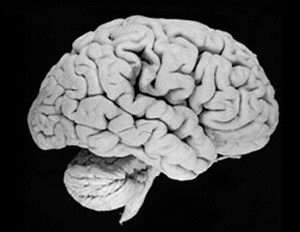
April 7, 2009 Modern human brain

Modern human brain. Image source: Univ. of Wisconsin-Madison Brain Collection.

Although fractions are thought to be a difficult mathematical concept to learn, the adult brain encodes them automatically without conscious thought, according to new research in the April 8 issue of The Journal of Neuroscience. The study shows that cells in the intraparietal sulcus (IPS) and the prefrontal cortex — brain regions important for processing whole numbers — are tuned to respond to particular fractions. The findings suggest that adults have an intuitive understanding of fractions and may aid in the development of new teaching techniques.

"Fractions are often considered a major stumbling block in math education," said Daniel Ansari, PhD, at the University of Western Ontario in Canada, an expert on numerical cognition in children and adults who was not affiliated with the study. "This new study challenges the notion that children must undergo a qualitative shift in order to understand fractions and use them in calculations. The findings instead suggest that fractions are built upon the system that is employed to represent basic numerical magnitude in the brain," Ansari said.

The study authors, Simon Jacob, MD, and Andreas Nieder, PhD, at the University of Tübingen in Germany, scanned the brains of adult participants as they watched fractions flashed on a screen. The researchers used a technique called functional MRI adaptation (fMRA) to identify that adapt — or show decreased activity — to the same stimulus presented over and over again.

When the researchers rapidly and repeatedly presented study participants with fractions that equaled approximately 1⁄6, they found decreased activation in the IPS and prefrontal cortex. Then, the researchers showed the participants fractions that deviated from 1⁄6. The more the fraction differed from 1⁄6, the greater the activity in IPS cells. The rapid presentation of each fraction and small variations in fraction value ensured that study participants directly processed the fractions, rather than calculating their values.

These findings suggest that fractions automatically activate the IPS and prefrontal cortex in adults. The researchers found that distinct groups of cells in these brain regions responded to different fraction values. Moreover, the cells responded the same way, whether fractions were presented as either numbers (1⁄4) or words (one-fourth).

The study builds on previous findings showing that human babies and nonhuman primates understand proportions.

"These experiments change the way we should think about fractions," said study author Jacob. "We have shown that our highly-trained brains represent fractions intuitively, a result that could influence the teaching of arithmetic and mathematics in schools," he said.

Future research will determine whether children process fractions the same way as adults, who may have learned to do so through experience.

More information: http://www.jneurosci.org/

Source: Society for Neuroscience


print this article email this article download pdf blog this article bookmark this article     Stumble it Digg this share on Facebook retweet share on Reddit add to delicious
Rate this story - 3.8 /5 (8 votes)


April 7, 2009 all stories

Comments: 0

3.8 /5 (8 votes)
  • Stumble this up

  • Digg this

  • share this

  • hide
  • Related Stories

  • Spanish scientists confirm extra virgin olive oil helps to combat breast cancer
    created Feb 05, 2009 | popularity not rated yet | comments 0
  • Sharing Now Might Help Kids Learn Advanced Math Later
    created May 21, 2008 | popularity not rated yet | comments 0
  • Unraveling 'math dyslexia'
    created Sep 24, 2008 | popularity not rated yet | comments 0
  • Studies yield insight into the numerical brain
    created Jan 17, 2007 | popularity not rated yet | comments 0
  • Study: Our brains compensate for aging
    created Apr 04, 2006 | popularity not rated yet | comments 0


  • hide
  • Relevant PhysicsForums posts

  • nesfatin
    created 45 minutes ago
  • Obsessive Compulsive Disorder
    created Nov 20, 2009
  • West's zone 2 starling resistor respiratory physiology
    created Nov 18, 2009
  • 50-0-50 rule
    created Nov 18, 2009
  • More from Physics Forums - Medical Sciences

Other News

New cancer target for non-Hodgkin's lymphoma

Medicine & Health / Cancer

created 1hour ago | popularity not rated yet | comments 0

Physician-scientists from Weill Cornell Medical College have discovered a molecular mechanism that may prove to be a powerful target for the treatment of non-Hodgkin's lymphoma, a type of cancer that affects lymphocytes, ...


Gene mismatch influences success of bone marrow transplants

Medicine & Health / Genetics

created 1hour ago | popularity not rated yet | comments 0

A commonly inherited gene deletion can increase the likelihood of immune complications following bone marrow transplantation, an international team of researchers reports in the November 22 advance online issue of Nature Ge ...


New understanding about mechanism for cell death after stroke leads to possible therapy

Medicine & Health / Research

created 1hour ago | popularity not rated yet | comments 0

Scientists at the Brain Research Centre, a partnership of the University of British Columbia Faculty of Medicine and Vancouver Coastal Health Research Institute, have uncovered new information about the mechanism by which ...


Surface bacteria maintain skin's healthy balance

Medicine & Health / Research

created 2 hours ago | popularity not rated yet | comments 0

On the skin's surface, bacteria are abundant, diverse and constant, but inflammation is undesirable. Research at the University of California, San Diego School of Medicine now shows that the normal bacteria living on the ...


Cancer metabolism discovery uncovers new role of IDH1 gene mutation in brain cancer

Medicine & Health / Cancer

created 1hour ago | popularity not rated yet | comments 0

Agios Pharmaceuticals today announced that its scientists have established, for the first time, that the mutated IDH1 gene has a novel enzyme activity consistent with a cancer-causing gene, or oncogene. This breakthrough ...