Field stations foster serendipitous discoveries in environmental, biological sciences
North America's biological field stations have long been home to a rich legacy of research results, scientists say, making them important places for serendipitous discoveries in the biological and environmental sciences.
In a paper published in the April issue of the journal BioScience, researchers affiliated with the National Science Foundation's (NSF) Long Term Ecological Research (LTER) Network and other groups state that few people realize the value of the data and specimens held at field stations--until an event such as a disease outbreak or environmental disaster triggers their use.
"At a time when we are reinvesting in our nation's academic infrastructure, it's critical that we also invest in one of our greatest treasures--America's biological field stations," said William Michener, a biologist at the University of New Mexico and co-author of the paper.
Peter McCartney, program director in NSF's Division of Biological Infrastructure, agrees. "Support for field stations is an important part of NSF's overall investments in biological infrastructure," he said. "They provide scientists with research opportunities, while fostering the regional and continental scale sampling provided through the LTER Network and the National Ecological Observatory Network [NEON]."
The paper, "Biological Field Stations: Research Legacies and Sites for Serendipity," cites three examples in which major serendipitous discoveries occurred at field stations:
The relationship between the decline and subsequent recovery of bald eagles and the widespread use of organochlorine pesticides, based on monitoring studies at Hawk Mountain Sanctuary near Kempton, Pa.
An understanding of and ability to forecast the spread of Hantavirus and West Nile virus, based on research at the Sevilleta field station near Albuquerque, N.M.
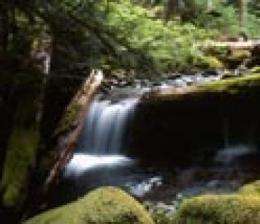
Creation of a new framework for forest ecosystem management, later adopted as policy, based on field studies at the H.J. Andrews Experimental Forest in Eugene, Ore. Research on old-growth forests and the importance of their biodiversity led to a far-reaching revision of forest management in the Pacific Northwest.
In their journal paper, the authors identify the underlying factors that contributed to these discoveries, including the interplay between "place" and "serendipity"--being in the right place at the right time.
However, not all unexpected discoveries occurred by chance, they state.
Long-term observation and monitoring programs, field research and experimentation, and synthesis efforts were equally responsible.
"Field stations are to biologists what telescopes are to astronomers, and what research vessels are to oceanographers," said Michener.
"They're places where basic biological discoveries are made, such as understanding the spread of human and animal diseases, and of invasive species--and what it takes to sustain the ecosystems in which we live."
Field stations provide logistical and laboratory facilities, offer secure places for deploying complex instrumentation, and allow for long-term observations of vegetation, animal populations, and soil and climate dynamics, state the authors.
They note that while initial discoveries of emerging pathogens are often made by public health workers and wildlife specialists from state and federal agencies, "established field stations provide the infrastructure, staff, and staying power to understand the life cycles and ecology of invasive or emerging disease vectors and pathogens."
In the Hantavirus example, long-term rodent studies were conducted for several years for a different purpose, yet provided data for addressing the ecology of this disease-causing virus.
Documentation of the precipitous decline of bald eagles at Hawk Mountain Sanctuary set the stage for Rachel Carson's Silent Spring, changing U.S. policy on use of pesticides like DDT.
Source: National Science Foundation (news : web)


