Scaling the wall of deafness
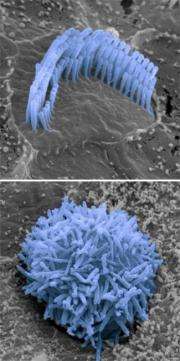
Despite modern medicine, one in 1,000 American babies are born deaf. The numbers increase markedly with age, with more than 50% of seniors in the United States experiencing some form of hearing loss.
But the era of the hearing aid, and shouting at aging in-laws, may soon be over. A new, landmark study by a world-renowned geneticist and hearing loss expert at Tel Aviv University has uncovered one of the root causes of deafness.
Prof. Karen Avraham of the Department of Human Molecular Genetics, Sackler School of Medicine at Tel Aviv University, has discovered that microRNAs, tiny molecules that regulate cell functions, help us hear. Found in "hair" cells of the ear, this discovery opens an entirely new window for possible treatments, and a cure for all types of deafness, age-related or genetic.
"Over the last decade, science has found that microRNAs are involved in heart disease, and in cancer, and for the first time ever, our lab shows that these tiny regulators in all our cells can cause deafness," says Prof. Avraham, whose groundbreaking work has previously discovered 4 deafness genes and novel mutations in 15 deafness genes, among 46 known ones.
Understanding the Hard of Hearing
Prof. Avraham's results published this month in the prestigious journal the Proceedings of the National Academy of Science, shows scientists an important factor that could cause deafness. It may lead to potential ways to ameliorate deafness, even in people where the hearing loss has no genetic basis, like after a major injury to the ear. Her recent study investigated mice and zebrafish, but the model holds true for all vertebrates ― including humans, she says. In separate studies in the UK and Spain, mutations in a single microRNA were just reported to cause deafness in humans and mice, showing the importance of microRNAs in the inner ear.
"We've found that 'hair' cell microRNAs are regulators involved in the normal development and survival of cells in the inner ear and are necessary for proper hearing," says Prof. Avraham. "Until now science only knew that mutations in protein-coding genes caused deafness. We went a layer deeper and discovered that the loss of microRNAs leads to deafness as well."
A Cure a Hair Away?
MicroRNAs can already be used to predict what kind of cancer a person may have, and will have both diagnostic and therapeutic applications in hearing loss in the near future, Prof. Avraham hopes.
The most common disability in humans, doctors still don't know what causes hearing loss in most people, but they do know where the process starts to break down. For some reason, there is an abnormal development or wearing down of specialized sensory cells, called hair cells located in the inner ear. Responsible for translating sounds to electrical pulses that the brain can interpret, when we lose these cells, we lose our ability to hear.
In the new study, developed with an international team including Prof. Avraham's post-doctoral fellow Dr. Lilach M. Friedman, Israeli researchers and those from Purdue University, the scientists sought to see what would happen if they stopped the formation of all or some microRNAs in the ears of a mouse and fish.
Making an Audible Difference
They "knocked-down" or blocked the functioning of the microRNA molecules, and as a result, the hair cells degenerated in the mouse ears. A few weeks later the mice became profoundly deaf, suggesting that a lack of normal microRNAs might lead to progressive hearing loss in people that were born with normal hearing, as well, says Prof. Avraham. The work in fish suggests that microRNA mutations may also cause abnormal development of the inner ear in embryos and deafness in newborns.
MicroRNAs are tiny pieces of RNA, the chemical building blocks that carries genetic information between DNA, to becoming proteins. MicroRNAs control whether or not a protein will actually be made. The important roles of microRNAs in animals have been discovered only during the last decade, and major efforts are being made to develop strategies for inserting these tiny molecules into cells, in order to use them as new drugs and potential cures.
If scientists can figure out how microRNAs regulate hair cells, they could be used to rescue the cells that are dying or induce the creation of new hair cells, says Prof. Avraham, who also collaborates with Palestinian researchers to help them understand, and combat, the high incidence of genetic deafness within the Palestinian population.
Source: Tel Aviv University (news : web)


