New insights into how SARS pathogen infects host
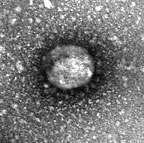
(PhysOrg.com) -- When Severe Acute Respiratory Syndrome (SARS) first appeared in 2003, international cooperation helped contain the virulent coronavirus, which caused respiratory illness in more than 8,000 people and killed almost 10 percent of them. Better understanding of such viruses will help control similar diseases when they strike again.
Now, Cornell researchers have discovered key properties in coronaviruses that help explain how these viruses invade their hosts and cross species barriers. The SARS virus, for example, originated in bats, jumped to civets (weasel-like mammals) in Chinese markets and then to humans. Other coronaviruses cause the common cold and croup in humans.
The researchers have discovered two sites -- called cleavage sites -- where a key structural protein on the virus gets split, activating a process that allows the virus to enter a host cell. They report their findings online in the Proceedings of the National Academy of Sciences. One cleavage site was known to exist, but studies of a mutated vaccine strain of another highly virulent avian coronavirus, known as infectious bronchitis virus (IBV), revealed a second cleavage site. This discovery led Cornell researchers to search for a second cleavage site in the SARS virus, which they found in exactly the same location as in IBV.
Viruses often access cells by binding to receptors on the cell's surface, but unfamiliar receptors provide barriers. However, small changes in the second cleavage site may allow coronaviruses to bypass receptors and gain entry into many cells, including those of new species. The findings provide researchers with a new context to identify virulent disease strains and could possibly lead to developing treatments.
"We can now make predictions based on cleavage sites about new viruses that might come about," said Gary Whittaker, associate professor of virology at Cornell's College of Veterinary Medicine and the paper's senior author. "SARS appeared and then went away, but it is only a matter of time before similar viruses make that leap [to spread and jump species]."
While changes in the first cleavage site can affect a virus's ability to infect, the study reports that changes in the second site are always necessary for increased virulence. Whittaker believes that coronaviruses may have begun with just one cleavage site but then evolved the second one.
The researchers also report that their findings have led to new insights into such animal coronaviruses as feline infectious peritonitis (FIP), the most infectious disease in cats and the feline equivalent of SARS. As expected, the FIP virus's ability to infect cells is dictated by the same two cleavage sites, and studying FIP may contribute insights into SARS, since cats are vectors in both diseases. During the 2003 SARS outbreak, cats in a Hong Kong hotel helped transmit the disease between humans.
Provided by Cornell University (news : web)


