Brain mechanisms for behavioral flexibility
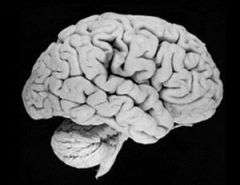
April 15, 2009 Modern human brain

Modern human brain. Image source: Univ. of Wisconsin-Madison Brain Collection.

New research provides insight into how the brain can execute different actions in response to the same stimulus. The study, published by Cell Press in the April 16 issue of the journal Neuron, suggests that information from single brain cells cannot be interpreted differently within a short time period, a finding that is important for understanding both normal cognition and psychiatric disorders.

Humans exhibit incredible flexibility when it comes to adjusting to the demands of a particular task. For example, when the word "blue" is written in red ink, separate responses to the color or the meaning of the word can be elicited. "Although the roles played by the in this kind of switching behavior have been well documented, little is known about how neural pathways governing sensory and motor associations accomplish such a switch," explains senior study author, Dr. Takanori Uka from the Juntendo University School of Medicine in Tokyo.

Dr. Uka and coauthor Dr. Ryo Sasaki investigated where and how identical sensory signals are converted into distinct motor signals. The researchers examined the responses of middle temporal (MT) neurons and the associations between MT neurons and downstream functions in monkeys as they switched between direction and depth discrimination tasks. Previous work has shown that the MT area is critical for both direction and depth discrimination.

The monkeys were trained to view dots on a screen and to indicate whether dots moved up or down when they saw the color magenta or whether the dots were nearer or father away when they saw the color cyan. "We found that neuronal sensitivities were nearly identical during both the direction and depth discrimination tasks; that is, depended on the visual stimulus and not the task itself," says Dr. Uka. This finding suggests that inputs to the MT area were not directly responsible for task switching.

Importantly, the researchers went on to show that signals from different MT populations were read out to perform different tasks. "We suggest that task switching is accomplished via the communication of distinct populations of MT neurons into a downstream decision system," explains Dr. Uka. "We hypothesize that single neurons probably cannot switch outputs in a short period of time, so the brain realizes behavioral flexibility by preparing separate pathways for each task through learning, and then chooses the appropriate pathways, rather than switching outputs, in a given trial."

Source: Cell Press (news : web)


print this article email this article download pdf blog this article bookmark this article     Stumble it Digg this share on Facebook retweet share on Reddit add to delicious
Rate this story - 4.8 /5 (4 votes)


April 15, 2009 all stories

Comments: 0

4.8 /5 (4 votes)
  • Stumble this up

  • Digg this

  • share this

  • hide
  • Related Stories

  • Activity of individual brain cells predicts cognitive flexibility
    created Mar 25, 2009 | popularity not rated yet | comments 0
  • Scientists identify brain circuits used in sensation of touch
    created Oct 10, 2007 | popularity not rated yet | comments 0
  • Brain mechanism recruited to reduce noise during challenging tasks
    created Feb 25, 2009 | popularity not rated yet | comments 0
  • Turning Sensation into Perception
    created Nov 06, 2005 | popularity not rated yet | comments 0
  • Sound adds speed to visual perception
    created Aug 12, 2008 | popularity not rated yet | comments 0


  • hide
  • Relevant PhysicsForums posts

  • Improving the brain through chemistry
    created Nov 07, 2009
  • Sleep / REM Sleep and homeostasis
    created Nov 07, 2009
  • The Biceps Reflex
    created Nov 05, 2009
  • Consequenses of striking a Vein and an artery?
    created Nov 05, 2009
  • More from Physics Forums - Medical Sciences

Other News

New York residents walk on the sidewalk  in Manahattan in New York

Path to good health, less pollution is the sidewalk: report

Medicine & Health / Health

created 32 minutes ago | popularity not rated yet | comments 0

US pressure groups joined forces Monday to urge authorities to spend more to improve Americans' health and cut greenhouse gas emissions.


For young boys with cancer, testicular tissue banking may be option to preserve fertility

Medicine & Health / Cancer

created 22 minutes ago | popularity not rated yet | comments 0

For parents of children with cancer, the hopeful news is that pediatric survival rates have steadily improved for decades. Among the bad news—treatments that enable survival often cause infertility.


AIDS is leading cause of death, disease for women

Medicine & Health / HIV & AIDS

created 42 minutes ago | popularity not rated yet | comments 0

(AP) -- In its first study of women's health around the globe, the World Health Organization said Monday that the AIDS virus is the leading cause of death and disease among women between the ages of 15 and 44.


St. Jude and UF Proton Therapy Institute to begin proton therapy clinical trial

Medicine & Health / Cancer

created 50 minutes ago | popularity not rated yet | comments 0

St. Jude Children's Research Hospital and the University of Florida Proton Therapy Institute have formed a collaboration to provide proton therapy for St. Jude patients. The announcement follows the approval of the first ...


The world's most common operation

Medicine & Health / Diseases

created 32 minutes ago | popularity not rated yet | comments 0

As many as 10 million people around the world suffer from cataracts. Thomas Kohnen of the Goethe University in Frankfurt and his coauthors discuss cataract surgery with the implantation of an artificial lens in the current ...