DNA biosynthesis discovery could lead to better antibiotics
Combating several human pathogens, including some biological warfare agents, may one day become a bit easier thanks to research reported by a University of Iowa chemist and his colleagues in the April 16 issue of the journal Nature.
Amnon Kohen, associate professor of chemistry in the UI College of Liberal Arts and Sciences, said that the study indicated a new mechanism by which certain organisms manufacture the DNA base thymidylate. This new mechanism is so very different from the way humans synthesize this base that drugs targeting this biosynthetic path in the pathogens are unlikely to affect the human path, thus resulting in very reduced side effects or no side effects at all.
Kohen suggested that the process is similar to feeding the "bad bugs" a poison that your own body's cells don't eat.
"The study proposes a new catalytic mechanism for DNA biosynthesis in organisms that contain the gene thyX, including several human pathogens," he said. "This mechanism is very different from the mechanism of human DNA biosynthesis and may involve unique chemical aspects not yet reported in enzyme catalysis."
He added that the enzyme being studied is present in pathogens causing anthrax, tuberculosis, botulism, syphilis, pneumonia, Lyme disease and other human diseases.
"Technically speaking, the newly proposed catalyst mechanism is the first example of thymidylate biosynthesis that occurs without an enzymatic nucleophile," he said.
Kohen explained that in the past, it was assumed that the combined action of two enzymes (thymidylate synthase - Tsase and dihydrofolate reductase - DHFR) is essential for DNA synthesis in all organisms. Then, in 2002, Ursula Liebl and Hannu Myllykallio from Ecole Polytechnique, France, found that many organisms lack the gene coding for these two critical enzymes. They identified a new class of enzymes, coded by a very different gene (thyX) that had the combined activities of both classical enzymes.
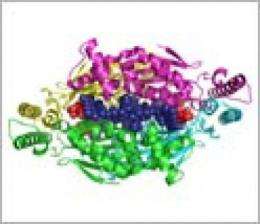
This enzyme is called flavin-dependent thymidylate synthase (FDTS), because -- in contrast to the classical enzymes -- it requires the yellow co-factor flavin to function. It was originally assumed that the catalytic mechanism of FDTS is similar to that of the classical enzymes, but the fact that drugs that inhibit these enzymes do not inhibit FDTS and other unusual phenomena caught Kohen's attention, and his group began to study its mechanism in 2004. (Researchers in Kohen's group who were involved in the earlier stages of this study include Nitish Agrawal, Anatoly Chernyshev, and Zhen Wang.)
The research team used a combination of methodologies from various scientific fields -- such as molecular biology, structural biology, biochemistry, and physical and organic chemistry -- to elucidate the mechanism of this recently discovered enzyme.
Said Kohen: "Our findings indicate that the mechanism of this new FDTS is completely and substantially different from that of either DHFR or TSase, and may involve chemistry that was not previously identified in biological systems. Since humans don't have this enzyme and since it is essential in several human pathogens, it is now the goal of the research community to develop drugs that target this enzyme, as such drugs are not likely to affect humans and thus may have reduced toxicity.
"Since this biosynthetic path has not been targeted before by antibiotics, there is a hope that drugs that will target FDTS will be efficient against pathogens with multiple drug resistance, like several strains of tuberculosis," he said.
Source: University of Iowa (news : web)


