World Wide Web conference opens, 20 years after its invention
April 20, 2009 The WWW technology was first made more widely available in 1991

Enlarge

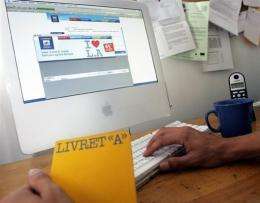
A man is pictured surfing the Internet. A global conference on the World Wide Web got under way in Spain on Monday, 20 years after the invention of the global information medium that has changed the daily lives of people around the world.

A global conference on the World Wide Web got under way in Spain Monday, 20 years after the invention of the global information medium that has changed the daily lives of people around the world.

British genius Tim Berners-Lee, one of the founders of the system, will give a keynote talk on Wednesday "which will reflect on the last 20 years and look forward to the next 20 years" of the Web.

Spanish Crown Prince Felipe and his wife Letizia are scheduled to attend the talk.

Over the five days of the 18th international World Wide Web conference, 105 research papers will be presented covering topics including interactive television, mobile web applications and the challenge of new media to traditional media.

The conference is organised each year by the International World Wide Web Conferences Steering Committee (IW3C2), a professional organization registered in Switzerland which promotes Web research and development.

It was held in China last year. The US will hold the next in 2010.

With the help of other scientists at the European Organisation for Nuclear Research (CERN), Berners-Lee set up the system to allow thousands of scientists around the world to stay in touch.

In March 1989, the young Berners-Lee handed his supervisor in Geneva a document entitled 'Information Management: a proposal."

The supervisor described it as "vague, but exciting" and gave it the go-ahead, although it took a good year or two to get off the ground and served nuclear physicists in Europe initially.

The WWW technology -- which simplifies the process of searching for information on the Internet -- was first made more widely available from 1991 after CERN was unable to ensure its development, and the organisation made a landmark decision two years later not to levy royalties.

As recently as 1994 there were only 500 fairly modest Web sites worldwide, according to Microsoft. Now there are millions.

Berners-Lee, now a researcher at Massachusetts Institute of Technology in the United States and a computer science professor at Southampton University in Britain, still heads the Consortium (3WC) that coordinates development of the Web.

(c) 2009 AFP


print this article email this article download pdf blog this article bookmark this article     Stumble it Digg this share on Facebook retweet share on Reddit add to delicious
Rate this story - not rated yet


April 20, 2009 all stories

Comments: 0

not rated yet
  • Stumble this up

  • Digg this

  • share this

  • hide
  • Related Stories

  • www.20yearsold -- World Wide Web feels its growing pains
    created Mar 13, 2009 | popularity not rated yet | comments 0
  • Draper prize to go to MIT researcher
    created Jan 15, 2007 | popularity not rated yet | comments 0
  • www@20: How the techies tamed the cyber zoo
    created Mar 17, 2009 | popularity not rated yet | comments 0
  • Web founder fears 'snooping' on the Internet
    created Mar 13, 2009 | popularity not rated yet | comments 0
  • Industry Leaders Join Effort to Improve Mobile Web User Experience
    created May 12, 2005 | popularity not rated yet | comments 0


  • hide
  • Relevant PhysicsForums posts

  • Achromat lens - magnifying LCD
    created 10 hours ago
  • Control System
    created Nov 24, 2009
  • Base Isolation Systems in Skyscrapers?
    created Nov 23, 2009
  • Need to interview a Computer Hardware Engineer for school project
    created Nov 23, 2009
  • More from Physics Forums - General Engineering

Other News

Design chosen for British 1,000 mph car

Design chosen for British 1,000 mph car (w/ Video)

Technology / Engineering

created 21 hours ago | popularity 4 / 5 (8) | comments 5

(PhysOrg.com) -- A British team hoping to be the first to get a car to 1,000 mph (1,610 km/h) has made its final design selection. The six-tonne car, known as the Bloodhound, will be powered by a Eurofighter ...


Should I buy a PC or Mac?

Technology / Software

created 9 hours ago | popularity 4 / 5 (2) | comments 7

Q. Our 6-year-old PC computer is dying a slow death and we are considering moving to a new iMac but have a few concerns. First, of all, we have several Word documents on our disk drive now that we want to keep and add to ...


Time Inc., Conde Nast and Hearst are preparing to launch an online newsstand described as an "iTunes for magazines"

Magazine publishers creating 'iTunes for magazines': reports

Technology / Internet

created 11 hours ago | popularity not rated yet | comments 0

US magazine publishers Time Inc., Conde Nast and Hearst are preparing to launch an online newsstand described as an "iTunes for magazines," according to published reports.


ORNL 'deep retrofits' can cut home energy bills in half

ORNL 'deep retrofits' can cut home energy bills in half

Technology / Energy

created 12 hours ago | popularity 3.7 / 5 (3) | comments 0

(PhysOrg.com) -- Oak Ridge National Laboratory has announced plans to conduct a series of deep energy retrofit research projects with the potential to improve the energy efficiency in selected homes by as ...


EU assembly adopts Internet, phone user rights

Technology / Telecom

created 17 hours ago | popularity 5 / 5 (1) | comments 1

(AP) -- The European Parliament has endorsed new telecom rules that would give phone and Internet users more rights and allow them to appeal to national courts if they are cut off for illegal file-sharing.