Autopilot guides proteins in brain
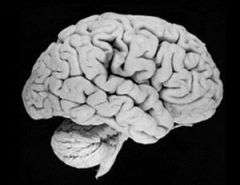
April 21, 2009 Modern human brain

Modern human brain. Image source: Univ. of Wisconsin-Madison Brain Collection.

Proteins go everywhere in the cell and do all sorts of work, but a fundamental question has eluded biologists: How do the proteins know where to go?

"There's no little man sitting there, putting the in the right place," said Don Arnold, molecular and computational biologist at the USC College of Letters, Arts and Sciences.

"Proteins have to have in them encoded information that tells them where to go in the cell."

In a study appearing online this week in , Arnold and collaborators solve the mystery for key proteins in the brain.

Neurons have separate structures for receiving signals (dendrites) and for sending them (axons). The electrical properties of each depend on different proteins. But the proteins travel in bubbles, or vesicles, powered by motors known as kinesins that travel along tiny molecular paths.

Even though the paths point to both axons and dendrites, dendritic proteins end up in dendrites, and axonal proteins go to the axons. How?

Arnold's group discovered a crude but effective sorting mechanism. At first, kinesins blindly carry both types of proteins towards the axon.

However, dendritic proteins enable the vesicles transporting them to bind to a second motor, known as , that literally walks them back into the dendrite.

This filter ensures that only axonal proteins make it into the axon. The others are caught by the second motor and diverted to the dendrite.

"This mechanism fishes these things out of the axon," Arnold said.

Once in the dendrite, the proteins either land in a place where they can do their electrical work or they move back towards the axon, only to be fished out again.

On its face, the process is inefficient, Arnold said, "but it is very effective."

The discovery may enable finer control over for basic research or for treatment of neurological disorders. Potentially, scientists could target only dendrites or axons in a neuron so as to study its outgoing or incoming impulses.

In addition to these potential applications, the study is notable for its contribution to the understanding of the and of protein transport in general.

"It's a very basic question, something people have been wondering about for a long time," Arnold said.

Source: University of Southern California (news : web)


print this article email this article download pdf blog this article bookmark this article     Stumble it Digg this share on Facebook retweet share on Reddit add to delicious
Rate this story - 5 /5 (5 votes)


April 21, 2009 all stories

Comments: 0

5 /5 (5 votes)
  • Stumble this up

  • Digg this

  • share this

  • hide
  • Related Stories

  • What makes an axon an axon?
    created Nov 10, 2008 | popularity not rated yet | comments 0
  • Research could lead to new treatments for brain injuries
    created Nov 20, 2007 | popularity not rated yet | comments 0
  • Proteins important in Alzheimer's, Parkinson's disease travel in the slow lane
    created Apr 17, 2007 | popularity not rated yet | comments 0
  • RNA-associated introns guide nerve-cell channel production
    created Feb 05, 2008 | popularity not rated yet | comments 0
  • Brain cells work differently than previously thought
    created Aug 19, 2007 | popularity not rated yet | comments 0


  • hide
  • Relevant PhysicsForums posts

  • Improving the brain through chemistry
    created Nov 07, 2009
  • Sleep / REM Sleep and homeostasis
    created Nov 07, 2009
  • The Biceps Reflex
    created Nov 05, 2009
  • Consequenses of striking a Vein and an artery?
    created Nov 05, 2009
  • More from Physics Forums - Medical Sciences

Other News

Exposure to several common infections over time may be associated with risk of stroke

Medicine & Health / Neuroscience

created 33 minutes ago | popularity not rated yet | comments 0

Cumulative exposure to five common infection-causing pathogens may be associated with an increased risk of stroke, according to a report posted online today that will appear in the January 2010 print issue of Archives of ...


Cataract surgery does not appear associated with worsening of age-related macular degeneration

Medicine & Health / Diseases

created 23 minutes ago | popularity not rated yet | comments 0

Age-related macular degeneration does not appear to progress at a higher rate among individuals who have had surgery to treat cataract, contrary to previous reports that treating one cause of vision loss worsens the other, ...


NSAIDs prevent early sign of Alzheimer disease in mice

Medicine & Health / Research

created 52 minutes ago | popularity not rated yet | comments 0

If taking nonsteroidal antiinflammatory drugs (NSAIDs) such as ibuprofen or naproxen is to protect you from developing Alzheimer disease then you will have to start taking them at a very early age according to new research ...


Size matters: Obesity leading risk factor of left atrial enlargement during aging

Medicine & Health / Diseases

created 51 minutes ago | popularity not rated yet | comments 0

Aside from aging itself, obesity appears to be the most powerful predictor of left atrial enlargement (LAE), upping one's risk of atrial fibrillation (the most common type of arrhythmia), stroke and death, according to findings ...


Study examines quality and duration of primary care visits

Medicine & Health / Other

created 13 minutes ago | popularity not rated yet | comments 0

Adult primary care visits have increased in quality, duration and frequency between 1997 and 2005, according to a report in the November 9 issue of Archives of Internal Medicine.