New Method Gives Regenerative Medicine a Boost
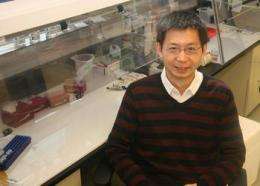
(PhysOrg.com) -- Bioengineers at UC San Diego have developed a breakthrough method for sequencing-based methylation profiling, which could help fuel personalized regenerative medicine and even lead to more efficient and cost-effective methods for studying certain diseases.
To do this, theresearchers, led by Kun Zhang, an assistant bioengineering professor in the UC San Diego Jacobs School of Engineering, developed an accurate assays for quantifying DNA methylation digitally on an arbitrary set of nonrepetitive genomic targets using padlock probes.
Zhang and his group describe the breakthrough in a recent paper published in Nature Biotechnology titled “Targeted bisulfite sequencing reveals changes in DNA methylation associated with nuclear reprogramming.”
DNA methylation is a type of chemical modification of DNA that can be inherited and subsequently removed without changing the original DNA sequence. Current DNA methylation assays are limited in the flexibility and efficiency of characterizing a large number of genomic targets, and are extremely costly (more than $100,000). The method created by Zhang and his team will allow researchers to perform such assays at a significantly lower cost, he said.
“What we reported in this paper is a novel method that allows us to do target analysis on the subset of the genome where we think the memory could be stored,” Zhang said.
“This is a generic method for the analysis of epigenome,” he added. “The application to induced pluripotent stem cells is one example to demonstrate the utility of this method. The method we developed would be widely applicable to other area of biomedical sciences, such as the study of cancers or Alzheimer’s disease.”
Epigenetics is an emerging frontier of science that involves the study of changes in the regulation of gene activity and expression that are not dependent on gene sequence. While epigenetics refers to the study of single genes or sets of genes, epigenomics refers to more global analyses of epigenetic changes across the entire genome.
Zhang’s team - which includes researchers from Harvard University, Virginia Commonwealth University and the University of Wisconsin, Madison - used their novel method to study nuclear reprogramming of differentiated adult human cells into pluripotent stem cells.
“We found that nuclear reprogramming based on the existing retroviral carriers appears to result in over-reprogramming, which will have profound implications on the use of induced pluripotent cells for personalized regenerative medicine,” Zhang said. “The surprising finding is that all current similar methods seem to be over re programming so they push the cell fate too far. Once we turn the clock back we want to turn it forward again to a certain tissue type to fixed damage tissues in patients. You want to turn it back just enough. If you turn it back too far it might be hard to bring it back. We found that the first generation of (stem cell) cocktails that people have developed is not perfect yet. One of the biggest concerns about regenerative medicine is that stem cells can cause tumors. You want to control that.”
Zhang and his team are using this new method to compare the use of artificial and natural stem cells.
“Different cells manifest as different types, so there are different layers of information and instructions on top of the genetic code,” he said. “This method will help determine whether artificial stem cells can 100 percent mimic natural stem cells. This method helps you determine if, by doing this trick, you can generate a stem cell similar to a natural stem cell. If it is not similar there may be some risk. For example, if you use this method on a mouse and the mouse tends to be shorter and develop a tumor, that’s a big concern. This research helps ease those concerns. The big open question is by doing this kind of trick are you able to control the artificial cell 100 percent like a natural stem cell? This is the assay to tell you whether it will do this or not.
“You can use our method to compare all kinds of ideas. It’s a relatively generic method that has many different applications,” Zhang added.
A key to the team’s discovery was the use of programmable DNA chips made with a proprietary Ink-jet printing method by Agilent Technology. Zhang and his group have a patent pending method to convert DNA coming out from the programmable chips into padlock probes.
In the meantime, Zhang and his team plan to further their research in this area.
“We have already compared fibroblasts with induced pluripotent stem cells, which was to examine what happened when we turned the clock back,” he said. “The natural thing we want to do now is follow the entire path. We want to turn the clock forward and differentiate stem cells into multiple tissue and see how the memory of the cells changes. We want to compare the artificial stem cells with the natural stem cells to see whether the differentiation can work exactly the same efficiency on the artificial stem cells as they do on the natural stem cells. At least now we have a hint of where we should be looking.
“In addition, a couple of second generation reprogramming method, so called virus-free or transgene-free methods, were reported in Nature and Science recently," Zhang added. "We are in the process of testing whether these new methods can alleviate the artifact we observed.”
Provided by University of California - San Diego (news : web)


