New cow genome sequence released
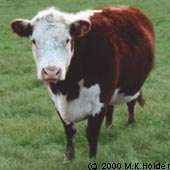
April 23, 2009 Cow

Scientists from the University of Maryland have published their assembly of the domestic cow (Bos taurus), an important new resource for the genetics community. The new version of the cow genome improves considerably on other assemblies, in terms of both completeness and accuracy. The article describing their research is freely available in BioMed Central's open access journal Genome Biology.

The research team led by Steven Salzberg developed special-purpose software to assemble 35 million DNA sequence fragments into the 30 chromosomes that make up the Bos taurus genome. The algorithms use paired-end sequence information, mapping data, and synteny with the human genome to detect errors, correct inverted segments and fill in sequence gaps. The resulting assembly has around 91% of the assembled genome anchored onto chromosomes.

The researchers believe their assembly is the best available, thanks to its completeness and the algorithm's ability to smooth out thousands of errors. Their comparisons demonstrate that the new cow genome assembly has better agreement with independent genetic maps, and a more complete representation of cow genes, than alternative assemblies.

The new assembly places some 150 million nucleotides (6%) more DNA sequence data onto chromosomes than the other draft assembly currently available, BosTau4.0 from the Baylor College of Medicine (BCM4). A new, expanded cow-human synteny map increases the number of syntenic breakpoints by approximately 30%. Salzberg's team also pinpointed a portion of the Bos taurus Y chromosome for the first time.

"Until the assembly is truly finished - a state that no mammalian genome, including human, has yet reached - we will continue to incorporate new data to fill in gaps, to correct the mis-oriented regions, and to place more sequences onto ," says Salzberg. The alpaca and sheep genomes are currently being sequenced, and should provide a rich source for making further improvements between these closely related mammals.

Although sequencing and assembly of mammalian genomes has become commonplace since the was first sequenced seven years ago, assembling large genomes accurately remains a challenge.

More information: The complete assembly has been deposited at GenBank (accession DAAA00000000); the version described in the Genome Biology article is (DAAA01000000). The assembly is also available at ftp://ftp.cbcb.umd.edu/pub/data/Bos_taurus

Paper: A whole-genome assembly of the domestic , Bos taurus
Aleksey V Zimin, Arthur L Delcher, Liliana Florea, David R Kelley, Michael C Schatz, Daniela Puiu, Finnian Hanrahan, Geo Pertea, Curtis P Van Tassell, Tad S Sonstegard, Guillaume Marcais, Michael Roberts, Poorani Subramanian, James A Yorke and Steven L Salzberg , Biology (in press), http://genomebiology.com/10/4/r42

Source: BioMed Central (news : web)


print this article email this article download pdf blog this article bookmark this article     Stumble it Digg this share on Facebook retweet share on Reddit add to delicious
Rate this story - 5 /5 (1 vote)


April 23, 2009 all stories

Comments: 0

5 /5 (1 vote)
  • Stumble this up

  • Digg this

  • share this

  • hide
  • Related Stories

  • Human chromosome 3 is sequenced
    created Apr 27, 2006 | popularity not rated yet | comments 0
  • Researchers assemble second non-human primate genome
    created Feb 09, 2006 | popularity not rated yet | comments 0
  • Domestic cat genome sequenced
    created Oct 31, 2007 | popularity not rated yet | comments 0
  • Completed genome set to transform the cow
    created Aug 16, 2006 | popularity not rated yet | comments 0
  • Analysis of rhesus monkey genome uncovers genetic differences with humans, chimps
    created Apr 12, 2007 | popularity not rated yet | comments 0


  • hide
  • Relevant PhysicsForums posts

  • What is transpulmonary pressure?
    created Nov 24, 2009
  • Is there a gay gene?
    created Nov 23, 2009
  • Super quick question about Starling forces?
    created Nov 22, 2009
  • Questions about diffusion
    created Nov 22, 2009
  • More from Physics Forums - Biology

Other News

Variable Temperatures Leave Insects wtih a Frosty Reception

Biology / Plants & Animals

created 9 hours ago | popularity not rated yet | comments 0

(PhysOrg.com) -- For the first time, scientists at The University of Western Ontario have shown that insects exposed to repeated periods of cold will trade reproduction for immediate survival.


When camouflage is a plant's best protection

Rare woodland plant uses 'cryptic coloration' to hide from predators

Biology / Plants & Animals

created 11 hours ago | popularity 4.3 / 5 (3) | comments 0

It is well known that some animal species use camouflage to hide from predators. Individuals that are able to blend in to their surroundings and avoid being eaten are able to survive longer, reproduce, and ...


Cells defend themselves from viruses, bacteria with armor of protein errors

Biology / Cell & Microbiology

created 13 hours ago | popularity 5 / 5 (7) | comments 0

When cells are confronted with an invading virus or bacteria or exposed to an irritating chemical, they protect themselves by going off their DNA recipe and inserting the wrong amino acid into new proteins to defend them ...


'Safety valve' protects photosynthesis from too much light

Biology / Cell & Microbiology

created 13 hours ago | popularity 4.7 / 5 (3) | comments 0

Photosynthetic organisms need to cope with a wide range of light intensities, which can change over timescales of seconds to minutes. Too much light can damage the photosynthetic machinery and cause cell death. Scientists ...


Researchers discover biological basis of 'bacterial immune system'

Biology / Cell & Microbiology

created 13 hours ago | popularity 4.7 / 5 (3) | comments 0

Bacteria don't have easy lives. In addition to mammalian immune systems that besiege the bugs, they have natural enemies called bacteriophages, viruses that kill half the bacteria on Earth every two days.