Scientists use retroviruses to unravel woolly history of sheep domestication
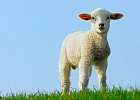
(PhysOrg.com) -- Scientists at the University of Glasgow have unravelled the woolly history of sheep domestication by examining retroviruses preserved in the animal’s DNA.
Livestock domestication, which was a fundamental step in human history, occurred approximately 11,000 years ago in Southwest Asia before spreading to Europe and the rest of the world.
Originally, sheep were used primarily for their meat, but up until now it was not known where selection for secondary products like wool first took place. Also, no genetic marker was known to differentiate primitive breeds from modern ones.
However, a study led by Professor Massimo Palmarini, a virologist from the Faculty of Veterinary Medicine of the University of Glasgow, published in the journal Science, suggests that most likely, breeding of sheep for products such as wool also occurred first in Southwest Asia before spreading to Europe through secondary migrations that shaped the great majority of present-day sheep.
In coming to their conclusions, scientists examined the presence of a particular group of endogenous retroviruses (enJSRVs) within the DNA of 1,362 sheep from 133 different breeds of domestic sheep and their closest wild relatives.
Endogenous retroviruses are like genetic fossils; remnants of ancient infections caught by sheep and their ancestors thousands of years ago whose DNA has been integrated into the genetic code of the animal and then passed on to subsequent generations.
The sheep were tested for the presence of six enJSRVs and by comparing the prevalence of the different viruses amongst the sample group Prof. Palmarini and his colleagues were able to differentiate primitive breeds from the more recently domesticated animals.
The tests revealed that sheep previously recognised as primitive - such as the Soay sheep of St Kilda and the Orkney sheep in Scotland for example - were among some of the very first domesticated sheep. Other primitive breeds include the Mediterranean Mouflon and some sheep breeds present mostly in Scandinavia.
Interestingly, the Orkney sheep are more closely related to Nordic breeds in Scandinavia while Soay are linked to Mouflon, providing intriguing insights into ancient migration routes. Thus, primitive breeds were generally found on the periphery of Europe or in isolated areas.
Prof Palmarini said: “The primitive breeds survived the second migrations of improved breeds from Southwest Asia by returning to a feral or semi-feral state in islands without predators or by occupying land less prone to commercial exchanges.
“Most, if not all, of the breeds we identified as being of ancient origin were already considered primitive due to traits such as a darker, coarser fleece, moulting coat and presence of horns even in females.”
Scientists say that similar tests used in the study could be applied to other species and be used to identify and preserve rare primitive breeds of animals.
Prof Palmarini added: “By being able to differentiate primitive breeds from modern ones our study offers a rationale for identifying and preserving rare gene pools. We have also demonstrated how ERVs can be used as a new class of genetic markers to unravel the history of a domesticated species.”
The study involved scientists from twenty different countries including Dr. Bernardo Chessa, Prof Tom Spencer at Texas A&M University, and Dr Ingrid Mainland, an archaeologist at the University of Bradford. This work was primarily funded by the Biotechnology and Biological Research Council and Wellcome Trust.
More information: The paper ‘Revealing the history of sheep domestication using retrovirus integrations’ is published in Science. www.sciencemag.org/cgi/content … bstract/324/5926/532
Provided by University of Glasgow


