NanoViagra

April 28, 2009 by David Hecht weblog
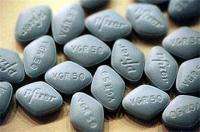
Viagra pill

(PhysOrg.com) -- A new generation of anti-impotency drugs based on nanoparticles might be coming quickly. Researchers at the Albert Einstein College of Medicine in New York presenting at the 104'th Annual Meeting of the American Urological Association have discovered a new potential application for drug carrying nanoparticles as a topical treatment for erectile dysfunction (ED). This breakthrough should hopefully stimulate further work in this area.

The nanoparticles were used as a unique sustained release drug delivery mechanism. They are composed of a hybrid hydrogel/glass capsule containing nitric oxide. The nitric oxide (NO) is slowly released at therapeutic levels when applied to the cutaneous. NO aids in erection biology and helps to relax smooth muscle cells; it occurs naturally in the body to help expand blood vessels, helping them fill with blood.

The nanoparticles were applied topically to the skin of the penis of seven rats and the erectile response was measured by intracorporal pressure/blood pressure ratio. 71% of the rats tested with the nanoparticles experienced positive effects on the ICP/BC which led to visible erections, with an average response time of 65 minutes. The researchers claim that this topical treatment will likely have fewer side effects than Viagra, which is ingested orally, and known to cause headaches and facial flushing. They also claim that given further research, their nanoparticle treatment could work faster than Viagra.

Says Ira D. Sharlip, MD, "This is a very interesting concept which has potential to impact treatment of many conditions including erectile dysfunction if it can be translated from the animal lab to clinical practice. It remains to be seen whether the effect of the nanoparticle technology is a local or a systemic effect." The could act as a transport mechanism for erectogenic agents, and could help localize the therapeutic impact without the potential systemic consequences of an ingested pill. Dr. Sharlip also feels that this type of technology can be applied to other problems such as premature ejaculation, which occurs in 20-30% of men. With further research, I'm sure that a solution for this problem will come soon.

Hopefully, this research will translate well to clinical practice, and will give further validation to programs seeking to use nanotechnology for medical/health applications. For example, companies such as Tego Biosciences are hoping to use fullerenes as therapeutics, and there is numerous research into using carbon nanotubes as a cancer killer. Needless to say, given the age distribution amongst those at NIH, I'm sure this particular research will continue to be well funded.

© 2009 PhysOrg.com

3.8 /5 (11 votes)  

Filter


Move the slider to adjust rank threshold, so that you can hide some of the comments.


Display comments: newest first

komone
Apr 29, 2009

Rank: 4 / 5 (1)
Wow - we get nanotechnology and we use it for this. And then to add insult the only post is a thinly veiled spam ad. What hope is there?
El_Nose
Apr 29, 2009

Rank: 5 / 5 (3)
topically applied to rats -- hate to be the grad student doing that job --- hey so what did you do all day? -- man you know i rubbed this new viagra cream on rat d**ks. -- sounds like fun, i think i need another beer before we continue
NeilFarbstein
Apr 29, 2009

Rank: 1 / 5 (1)
so what
Rank 3.8 /5 (11 votes)
Related Stories
Relevant PhysicsForums posts

More news stories

'Dark plasmons' transmit energy

Microscopic channels of gold nanoparticles have the ability to transmit electromagnetic energy that starts as light and propagates via "dark plasmons," according to researchers at Rice University.

Nanotechnology / Nanophysics

created 8 hours ago | popularity 5 / 5 (4) | comments 0 | with audio podcast

Nanotube therapy takes aim at breast cancer stem cells

Wake Forest Baptist Medical Center researchers have again proven that injecting multiwalled carbon nanotubes (MWCNTs) into tumors and heating them with a quick, 30-second laser treatment can kill them.

Nanotechnology / Bio & Medicine

created 13 hours ago | popularity 5 / 5 (1) | comments 0 | with audio podcast

Inspired by steel, nanomanufacturing gets wear-resistant carbide tip

(PhysOrg.com) -- Scientists at the University of Pennsylvania, the University of Wisconsin-Madison and IBM Research - Zurich have fabricated an ultrasharp silicon carbide tip possessing such high strength ...

Nanotechnology / Nanophysics

created 18 hours ago | popularity 5 / 5 (3) | comments 1 | with audio podcast

New technology platform for molecule-based electronics

Researchers at the Nano-Science Center at the University of Copenhagen have developed a new nano-technology platform for the development of molecule-based electronic components using the wonder material graphene. At the same ...

Nanotechnology / Nanomaterials

created 15 hours ago | popularity 5 / 5 (2) | comments 0

Australians risking skin cancer to avoid nanoparticles

More than three in five Australians are concerned enough about the health implications of nanoparticles in sunscreens to want to know more about their impact. And while the initial scientific information released suggests ...

Nanotechnology / Bio & Medicine

created 17 hours ago | popularity 5 / 5 (1) | comments 0


FDA-approved drug rapidly clears amyloid from the brain, reverses Alzheimer's symptoms in mice

Neuroscientists at Case Western Reserve University School of Medicine have made a dramatic breakthrough in their efforts to find a cure for Alzheimer's disease. The researchers' findings, published in the journal Science, show t ...

Hydrogen from acidic water: Researchers develop potential low cost alternative to platinum for splitting water

A technique for creating a new molecule that structurally and chemically replicates the active part of the widely used industrial catalyst molybdenite has been developed by researchers with the Lawrence Berkeley ...

Ultraviolet protection molecule in plants yields its secrets

Lying around in the sun all day is hazardous not just for humans but also for plants, which have no means of escape. Ultraviolet (UV) radiation from the sun can damage proteins and DNA inside cells, leading ...

Anyone can learn to be more inventive, cognitive researcher says

There will always be a wild and unpredictable quality to creativity and invention, says Anthony McCaffrey, a cognitive psychology researcher at the University of Massachusetts Amherst, because an "Aha moment" is rare and ...

Soraa LED light may dim 50-watt halogen rivals

(PhysOrg.com) -- Soraa, a Fremont, California company founded in 2008, this week launched its first product, a light that uses LEDS (light emitting diodes). The "Soraa LED MR16 lamp" is the "perfect" replacement ...

Flexible paper robots

(PhysOrg.com) -- These inexpensive robots can stretch, bend and twist under control, and lift objects up to 120 times their own weight. Being soft, they can apply gentle and even pressure, and adapt to varied ...