Two brown bear populations in Spain have been isolated for the past 50 years
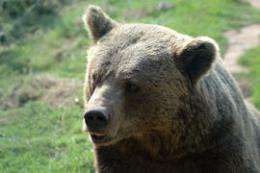
The situation of bears in the Iberian Peninsula is critical. Researchers from the University of Oviedo (UO) and the Superior Council of Scientific Research (SCSR) have performed a genetic identification based on the analysis of stools and hair of brown bears (Ursus arctos) from the Cantabrian mountain range, gathered between 2004 and 2006.
The non-invasive analysis of 146 samples has allowed for the identification of 39 bears in the western sub-population, and 9 in the eastern one, so as to show the genetic structure of the population. In order to obtain the individual genotypes of the bears, scientists have employed 18 micro-satellite markers in a joint fashion, and a sex marker with high-class genetic technology.
"The level of genetic diversity was 45% in the western sub-population, and 25% in the eastern population", explain Trinidad Pérez and Ana Domínguez Sanjurjo to SINC, authors of the study and researchers at the Department of Functional Biology (Genetics) at the UO.
According to Pérez, these levels of gene variation (which allow for adaptation, survival and evolution of the species) are "among the lowest of those described in scientific literature for this species".
The study, which appears in the latest edition of the magazine Conservation Genetics, points out that the difference between the two Cantabrian sub-populations is "extreme", around 41%. This value is comparable, for example, to that of the chamois (Rupicapra), which are considered a different species.
For Domínguez Sanjurjo, this phenomenon "can only be explained by an absolute isolation between both sub-populations, joined with an extremely reduced size in the eastern." From this differentiation data between sub-populations, "it can be inferred that there has been no genetic flow between them for at least 50 years," affirm the scientists.
In this fashion, we know that in the eastern population, the endogamy rate (reproduction of individuals from the same lineage) per generation is approximately 10%, "a value with amply exceeds the maximum tolerable rate given for domestic animals, which is 1%," asserts Pérez to SINC.
The sub-population has a number of around 20 individuals, a number which "is very far from the size considered as a viable minimum, which means its short-term conservation is seriously compromised," adds the biologist.
On the other hand, the western sub-population presents moderated levels of diversity, "probably due to an important reduction in the number of bears which would have begun 300 years ago", highlights Pérez. Although at the end of the 90s, the estimated size of this sub-population was between 50 and 60 members, "this number should be situated around 200 individuals for the bear population to be viable short-term," declare the scientists.
Connecting populations, a solution
In spite of the fact that the eastern population has less individuals, the western one possesses "a great risk of extinction in the near future," points out Domínguez. To this end, the researchers explain that "the connectivity between the two sub-populations is priority if we want to maintain the eastern nucleus, which would be at risk of immediate extinction."
The genetic analysis has allowed for the identification of a macho individual in Palencia belonging to the western sub-population. "In theory, if one migrant from one sub-population managed to reproduce with another every 10 years, it would reduce the differentiation between the two bear populations by 20%," confirm Pérez and Domínguez. The genetic difference would diminish by 11% if they were two bears. "This migration would increase diversity in the eastern sub-population, considerably increasing their possibilities of survival," points out Pérez.
In order for the brown bears to be out of danger long-term, "it would be necessary to control the population as a whole, estimate size and tendency, procure connectivity between the two sub-populations and avoid losses of habitat," conclude the researchers.
Source: Plataforma SINC (news : web)


