Limping rat provides sciatica insights
A newly developed animal model for the painful nerve condition known as sciatica should help researchers diagnose and treat it, according to Duke University bioengineers and surgeons.
Sciatica is not a single disorder, but rather a diverse range of symptoms, such as numbness or pain from the lower back to the feet, radiating leg pain or difficulty in controlling the leg. It is often caused by compression, or pinching, of any of the five nerve roots that combine to make up the sciatic nerve. These roots are the parts of the nerve that pass through openings in the spine to the spinal cord.
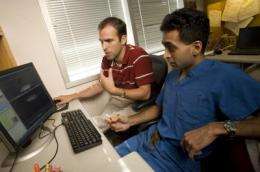
Surgical simulation of nerve compression in rats was led by Mohammed Shamji, a neurosurgery resident and recent Ph.D. graduate working in the laboratory of senior researcher Lori Setton, professor of biomedical engineering and surgery at Duke's Pratt School of Engineering. Shamji and post-doctoral research fellow Kyle Allen observed that the animals' gait became asymmetric, and that they over-responded to temperature changes and touch in their limbs after the surgery.
They also found, for the first time, that the physical symptoms experienced by the affected animals seemed to be linked to an increase in levels of interleukin-17 (IL-17), a protein involved in regulating the inflammatory response. Elevated levels of IL-17 have already been implicated in such autoimmune diseases as rheumatoid arthritis and asthma.
"This finding suggests a possible role for immune system activation in contributing to symptoms of sciatica," said Shamji, now completing his neurosurgical residency at the Ottawa Hospital in Canada. "This offers new insight into the pathophysiology of the disease, and may also identify novel therapeutic targets to treat it."
The results of Shamji's and Allen's experiments were published online in the journal Spine.
"If immune system activation is involved, and it turns out to be an important part of the condition, it is possible that existing or new drugs that can block this immune response could offer relief to patients," Setton said. "This new model should help us find answers for a disorder that has few good treatments."
For their experiments, the researchers compressed a specific nerve root known as the dorsal root ganglia in the lumbar region of the spine, which simulated sciatica in one of the rear legs. They performed numerous tests on the animals' ability to move as well as their reaction to pain and temperature. Throughout this process, they took blood samples to measure any changes in the levels of specific immune system molecules.
One of the more novel tests, developed by Allen, involved taking high-speed videotapes of the animals - those that received the procedure and those that did not - and analyzing step by step the particulars of the animals' gait. Specifically, they measured how the animals responded to the pressure of walking with an affected leg and how they shifted their weight in response.
"Following surgery, we noticed some novel signs of limping, characterized by changes in gait symmetry and the placement of more weight on the non-affected limb," Allen explained. "While some of our findings confirmed what others have suggested, our results were able to quantify the extent of the gait asymmetry, or limping, which could prove important as we evaluate different treatments."
Further studies are planned to test the effects of different IL-17 blockers on the mechanics of the animals' movement.
Source: Duke University (news : web)


