Half a glass of wine a day may boost life expectancy by five years
April 30, 2009
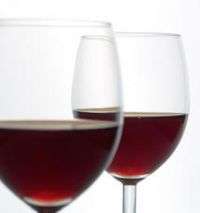
Drinking up to half a glass of wine a day may boost life expectancy by five years—at least in men—suggests research published ahead of print in the Journal of Epidemiology and Community Health.
The Dutch authors base their findings on a total of 1,373 randomly selected men whose cardiovascular health and life expectancy at age 50 were repeatedly monitored between 1960 and 2000.
The researchers looked into how much alcohol the men drank, what type it was, and over what period, in a bid to assess whether this had any impact on the risks of their dying from cardiovascular disease, cerebrovascular disease, and from all causes.
They also tracked weight and diet, whether the men smoked, and for how long, and checked for the presence of serious illness.
During the 40 years of monitoring, 1,130 of the men died. Over half the deaths were caused by cardiovascular disease.
The proportion of men who drank alcohol almost doubled from 45% in 1960 to 86% in 2000, with the proportion of those drinking wine soaring from 2% to 44% during that period.
The researchers found that light long term alcohol consumption of all types—up to 20 g a day— extended life by around two extra years compared with no alcohol at all. Extended life expectancy was slightly less for those who drank more than 20 g.
And men who drank only wine, and less than half a glass of it a day, lived around 2.5 years longer than those who drank beer and spirits, and almost five years longer than those who drank no alcohol at all.
Drinking wine was strongly associated with a lower risk of dying from coronary heart disease, cerebrovascular disease, and death from all causes.
These results held true, irrespective of socioeconomic status, dietary and other lifestyle habits, factors long thought to influence the association between wine drinking and better health.
Source: BMJ-British Medical Journal
-
Light wine intake is associated with longer life expectancy in men
Feb 28, 2007 |
not rated yet |
0
-
Alcohol's impact on heart and stroke risk may differ for men, women
Jul 10, 2008 |
not rated yet |
0
-
Wine may protect against dementia
Apr 10, 2008 |
not rated yet |
0
-
Regular tipple may curb risk of rheumatoid arthritis
Jun 05, 2008 |
not rated yet |
0
-
Red wine decreases the risk of lung cancer
Oct 07, 2008 |
not rated yet |
0
-
Engineers build first sub-10-nm carbon nanotube transistor
Feb 01, 2012 |
4.9 / 5 (30) |
30
-
Something old, something new: Evolution and the structural divergence of duplicate genes
Jan 31, 2012 |
4.6 / 5 (7) |
1
-
The hidden nanoworld of ice crystals: Revealing the dynamic behavior of quasi-liquid layers
Jan 30, 2012 |
5 / 5 (3) |
1
-
Stock market network reveals investor clustering
Jan 27, 2012 |
3.9 / 5 (23) |
8
-
Of microchemistry and molecules: Electronic microfluidic device synthesizes biocompatible probes
Jan 26, 2012 |
5 / 5 (1) |
0
-
Classical and Quantum Mechanics via Lie algebras
Apr 15, 2011
- More from Physics Forums - Independent Research
More news stories
FDA-approved drug rapidly clears amyloid from the brain, reverses Alzheimer's symptoms in mice
Neuroscientists at Case Western Reserve University School of Medicine have made a dramatic breakthrough in their efforts to find a cure for Alzheimer's disease. The researchers' findings, published in the journal Science, show t ...
Medicine & Health / Neuroscience
13 hours ago |
4.9 / 5 (32) |
14
|
Anyone can learn to be more inventive, cognitive researcher says
There will always be a wild and unpredictable quality to creativity and invention, says Anthony McCaffrey, a cognitive psychology researcher at the University of Massachusetts Amherst, because an "Aha moment" is rare and ...
Medicine & Health / Psychology & Psychiatry
9 hours ago |
4.7 / 5 (7) |
1
|
Researchers weigh in on ethics of H5N1 research
(Medical Xpress) -- In a commentary on the biosecurity controversy surrounding publication of bird flu research details, a bioethicist and a vaccine expert at Johns Hopkins reaffirm that "all scientists have an affirmativ ...
11 hours ago |
not rated yet |
0
|
Cell biologists describes mechanism by which some people may be more susceptible to colon cancer
An international research team led by cell biologists at the University of California, Riverside has uncovered a new insight into colon cancer, the third leading cause of cancer-related deaths in the United ...
9 hours ago |
5 / 5 (3) |
0
|
To perform with less effort, practice beyond perfection
Whether you are an athlete, a musician or a stroke patient learning to walk again, practice can make perfect, but more practice may make you more efficient, according to a surprising new University of Colorado Boulder study.
Medicine & Health / Neuroscience
12 hours ago |
4.6 / 5 (9) |
3
|
'Dark plasmons' transmit energy
Microscopic channels of gold nanoparticles have the ability to transmit electromagnetic energy that starts as light and propagates via "dark plasmons," according to researchers at Rice University.
Hydrogen from acidic water: Researchers develop potential low cost alternative to platinum for splitting water
A technique for creating a new molecule that structurally and chemically replicates the active part of the widely used industrial catalyst molybdenite has been developed by researchers with the Lawrence Berkeley ...
Ultraviolet protection molecule in plants yields its secrets
Lying around in the sun all day is hazardous not just for humans but also for plants, which have no means of escape. Ultraviolet (UV) radiation from the sun can damage proteins and DNA inside cells, leading ...
Soraa LED light may dim 50-watt halogen rivals
(PhysOrg.com) -- Soraa, a Fremont, California company founded in 2008, this week launched its first product, a light that uses LEDS (light emitting diodes). The "Soraa LED MR16 lamp" is the "perfect" replacement ...
Flexible paper robots
(PhysOrg.com) -- These inexpensive robots can stretch, bend and twist under control, and lift objects up to 120 times their own weight. Being soft, they can apply gentle and even pressure, and adapt to varied ...
Engineers find inspiration for new materials in Piranha-proof armor
(PhysOrg.com) -- Its a matchup worthy of a late-night cable movie: put a school of starving piranha and a 300-pound fish together, and who comes out the winner?
May 01, 2009
Rank: not rated yet
-Romy