US wants to move on climate change
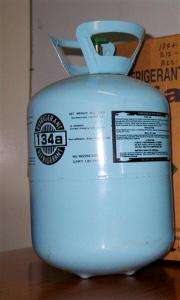
(AP) -- The Obama administration, in a major environmental policy shift, is leaning toward asking 195 nations that ratified the U.N. ozone treaty to enact mandatory reductions in hydrofluorocarbons, according to U.S. officials and documents obtained by The Associated Press.
"We're considering this as an option," Environmental Protection Agency spokeswoman Adora Andy said Wednesday, emphasizing that while a final decision has not been made it was accurate to describe this as the administration's "preferred option."
The change - the first U.S.-proposed mandatory global cut in greenhouse gases - would transform the ozone treaty into a strong tool for fighting global warming.
"Now it's going to be a climate treaty, with no ozone-depleting materials, if this goes forward," an EPA technical expert said Wednesday, speaking on condition of anonymity because a final decision is pending.
The expert said the 21-year-old ozone treaty known as the Montreal Protocol created virtually the entire market for hydrofluorocarbons, or HFCs, so including them in the treaty would take care of a problem of its own making.
It's uncertain how that would work in conjunction with the Kyoto Protocol, the world's climate treaty, which now regulates HFCs and was rejected by the Bush administration. Negotiations to replace Kyoto, which expires in 2012, are to be concluded in December in Denmark.
The Montreal Protocol is widely viewed as one of the most successful environmental treaties because it essentially eliminated the use of chlorofluorocarbons, or CFCs, blamed for damaging the ozone layer over Antarctica.
Because they do not affect the ozone layer, HFCs broadly replaced CFCs as coolants in everything from refrigerators, air conditioners and fire extinguishers to aerosol sprays, medical devices and semiconductors.
But experts say the solution to one problem is now worsening another.
As a result, the U.S. is calling HFCs "a significant and growing source of emissions" that could be eliminated more quickly in several ways, including amending the ozone treaty or creating "a legally distinct agreement" linked to the Montreal Protocol, says a March 27 State Department briefing paper presented at one of two recent meetings on the topic.
State Department officials told participants at one of last month's meetings that the United States wants to amend the Montreal Protocol to phase out the use of HFCs, a change praised by environmentalists. But there appear to be some interagency snags.
Though the State Department secured backing from the Pentagon and other agencies for amending the Montreal Protocol, some opposition remains within the administration, U.S. officials say. It is not clear if the proposal to eliminate HFCs will be submitted by next week, in time to be considered at a meeting in November by parties to the Montreal Protocol.
Proponents say eliminating HFCs would have an impact within our lifetimes. HFCs do most of their damage in their first 30 years in the atmosphere, unlike carbon dioxide which spreads its impact over a longer period of time.
"Retiring HFCs is our best hope of avoiding a near-term tipping point for irreversible climate change. It's an opportunity the world simply cannot afford to miss, and every year we delay action on HFCs reduces the benefit," said Alexander von Bismarck, executive director of the Environmental Investigation Agency, a nonprofit watchdog group in Washington that first pitched the idea two years ago.
Globally, a huge market has sprung up around the use of HFCs, a man-made chemical, as a result of their promotion under the Montreal Protocol. Several billion dollars have been spent through an affiliated fund to prod countries to stop making and using CFCs and other ozone-damaging chemicals and to instead use cheap and effective chemicals like HFCs.
Scientists say eliminating use of HFCs would spare the world an amount of greenhouse gases up to about a third of all CO2 emissions about two to four decades from now. Manufacturers in both Europe and the U.S. have begun to replace HFCs with so-called natural refrigerants such as hydrocarbons, ammonia or carbon dioxide.
HFCs can be up to 10,000 times more powerful than carbon dioxide as climate-warming chemicals, according to U.S. government data.
Currently they account for only about 2 percent of all greenhouse-gas emissions, but the U.N.'s Intergovernmental Panel on Climate Change warned in 2005 that use of HFCs was growing at 8.8 percent per year.
More recent studies concur and show that HFCs are on a path to reach about 11 billion tons of greenhouse gases, which would constitute up to a third of all greenhouse gas emissions by sometime within 2030 and 2040 under some CO2-reduction scenarios.
House Democrats also are adding to the pressure on HFCs.
In an April 3 letter to President Barack Obama, California Rep. Henry Waxman, chairman of the House Energy and Commerce Committee, and Massachusetts Rep. Edward Markey, chairman of the energy and environment subcommittee, urged the White House to offer an amendment to the Montreal Protocol this year.
"Although we strongly support a comprehensive international agreement on climate change, we believe that adding HFCs to the existing Montreal Protocol would be a sensible, cost-effective method of addressing a small but growing piece of the problem," they wrote.
Waxman and Markey also have drafted legislation laying out a broad outline for phasing out HFCs in the United States.
Worldwide, phasing out HFCs under the Montreal Protocol could prevent 90 billion tons of greenhouse gases by 2040, by including nations like India and China that were not part of the Kyoto treaty.
Nations such as Argentina, the Federated States of Micronesia, Mauritius and Mexico have recently pushed for climate protections under the Montreal Protocol, arguing every possible tool must be used to combat climate change.
The EPA in April determined that hydrofluorocarbons were one of six greenhouse gases endangering human health and welfare, a ruling that could eventually lead to mandatory reductions in the U.S. under the Clean Air Act.
"This is a strong sign of new American leadership in atmospheric protection," said von Bismarck.
©2009 The Associated Press. All rights reserved. This material may not be published, broadcast, rewritten or redistributed.


