Ash shows past eruptions 'underestimated'
May 6, 2009 Ash shows past eruptions 'underestimated'

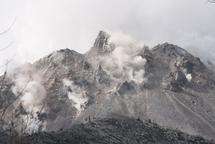
Chaiten volcano, Chile, 2009 continuing a low level eruption.

(PhysOrg.com) -- A study into ash fallout from the biggest volcanic eruption in almost 20 years has shown that the impact of past eruptions is likely to have been significantly underestimated as so much of the evidence quickly disappears, Oxford University scientists report.

The study focuses on the Chaitén volcano in southern Chile that began to erupt explosively on 2 May 2008. For six days afterwards the volcano pumped huge volumes of ash high into the atmosphere before its activity began to decline to a low intensity eruption still going on today.

With emergency funding from the UK’s Natural Environment Research Council, a team of scientists from the University of Oxford was quickly dispatched to map out the distribution of ash from the eruption and to study its impacts on the local environment, in collaboration with Argentinian scientists.

A first report of their findings is published in the Journal of Geophysical Research.

‘The area around a volcano immediately after an eruption is like a crime scene where the evidence can quickly be destroyed by the elements,’ said Professor David Pyle of Oxford University’s Department of Earth Sciences. ‘Ash deposited on land will rapidly be removed by rain or wind, while ash deposited out to sea is only accessible by collecting core samples of the sea-floor sediment. This makes it extremely difficult for volcanologists to accurately reconstruct a past eruption from the available evidence and say how much fine ash was deposited, and over what area, during an eruption.’

The team’s work on Chaitén has shown that the several millimetres thickness of ash deposited across Argentina have been lost from wide areas - of at least 50,000 square kilometers - in only nine months. A geologist attempting to map the region affected by ash fallout now would significantly underestimate the size of the area affected, and as a result would underestimate the size of the eruption and the amount of ash erupted.

‘By using satellite imagery to guide us, we were able to map the ash fallout across Argentina to a thickness of less than one tenth of a millimetre,’ said Sebastian Watt, a PhD student in Oxford’s Department of Earth Sciences, who led the team. ‘We collected samples from over 220 sites across an area of 100,000 square kilometres and with these field data and samples we were able to make the first scientific assessment of the size and impact of the eruption.’

The Chaitén eruption had immediate social and economic impacts across Patagonia (southern Chile and Argentina), with more than 5,000 people evacuated from settlements up to 75 km from the volcano, and extensive deposition leading to regional disruption of agriculture and aviation. The volcano was not routinely monitored, and there was no recognised warning before the eruption started.

Sebastian Watt said: ‘Chaitén is still erupting right now, although it is currently in a less explosive phase. Our previous work has shown that eruptions from this have the potential to be much larger in size making careful monitoring of the present a priority.’

Provided by Oxford University (news : web)


print this article email this article download pdf blog this article bookmark this article     Stumble it Digg this share on Facebook retweet share on Reddit add to delicious
Rate this story - 4.7 /5 (7 votes)


May 6, 2009 all stories

Comments: 0

4.7 /5 (7 votes)
  • Stumble this up

  • Digg this

  • share this

  • hide
  • Related Stories

  • First evidence of under-ice volcanic eruption in Antarctica
    created Jan 20, 2008 | popularity not rated yet | comments 0
  • Alaskan volcano sends ash plume high
    created Jan 17, 2006 | popularity not rated yet | comments 0
  • Chilean volcano captured blasting ash
    created May 08, 2008 | popularity not rated yet | comments 0
  • Alaska's Mount Redoubt spews ash 50,000 feet high
    created Mar 28, 2009 | popularity not rated yet | comments 0
  • Rapid analysis could cut health risks of volcanic ash
    created Oct 10, 2007 | popularity not rated yet | comments 0


  • hide
  • Relevant PhysicsForums posts

  • cycles
    created 17 hours ago
  • The Origin of the term 'fossil' fuels
    created Nov 05, 2009
  • co2
    created Nov 03, 2009
  • Early Earths Sulfidic Ocean Conditions
    created Oct 30, 2009
  • More from Physics Forums - Earth

Other News

Deep creep means milder, more frequent earthquakes along Southern California's San Jacinto fault

Deep creep means milder, more frequent earthquakes along Southern California's San Jacinto fault

Space & Earth / Earth Sciences

created 16 hours ago | popularity 4.5 / 5 (4) | comments 0

With an average of four mini-earthquakes per day, Southern California's San Jacinto fault constantly adjusts to make it a less likely candidate for a major earthquake than its quiet neighbor to the east, the ...


Success in 'space elevator' competition (AP)

Success in 'space elevator' competition (Update 3)

Space & Earth / Space Exploration

created Nov 05, 2009 | popularity 4.3 / 5 (33) | comments 50

(AP) -- A robot powered by a ground-based laser beam climbed a long cable dangling from a helicopter on Wednesday to qualify for prize money in a $2 million competition to test the potential reality of the ...


In a Galaxy Far, Far Away...

In a Galaxy Far, Far Away...

Space & Earth / Astronomy

created Nov 06, 2009 | popularity 4.8 / 5 (5) | comments 17

(PhysOrg.com) -- Astronomers have published the discovery of the farthest known object in the cosmos: a star that exploded when the universe was only 630 million years old -- only 4.6% of its current age. ...


'Dropouts' pinpoint earliest galaxies

'Dropouts' pinpoint earliest galaxies

Space & Earth / Astronomy

created Nov 06, 2009 | popularity 4.2 / 5 (10) | comments 13

Astronomers, conducting the broadest survey to date of galaxies from about 800 million years after the Big Bang, have found 22 early galaxies and confirmed the age of one by its characteristic hydrogen signature ...


Space hotel taking bookings for 2012 opening

Space hotel taking bookings for 2012 opening

Space & Earth / Space Exploration

created Nov 05, 2009 | popularity 4.4 / 5 (21) | comments 11

(PhysOrg.com) -- The first orbiting space hotel is on track to open for its first customers in 2012, but hurry, as bookings are filling fast.