Pandemic, or just a bad bug? (w/Webcast)
(PhysOrg.com) -- International alarm about swine flu is ebbing as the virus has proven far less virulent than was feared. But important questions and concerns remain about the new flu strain and its potential to wreak havoc around the world.
So a panel of Berkeley experts told an audience of several hundred people who attended a 90-minute H1N1 teach-in Monday afternoon, hosted by the School of Public Health in Stanley Hall's Berdahl Auditorium.
While some schools around the country — including Berkeley's Malcolm X Elementary — closed early in the week to keep the virus from spreading, the fact is that the much-feared new H1N1 flu strain has turned out to behave like any old flu bug in the United States, at least so far, according to the panel.
Clinically, it's proven no more serious than seasonal flu in this country — even less so, considering that flu kills an average of 100 Americans a day during the winter flu season, and as many as 500 to 600 a day at the height of contagion, said Arthur Reingold, professor and head of epidemiology in the School of Public Health. Only two U.S. deaths from the new swine flu have been reported.
It helped that the virus turned out to be susceptible to Tamiflu and other anti-viral medications, he said, though that wasn't known when cases first cropped up. But in Mexico the mortality rate has been much higher, and some victims have been teenagers and young adults, groups not usually at risk of death from the flu.
"We still don't know what we need to know about the mortality of this virus," Reingold said.
Fears that the new flu strain might cause a pandemic weren't misplaced, Reingold said, because all the conditions for one were present: The virus is easily transmittable from person to person; the population is vulnerable, because the virus is new and people haven't yet built up immunity by exposure; and because no vaccine specific to the new strain exists, and this year's flu vaccine apparently was ineffective against it.
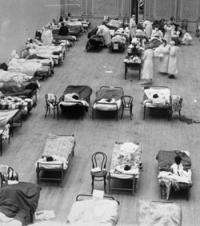
Most of the same conditions existed during the "Spanish flu" outbreak in 1918, also caused by an H1N1 swine-flu virus, which led to 40 million to 50 million deaths worldwide, Reingold said.
Because so much remains unknown about the current virus, Reingold added, scientists have to wait to see if it stops spreading when the current flu season ends in the Northern Hemisphere, and whether contagion breaks out in the Southern Hemisphere, which is just going into flu season now.
Also unknown, he said, is whether the virus will reappear next year: "We don't know where they go, but they do come back."
A griffin-like virus
Immunology expert Russell Vance, of the Department of Molecular and Cell Biology, explained that viruses are known to mutate rapidly as they replicate themselves and incorporate segments from other viruses. The strain causing the current outbreak contains segments of pig, bird, and human viruses — one reason for confusion about what kind it is.
Pigs are believed to have caught the flu from humans during the 1918 pandemic, and the virus has evolved in them since then, according to Vance. About 10 years ago, something — it's not clear what — prompted flu viruses in pig populations to start mutating much more rapidly; new pig-bird-human viruses emerged, closely resembling the strain causing the current outbreak, Vance said.
From the point of view of pure mathematical epidemiology, College of Natural Resources professor Wayne Getz said he found himself perplexed about why this flu outbreak has attracted so much attention when everyday flu kills some 36,000 Americans annually.
One factor may be that the current outbreak is unusual in that it arrived late in the season, he said. And people think swine flu is "scary," as opposed to everyday flu, he added.
Introspective and indulgent?
But while questions do remain about how infectious and virulent the virus is, Getz said he thinks that "what's going on in the United States now is maybe a little introspective and a little indulgent." Any real crisis would come if a pandemic hits poorer parts of the world, he said, where there's less access to healthcare and information about disease transmission.
Bioengineers are working on technologies designed to help provide quick and inexpensive screening devices to developing countries, said panelist Amy Herr, an assistant professor in the College of Engineering.
As it is, fairly inexpensive, widely available tests can tell people if they have the flu, but it takes costly, sophisticated machines available only at the Centers for Disease Control and a few other labs to determine which strain of flu they have, Herr said — one reason why so many cases in the current outbreak remain "probable" but aren't confirmed.
New "blue sky processes" in the area of microfluidics, under development for the last decade at Berkeley and elsewhere, could produce a "lab on a chip," making it possible to deploy around the world the kinds of tests now available only at the CDC, Herr said.
Provided by University of California - Berkeley (news : web)


