Fight to save the 'Amazon of the oceans'
With its pleasure boats dipping on the horizon and clustered tourist restaurants, the Indonesian island of Nusa Lembongan looks little like the edge of a great wilderness.
But according to scientists, this small and scrubby island off Bali is one corner of a huge marine ecosystem touted as the most diverse on earth -- and a key environmental battleground for a planet grappling with climate change.
The area is known as the Coral Triangle, and stretching across six nations between the Indian and Pacific oceans -- Indonesia, Malaysia, the Philippines, East Timor, Papua New Guinea and the Solomon Islands -- it is impressive in scale.
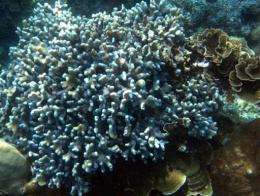
About half the size of the continental United States, the triangle is home to more than half the world's coral reefs, three-quarters of its coral species and key stocks of fish that help feed the world.
"People have compared the Coral Triangle's biodiversity richness to the Amazon," said Abdul Halim, the head of The Nature Conservancy's (TNC) Coral Triangle Centre.
But, as in the Amazon, the area's huge biodiversity is matched by a daunting set of challenges.
Overfishing, climate change and impoverished communities are all taking their toll on the region.
As nations meet in the Indonesian city of Manado in the coming week for the World Oceans Conference, the Coral Triangle is being touted as a key target in efforts to conserve the health of the oceans, to both battle climate change and adapt to its consequences.
A meeting of leaders from the six nations of the Coral Triangle Initiative, which was formed in 2007, is set to launch a plan to save the region, which has already been pledged hundreds of millions of dollars by international donors.
However, those involved in conserving the region say it will be a hard fight.
Slipping under the clear waters off Lembongan, the threat of destruction can seem distant. Fish from across the colour spectrum flit among bright corals in a concentration of life unthinkable on land.
Scientists say the area has withstood the pressures of human misuse and nature better than most, and that is precisely what makes it so important.
"It has the highest diversity anywhere on the planet, if you talk about marine life," said Lida Pet Soede, the head of environmental group WWF's Coral Triangle Initiative Network.
"It has the most species of corals, the most species of fish, every other marine organism.... All sorts of stuff, it has the most of it," she said.
The Coral Triangle's variety of species means life here has an in-built coping mechanism to deal with outside stresses, and serves as the "nursery of the seas" for species facing collapse elsewhere, Soede said.
About 30 percent of the world's tuna is caught here and populations are relatively healthy but by no means beyond threat.
Unlike other massive coral reefs, such as Australia's threatened Great Barrier Reef, the area has also proved resistant to the effects of climate change, thanks to a constant welling of water between the Pacific and Indian oceans that keeps temperatures relatively stable.
But as temperatures rise and industrial fishing fleets in other parts of the world are forced to ever more obscure and deep corners for dwindling catches, the stresses on the Coral Triangle are likely to prove too much, Soede said.
"As reserves everywhere else are going down the pressure is on, everyone is going to want to come here," she said.
"It's very likely that this will be one of the last areas where you still have significant production of seafood, but this area will not be able to feed the world.
"It's not just about fish and food but the very fact of certain species that we don't even know exist... that may be the cure for HIV.
"If that particular organism or particular ecosystem is gone before we figure it out, it's a big loss.
About 120 million people living in the Coral Triangle depend on the seas for their livelihoods, and although they are among the greatest potential victims of the collapse of local ecosystems, they also often play the role of vandals.
Spread out on thousands of islands across porous national borders, many living in impoverished communities have turned to poisoning fish with cyanide or blowing them up with dynamite, said Marthen Welly, who runs a TNC programme at Nusa Lembongan and its neighbouring islands.
"Middlemen tie up the fishermen with debt for life. The fishermen have to pay back their debts by selling fish every day, but it's the middlemen who set the price and they set it as low as possible," he said.
"Sometimes fishermen know that using bombs and cyanide breaks the law and wrecks the reefs, but they're also squeezed."
The approach of non-governmental organisations and governments has been to try to introduce alternative livelihoods and get communities on board in protecting the environment through so-called Marine Protected Areas (MPAs).
If everything goes to plan, Nusa Lembongan will soon be covered by one of the MPAs, which already spread over about 10,000 hectares (24,750 acres) in Indonesia.
The area has been a relative success without outside help. Tourist dollars and the introduction of seaweed farming in the 1980s have lifted local farmers and fishermen out of desperate poverty, and put conservation on the agenda.
"Before there was seaweed we could count with our hands who could eat. They were the ones with big plots of land that could plant trees, corn, coconuts," said 37-year-old seaweed farmer Wayan Suwarbawa, who is working with the TNC.
"Even though we're just farmers, we're obliged to spread the importance of preserving sea ecosystems," he said.
But even if other areas -- which in most Coral Triangle countries tend to be much poorer -- can replicate the successes of Nusa Lembongan, the root of the problem remains with climate change and a growing global population hungry for fish, WWF's Soede said.
"If you don't take away the drivers like unsustainable consumption patterns or other influences then your conservation dollar on the ground is not going to be very effective. It's pretty much a waste," she said.
(c) 2009 AFP


