Meditation increases brain gray matter
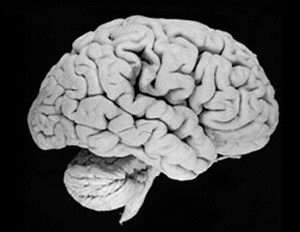
May 12, 2009 Modern human brain

Modern human brain. Image source: Univ. of Wisconsin-Madison Brain Collection.

Push-ups, crunches, gyms, personal trainers -- people have many strategies for building bigger muscles and stronger bones. But what can one do to build a bigger brain? Meditate.

That's the finding from a group of researchers at UCLA who used high-resolution magnetic resonance imaging (MRI) to scan the brains of people who meditate. In a study published in the journal NeuroImage and currently available online (by subscription), the researchers report that certain regions in the brains of long-term meditators were larger than in a similar control group.

Specifically, meditators showed significantly larger volumes of the and areas within the orbito-frontal cortex, the thalamus and the inferior temporal gyrus — all regions known for regulating emotions.

"We know that people who consistently meditate have a singular ability to cultivate positive emotions, retain emotional stability and engage in mindful behavior," said Eileen Luders, lead author and a postdoctoral research fellow at the UCLA Laboratory of Neuro Imaging. "The observed differences in anatomy might give us a clue why meditators have these exceptional abilities."

Research has confirmed the beneficial aspects of . In addition to having better focus and control over their emotions, many people who meditate regularly have reduced levels of and bolstered immune systems. But less is known about the link between meditation and brain structure.

In the study, Luders and her colleagues examined 44 people — 22 control subjects and 22 who had practiced various forms of meditation, including Zazen, Samatha and Vipassana, among others. The amount of time they had practiced ranged from five to 46 years, with an average of 24 years.

More than half of all the meditators said that deep concentration was an essential part of their practice, and most meditated between 10 and 90 minutes every day.

The researchers used a high-resolution, three-dimensional form of MRI and two different approaches to measure differences in brain structure. One approach automatically divides the brain into several regions of interest, allowing researchers to compare the size of certain brain structures. The other segments the brain into different tissue types, allowing researchers to compare the amount of within specific regions of the brain.

The researchers found significantly larger cerebral measurements in meditators compared with controls, including larger volumes of the right hippocampus and increased gray matter in the right orbito-frontal cortex, the right thalamus and the left inferior temporal lobe. There were no regions where controls had significantly larger volumes or more gray matter than meditators.

Because these areas of the brain are closely linked to emotion, Luders said, "these might be the neuronal underpinnings that give meditators' the outstanding ability to regulate their emotions and allow for well-adjusted responses to whatever life throws their way."

What's not known, she said, and will require further study, are what the specific correlates are on a microscopic level — that is, whether it's an increased number of neurons, the larger size of the neurons or a particular "wiring" pattern meditators may develop that other people don't.

Because this was not a longitudinal study — which would have tracked meditators from the time they began meditating onward — it's possible that the meditators already had more regional gray matter and volume in specific areas; that may have attracted them to meditation in the first place, Luders said.

However, she also noted that numerous previous studies have pointed to the brain's remarkable plasticity and how environmental enrichment has been shown to change .

Source: University of California - Los Angeles


print this article email this article download pdf blog this article bookmark this article     Stumble it Digg this share on Facebook retweet share on Reddit add to delicious
Rate this story - 4.5 /5 (33 votes)

Rank Filter

Move the slider to adjust rank threshold, so that you can hide some of the comments.


Display comments: newest first

  • John_balls - May 12, 2009
    • Rank: not rated yet
    Sweet, I was just considering doing transcendental meditation.
  • Adam_Z - May 12, 2009
    • Rank: 2 / 5 (1)
    Couldn't this very well just be that more intelligent, higher brain activity people are the ones who tend to meditate rather the meditation causing the increased right brain activity and gray matter?
  • Scire - May 12, 2009
    • Rank: not rated yet
    @Adam: This was my first thought also.

    I would be very interested in related research; i.e. Why meditation helps, what kind of meditation is most effective.
  • Mombo_Dogface - May 12, 2009
    • Rank: 5 / 5 (2)
    Hey Adam 7,
    From the article above.

    "it's possible that the meditators already had more regional gray matter and volume in specific areas; that may have attracted them to meditation in the first place"

    Just saying...
  • Mauricio - May 12, 2009
    • Rank: not rated yet
    When people meditate, they report qualitative changes in psychological processes. That insinuates that might be changes at cellular level. Besides, meditation is difficult, most forms of meditation are an attention exercise i.e., people have to learn to focus.

    The report is good, but is old news, this has been known for a while. But good anyways.
  • bredmond - May 12, 2009
    • Rank: 5 / 5 (3)
    I hope this is continues and more research is done into meditation. I would like to learn meditation without going to either religious centers or questionable new age camps. It is hard to really find places to learn meditation which seem neutral of other issues.
  • Arikin - May 12, 2009
    • Rank: 2.5 / 5 (2)
    Like the old saying goes use it or lose it. Or in this case be a buff mental dude.

    bredmond,
    Meditation isn't really related to religion. But yes many religious people take it up for self control and peace. Just do a search for: meditation non-religious
  • searcher - May 13, 2009
    • Rank: 3 / 5 (1)
    An exciting example of a prime role of consciousness in its relations with matter. Maybe, somewhen we can say "With a power of soul everything is possible".
  • chaman - May 13, 2009
    • Rank: not rated yet
    More on this subject here:
    http://www.altern.../108204/
  • superhuman - May 13, 2009
    • Rank: not rated yet
    Specifically, meditators showed significantly larger volumes of the hippocampus and areas within the orbito-frontal cortex, the thalamus and the inferior temporal gyrus %u2014 all regions known for regulating emotions.


    The interesting question is where does this extra volume come from.
  • Stanley - May 13, 2009
    • Rank: not rated yet
    may be lost less..
  • chefhef - May 16, 2009
    • Rank: not rated yet
    The mind as it's nature, thinks. And it does this constantly -just start meditating and see how successful you are for the first week, lol... When the mind has the ability to relax, it regenerates. Memory increases, and so too do motor skills. I have been meditating for years, and have noticed that my memory both short-term and long-term have increased. As well meditation keeps me young because I have very little reactionary emotional baggage. Always being in the present moment allows one to adapt more readily to new situations, and keeps one young at heart.
  • GrayMouser - May 16, 2009
    • Rank: 1 / 5 (1)
    What did they use for a double-blind?

May 12, 2009 all stories

Comments: 13

4.5 /5 (33 votes)
  • Stumble this up

  • Digg this

  • share this

  • hide
  • Related Stories

  • Meditation found to increase brain size
    created Jan 27, 2006 | popularity not rated yet | comments 0
  • Study finds Zen meditation alleviates pain
    created Feb 03, 2009 | popularity not rated yet | comments 0
  • Brain scans show meditation changes minds, increases attention
    created Jun 27, 2007 | popularity not rated yet | comments 0
  • Zen training speeds the mind's return after distraction, brain scans reveal
    created Sep 03, 2008 | popularity not rated yet | comments 0
  • Lithium Builds Gray Matter in Bipolar Brains, Study Shows
    created Apr 09, 2007 | popularity not rated yet | comments 0


  • hide
  • Relevant PhysicsForums posts

  • Improving the brain through chemistry
    created 1hour ago
  • HH Equation to calculate [HCO3-]
    created 7 hours ago
  • Sleep / REM Sleep and homeostasis
    created 18 hours ago
  • The Biceps Reflex
    created Nov 05, 2009
  • Consequenses of striking a Vein and an artery?
    created Nov 05, 2009
  • computing with real neurons
    created Nov 05, 2009
  • More from Physics Forums - Medical Sciences

Other News

Decision day for health care in the House (AP)

Decision day for health care in the House

Medicine & Health / Health

created 14 hours ago | popularity not rated yet | comments 0

(AP) -- President Barack Obama is trying to close the deal in the House on his health care overhaul, facing a make-or-break vote that's certain to be seen as a test of his presidency.


Island village hit by suspected swine flu (AP)

Island village hit by suspected swine flu

Medicine & Health / Diseases

created 14 hours ago | popularity 5 / 5 (1) | comments 1

(AP) -- Suspected swine flu is sweeping a traditional Eskimo whaling village on a remote Alaska island - prompting an urgent medical mission to deliver help.


Higher carotid arterial stenting rates associated with poorer clinical outcomes

Medicine & Health / Other

created 15 hours ago | popularity not rated yet | comments 0

Among eligible Medicare beneficiaries, increased use of carotid arterial stenting (CAS) procedures to treat carotid stenosis--the narrowing of the carotid artery--is associated with higher rates of mortality and adverse clinical ...


Chocolate

Chocolate rich in flavanols may protect the skin from UV

Medicine & Health / Health

created Nov 06, 2009 | popularity 5 / 5 (8) | comments 3

(PhysOrg.com) -- A new study has discovered for the first time that dark chocolate rich in flavanols may provide significant protection from the harmful effects of ultraviolet light.


Turn On, Tune In, Develop?

Turn On, Tune In, Develop? Researchers Examine How Brain Benefits From Musical Training

Medicine & Health / Neuroscience

created Nov 06, 2009 | popularity 5 / 5 (8) | comments 4

For most people music is an enjoyable, although momentary, form of entertainment. But for those who seriously practiced a musical instrument when they were young, perhaps when they played in a school orchestra ...