Nursing homes save millions using care improvement program, researcher finds
May 13, 2009
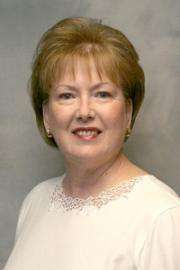
This is Dr. Marilyn Rantz, professor and Helen E. Nahm Chair in the University of Missouri Sinclair School of Nursing. Credit: University of Missouri Sinclair School of Nursing
Aging adults living in nursing homes and relying on the care of others are often susceptible to a long list of medical problems. These problems are debilitating for the residents and cost facilities millions of dollars. In a new study, a University of Missouri researcher found that long-term care facilities in Missouri saved more than $6 million in the past three years after implementing a quality care improvement program. Savings for the facilities were more than 10 times the program costs.
Marilyn Rantz, professor in the MU Sinclair School of Nursing completed a three-year analysis of the Quality Improvement Program of Missouri (QIPMO) and found significant improvements in overall care quality of residents in participating facilities. Last year, a total of 990 residents avoided developing clinical problems, including pressure ulcers, depression symptoms and weight loss, resulting in a total savings of $3.7 million statewide for facilities and health care providers in the state.
According to the U.S. Department of Health and Human Services, the primary goal of quality improvement plans is to improve nursing home care practices. In Missouri, QIPMO is a cooperative service of the Sinclair School of Nursing and the Missouri Department of Health and Senior Services; it was created to pair facilities with gerontological nurse experts. The nurses perform on-site visits to offer technical assistance, care-planning help and clinical consultations. One of the nurses' primary functions is to identify "best practices" for care procedures and make such information available throughout the state.
"Quality improvement is cost effective for everyone involved," Rantz said. "Focusing efforts to improve quality of care not only helps to improve that care and the positive outcomes for people, but it also saves the industry and facilities money."
In the study, Rantz found that the cost savings for each year exceeded the total program cost by more than $1 million. Statewide trends among residents included improvements in pain, fall reduction and pressure ulcer reduction, and fewer tube feedings and restraint reduction.
QIPMO is funded through Missouri's Nursing Facility Quality of Care Fund, which is generated from care facilities paying taxes according to the number of beds in their facilities. The cost per facility to use the program was less than $3 per bed.
"The impact on improving the quality of care by expert gerontological nurses consulting in nursing homes is significant in addition to the cost savings for the facilities and health care system in general," Rantz said. "The role of these nurses should be embraced by state agencies, nursing home providers and consumers as an ongoing strategy to continuously improve the quality of nursing home care."
The program works with a range of facilities in the state, including those that already embrace quality improvement and those that need help with care issues. Throughout 2007-08, QIPMO nurses made 855 contacts with 246 different facilities in the state, and they made 417 site visits in 227 nursing facilities. Results showed that facilities who participated did improve, and costs of care problems were reduced.
"A criticism of QIPMO services in the past was that we might be working only with the best nursing facilities or places that wanted to improve," Rantz said. "But these three years, we focused on facilities identified as at risk for problems, not just ones that volunteered. In all instances, when we compared those using the service to those not using the service, we saw improvements."
More information: The study, "Helping Nursing Homes 'At risk' for Quality Problems: A Statewide Evaluation," was co-authored by several MU researchers and will be published in the July/August 2009 issue of Geriatric Nursing. For more information about QIPMO statistics, visit: http://www.nursing … g/stats.html .
-
Aged care workers to leave industry en masse due to stress, warns study
Nov 27, 2008 |
not rated yet |
0
-
Health-monitoring technology helps seniors live at home longer
Jan 06, 2009 |
not rated yet |
0
-
Hispanics appear to face poorer quality nursing home care
Apr 10, 2009 |
not rated yet |
0
-
Nursing homes a popular option in Taiwan
Jul 24, 2008 |
not rated yet |
0
-
Private equity companies purchase nursing homes, but care does not suffer
Sep 10, 2008 |
not rated yet |
0
-
Engineers build first sub-10-nm carbon nanotube transistor
Feb 01, 2012 |
4.9 / 5 (33) |
30
-
Something old, something new: Evolution and the structural divergence of duplicate genes
Jan 31, 2012 |
4.6 / 5 (7) |
1
-
The hidden nanoworld of ice crystals: Revealing the dynamic behavior of quasi-liquid layers
Jan 30, 2012 |
5 / 5 (5) |
1
-
Stock market network reveals investor clustering
Jan 27, 2012 |
3.9 / 5 (23) |
8
-
Of microchemistry and molecules: Electronic microfluidic device synthesizes biocompatible probes
Jan 26, 2012 |
5 / 5 (2) |
0
-
Classical and Quantum Mechanics via Lie algebras
Apr 15, 2011
- More from Physics Forums - Independent Research
More news stories
Tenofovir, leading HIV medication, linked with risk of kidney damage
(Medical Xpress) -- Tenofovir, one of the most effective and commonly prescribed antiretroviral medications for HIV/AIDS, is associated with a significant risk of kidney damage and chronic kidney disease that increases over ...
Medicine & Health / Medications
43 minutes ago |
not rated yet |
0
|
New tumor suppressor gene identified
A recent study published in Clinical Cancer Research suggests that the protein hVps37A suppresses tumor growth in ovarian cancer. The work, which was funded by the Austrian Science Fund FWF, shows, for th ...
13 minutes ago |
not rated yet |
0
Don't ignore kids' snores
(Medical Xpress) -- Your ears arent playing tricks on you that is the sound of snoring you hear from the bedroom of your preschooler. Snoring is common in children, but in some cases it can be a symptom of a ...
1 hour ago |
5 / 5 (1) |
0
WHO calls for stepped-up fight against leprosy
The World Health Organization called Monday for greater efforts to fight leprosy, warning the disfiguring disease was defying efforts to wipe it out across many countries in the Asia-Pacific region.
1 hour ago |
not rated yet |
0
Social psychologist: Lust makes you smarter and evidence that seven deadly sins are good for you
(Medical Xpress) -- Good news for lovers on Valentine’s Day - the seven deadly sins, including Lust, are good for you. University of Melbourne social psychologist Dr Simon Laham uses modern research to make a compelling ...
Medicine & Health / Psychology & Psychiatry
2 hours ago |
4.5 / 5 (2) |
0
Researchers make better heat sensor based on butterfly wings
(PhysOrg.com) -- Scientists have long known that butterfly wings produce their iridescent colors by bouncing light around and between tiny ridges in structures made of chitin. More recently they’ve discovered ...
Manipulating genes with hidden TALENs
(PhysOrg.com) -- A better understanding of gene function in model plant and animal systems could be used to develop useful traits in livestock and crop plants, and might someday lead to developments in stem ...
Alien matter in the solar system: A galactic mismatch
This just in: The Solar System is different from the space just outside it.
Transforming galaxies
(PhysOrg.com) -- Many of the Universe's galaxies are like our own, displaying beautiful spiral arms wrapping around a bright nucleus. Examples in this stunning image, taken with the Wide Field Camera 3 on ...
'Smart' microcapsules in a single step
(PhysOrg.com) -- A new, single-step method of fabricating microcapsules, which have potential commercial applications in industries including medicine, agriculture and diagnostics, has been developed by researchers ...
China's pollution puts a dent in its economy
Although China has made substantial progress in cleaning up its air pollution,a new MIT study shows that the economic impact from ozone and particulates in its air has increased dramatically. ...