Scientists discover area of brain that makes a 'people person'
May 20, 2009 Brain

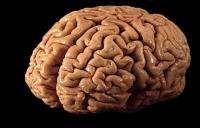
Cambridge University researchers have discovered that whether someone is a 'people-person' may depend on the structure of their brain: the greater the concentration of brain tissue in certain parts of the brain, the more likely they are to be a warm, sentimental person.

Why is it that some of us really enjoy the company of others while some people are detached and independent? In an effort to explore these questions, Maël Lebreton and colleagues from the Cambridge Department of Psychiatry, in collaboration with Oulu University, Finland, examined the relationship between personality and brain structure in 41 male volunteers.

The volunteers underwent a brain scan using (MRI). They also completed a questionnaire that asked them to rate themselves on items such as 'I make a warm personal connection with most people', or 'I like to please other people as much as I can'. The answers to the questionnaire provide an overall measure of emotional warmth and sociability called social reward dependence.

The researchers then analysed the relationship between social reward dependence and the concentration of grey matter (brain-cell containing tissue) in different brain regions. They found that the greater the concentration of tissue in the orbitofrontal cortex (the outer strip of the brain just above the eyes), and in the ventral striatum (a deep structure in the centre of the brain), the higher they tended to score on the social reward dependence measure. The research is published in the .

Dr Graham Murray, who is funded by the Medical Research Council and who led the research, said: "Sociability and emotional warmth are very complex features of our personality. This research helps us understand at a biological level why people differ in the degrees to which we express those traits." But he cautioned, "As this research is only correlational and cross-sectional, it cannot prove that brain structure determines personality. It could even be that your personality, through experience, helps in part to determine your ."

Interestingly, the orbitofrontal cortex and ventral striatum have previously been shown to be important for the brain's processing of much simpler rewards like sweet tastes or sexual stimuli.

Dr Murray explained: "It's interesting that the degree to which we find social interaction rewarding relates to the structure of our brains in regions that are important for very simple biological drives such as food, sweet liquids and sex. Perhaps this gives us a clue to how complex features like sentimentality and affection evolved from structures that in lower animals originally were only important for basic biological survival processes."

The research could also lead to new insights into psychiatric disorders where difficulties in social interaction are prominent, such as autism or schizophrenia.

"Patients with certain psychiatric conditions often experience difficulties in feeling emotional closeness, and this can have a big impact on their life. It could be that the cause of these difficulties is at least partly due to structural features of those disorders," said Dr Murray.

Source: University of Cambridge (news : web)


print this article email this article download pdf blog this article bookmark this article     Stumble it Digg this share on Facebook retweet share on Reddit add to delicious
Rate this story - 4.2 /5 (12 votes)

Rank Filter

Move the slider to adjust rank threshold, so that you can hide some of the comments.


Display comments: newest first

  • Au-Pu - May 20, 2009
    • Rank: 4.2 / 5 (5)
    I have only one problem with this.
    You have based your assessment of the volunteers personality upon their interpretation of themselves.
    Unless they were all unusually objective individuals this form of assessment has a myriad of problems.
    Some will try to be what they think the assessors are looking for.
    Even if the assessors say they want only their real self some will believe they are smarter and know what the assessors really want.
    Some will project what they would like people to think of them'
    Some will describe what they think they are even if they aren't
    Some will describe themselves as they think they are even though all who know them would disagree.

    This method of assessment is far too subjective

    Which means that causes or relationships may be incorrect despite the very best endeavours of the researchers

    It is however a very interesting line of research and hopefully one that will be continued.

    How you accurately assess personality is the question.
    Gangsters are sometimes claimed to be loving gentle carers of their family
    Some highly lauded members of our societies are often claimed by their family to be sadistic and tyranical.
    Where does the truth lie?
    With such contradictions how would you align MRI results? With the family image or the public image or with an entirely different self image?

    Whilst the research project is very interesting and could prove to be of enormous value in several areas I do not envy the researchers problem of determining the true personality of the volunteers.
  • RaMoNaD - May 20, 2009
    • Rank: 3 / 5 (2)
    Agreed!!!
  • gmurphy - May 20, 2009
    • Rank: 4 / 5 (2)
    au-pu, variability in self assessment notwithstanding, the observation of distinct spatial differences between "warm" vs "detached" individuals brains indicates that there is some merit to these self assessments.
  • Myria83 - May 20, 2009
    • Rank: 3 / 5 (2)
    au-pu, variability in self assessment notwithstanding, the observation of distinct spatial differences between "warm" vs "detached" individuals brains indicates that there is some merit to these self assessments.


    Yes, but the research actually had to prove the connection, and it needed some kind of well-founded and objective measure to begin with.
  • pcatiprodotnet - May 20, 2009
    • Rank: 1 / 5 (1)
    Perhaps this could a first step toward physical proof of psychological models, such as in MBTI: The "people people" were likely Feelers and/or Extroverts ...
    http://www.person....html#TF
    In MBTI you are born with 1 of the 16 different types of brain configurations:
    http://www.person...nfo.html
    http://personalit...its.html
  • clunis - May 21, 2009
    • Rank: 1 / 5 (1)
    Sure, Myria83, but all this study has shown is a relationship between how people complete these survey instruments and the structure of their brains. It's going to far to extrapolate a relationship between the instruments and actual social interactions. It would be much better to get some objective measure like the connectedness or betweenness of the participating individual in their social network and compare differences in those metrics to measurable differences in brain structure.

May 20, 2009 all stories

Comments: 6

4.2 /5 (12 votes)
  • Stumble this up

  • Digg this

  • share this

  • hide
  • Related Stories

  • 'Wiring' in the brain influences personality
    created Nov 23, 2008 | popularity not rated yet | comments 0
  • How we remember each other
    created Apr 03, 2007 | popularity not rated yet | comments 0
  • Hallucinations in schizophrenia linked to brain area that processes voices
    created Jul 31, 2007 | popularity not rated yet | comments 0
  • Nature or nurture -- Are you who your brain chemistry says you are?
    created Aug 12, 2008 | popularity not rated yet | comments 0
  • Context and personality key in understanding responses to emotional facial expressions
    created Aug 06, 2008 | popularity not rated yet | comments 0


  • hide
  • Relevant PhysicsForums posts

  • 23 Years in a Vegetative State....or not?
    created Nov 25, 2009
  • Has the H1N1 vaccine been scientifically proven to work?
    created Nov 24, 2009
  • nesfatin
    created Nov 22, 2009
  • Obsessive Compulsive Disorder
    created Nov 20, 2009
  • More from Physics Forums - Medical Sciences

Other News

Implant-based cancer vaccine is first to eliminate tumors in mice

Implant-based cancer vaccine is first to eliminate tumors in mice

Medicine & Health / Cancer

created 13 hours ago | popularity 4.9 / 5 (19) | comments 4

(PhysOrg.com) -- A cancer vaccine carried into the body on a carefully engineered, fingernail-sized implant is the first to successfully eliminate tumors in mammals, scientists report this week in the journal ...


Brain's endocannabinoid signaling pathway kept in check by two enzymes

Medicine & Health / Research

created 11 hours ago | popularity 5 / 5 (2) | comments 0

(PhysOrg.com) -- A research team has shown that blocking the degradation of two naturally occurring cannabinoids in the endocannabinoid signaling pathway of the brain produces marijuana-like behavioral effects in mice, according ...


Scale of justice

fMRI scans used in murder trial sentencing

Medicine & Health / Other

created 21 hours ago | popularity 1 / 5 (1) | comments 4

(PhysOrg.com) -- Functional Magnetic Resonance Imaging (fMRI) scans have been used, possibly for the first time, in the sentencing phase of a murder trial in Chicago in the US.


Scientists find emotion-like behaviors, regulated by dopamine, in fruit flies

Medicine & Health / Neuroscience

created 15 hours ago | popularity 5 / 5 (3) | comments 0

Scientists at the California Institute of Technology have uncovered evidence of a primitive emotion-like behavior in the fruit fly, Drosophila melanogaster. Their findings, which may be relevant to the relationship betwee ...


Study sheds light on brain's fear processing center

Medicine & Health / Research

created 15 hours ago | popularity 5 / 5 (3) | comments 1

Breathing carbon dioxide can trigger panic attacks, but the biological reason for this effect has not been understood. A new study by University of Iowa researchers shows that carbon dioxide increases brain acidity, which ...