Researchers reveal six new genome sequences and fundamental insights to the Candida fungus family
May 25, 2009 Researchers reveal six new genome sequences and fundamental insights to the Candida fungus family

Enlarge

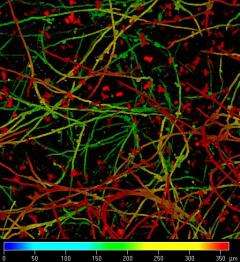
Candida species growing as biofilms on catheter material. Image: UCD

An international research collaboration coordinated by UCD (University College Dublin) researchers and involving scientists at 21 institutes including the genome sequencing centres in the Wellcome Trust Sanger Institute, UK and the Broad Institute at MIT and Harvard, USA have defined six new genome sequences in the Candida fungus family and identified genetic differences in species that cause disease.

The research, published yesterday in Nature, describes how Candida strains have evolved and ensured their survival by adapting their to respond to changes in their environment. Candida species are the most common cause of opportunistic fungal infection worldwide.

The incidence of Candida parapsilosis in particular poses the greatest threat to transplant patients and as it forms a film that coats the inside of medical devices such as implants, catheters or feeding tubes. The is drug resistant and the only effective treatment involves the removal of the medical device. Prior to this work, very little was known about this species.
 
The UCD research team led by Professor Geraldine Butler from UCD Conway Institute & School of Biomolecular & Biomedical Science looked at key components of mating and cell division in Candida species, shedding new light on how the fungi reproduce and survive. 

Professor Butler, scientific coordinator on this project, began working to identify the sequence of genes of C. parapsilosis in 2003 through funding from Science Foundation Ireland. She said, “We started by sequencing small parts of the C. parapsilosis genome, which led to our collaboration with the Sanger Institute to sequence the entire genome, and finally to combining this genome with others sequenced by the Broad Institute”

Commenting on their findings, Professor Butler says, “Candida species were originally believed to be incapable of mating, and so may have difficulties in adapting to new environments or new hosts. As a result of our analysis, we now know a great deal more about the evolution of mating, and how some species recombine their genes. Interestingly, C. parapsilosis is probably the only species that cannot mate”

By comparing the genetic sequences in disease and non-disease causing fungi, the team found that in general, the disease causing  Candida species have many more copies of genes involved in adhesion, and in the cell wall. The stickiness of the proteins in the cell wall makes it easier for the fungi to adhere to the human host. Further research on the regulation of these proteins may lead to developing treatment methods for infections caused by fungi in the future.

More information: ‘Evolution of pathogenicity and sexual reproduction in eight Candida genomes’, http://dx.doi.org/10.1038/nature08064

Provided by University College Dublin


print this article email this article download pdf blog this article bookmark this article     Stumble it Digg this share on Facebook retweet share on Reddit add to delicious
Rate this story - 4.5 /5 (2 votes)


May 25, 2009 all stories

Comments: 0

4.5 /5 (2 votes)
  • Stumble this up

  • Digg this

  • share this

  • hide
  • Related Stories

  • Researchers hone in on new strategy to treat common infection
    created Oct 27, 2008 | popularity not rated yet | comments 0
  • Study identifies mechanism underlying multidrug resistance in fungi
    created Apr 02, 2008 | popularity not rated yet | comments 0
  • Evolution of the Sexes: What a Fungus Can Tell Us
    created Jan 09, 2008 | popularity not rated yet | comments 0
  • Sex life of killer fungus finally revealed
    created Dec 01, 2008 | popularity not rated yet | comments 0
  • Yeast missing sex genes undergo unexpected sexual reproduction
    created May 24, 2009 | popularity not rated yet | comments 0


  • hide
  • Relevant PhysicsForums posts

Other News

The bizarre lives of bone-eating worms

Biology / Plants & Animals

created 1hour ago | popularity not rated yet | comments 0

The females of the recently discovered Osedax marine worms feast on submerged bones via a complex relationship with symbiotic bacteria, and they are turning out to be far more diverse and widespread than scientists expected. ...


Iowa State University researcher discovers key to vital DNA, protein interaction

Researchers discover key to vital DNA, protein interaction

Biology / Other

created 1hour ago | popularity not rated yet | comments 0

(PhysOrg.com) -- A researcher at Iowa State University has discovered how a group of proteins from plant pathogenic bacteria interact with DNA in the plant cell, opening up the possibility for what the scientist ...


Scientists successfully reprogram blood cells

Biology / Cell & Microbiology

created 5 hours ago | popularity 5 / 5 (1) | comments 0

Researchers have transplanted genetically modified hematopoietic stem cells into mice so that their developing red blood cells produce a critical lysosomal enzyme -preventing or reducing organ and central nervous system damage ...


New discovery allows scientists for the first time to experimentally annotate genomes

New discovery allows scientists for the first time to experimentally annotate genomes

Biology / Biotechnology

created 4 hours ago | popularity 5 / 5 (3) | comments 0

Over the last 20 years, the sequencing of the human genome, along with related organisms, has represented one of the largest scientific endeavors in the history of mankind. The information collected from genome ...


Study shows that some malignant tumors can be shut down after all

Biology / Cell & Microbiology

created 9 hours ago | popularity 5 / 5 (3) | comments 1

Oncologists have had their hands tied because more than half of all human cancers have mutations that disable a protein called p53. As a critical anti-cancer watchdog, p53 masterminds several cancer-fighting operations within ...