All the carbon counts
May 28, 2009 All the carbon counts

Enlarge

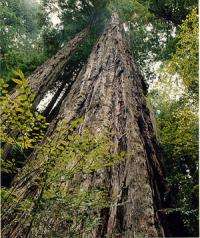
Policies that turn forests into valuable carbon storage units would likely preserve forests and lower costs of cutting atmospheric carbon dioxide.

Cutting down forests for agriculture vents excess carbon dioxide into the air just as industrial activities and the burning of fossil fuels do. But whether policies to stabilize greenhouse gases in the atmosphere should include this terrestrial source of carbon dioxide is under debate. According to a new study this week in Science, failing to include land use changes in such policies could lead to massive deforestation and higher costs for limiting carbon emissions.

The results also suggest improved agricultural technology will be as important as new energy technologies in a carbon-limited future.

To understand the effects of economic forces from on terrestrial carbon and land use changes, researchers with the Joint Global Change Research Institute in College Park, Md., a collaboration between the Department of Energy's Pacific Northwest National Laboratory and the University of Maryland, used an integrated assessment model called MiniCAM to compare different scenarios. This computer model incorporates economics, energy, agriculture, land-use changes, emissions and concentrations of in order to understand the way that human decisions interact with natural processes that control climate.

For this study, the researchers set the highest concentration that could reach. Then they compared two ways to stay within that limit: in one, they taxed terrestrial and industrial and fossil fuel emissions all at the same rate. In the other, they only taxed emissions from industry and .

Ignoring terrestrial carbon led to nearly complete loss of unmanaged forests by 2100, largely as a result of massive expansions of bioenergy crops -- those planted to reduce the use of fossil fuels -- replacing forests. However, placing a value on terrestrial carbon emissions led to increased forest cover, while bioenergy still expanded considerably compared to today.

"When society tries to limit carbon dioxide concentrations, if terrestrial carbon emissions aren't valued but fossil fuel and industrial emissions are, economic forces could create very strong pressures to deforest," said PNNL scientist Marshall Wise, the study leader.

In addition, the cost to reduce global emissions in a world that valued terrestrial, fossil fuel, and industrial sources dropped to half that of the world in which only fossil fuel and industrial entities paid to emit carbon. This suggests that storing carbon in forests, agricultural areas, and other ecosystems is an important and cost-effective part of a bigger carbon dioxide emissions control strategy that includes dramatic changes to the global energy system.

This study also shows that continual improvement in agricultural crop productivity for crops like corn, wheat, barley, and rice will be required to best make use of limited cropland. This suggests improvements to agriculture technology could be as important as improvements to energy technology in controlling .

"If society wants to stabilize carbon dioxide concentrations at low levels, then we can't ignore the two thousand billion tons that are out there in terrestrial systems," said PNNL economist James Edmonds at the JGCRI.

More information: M. Wise, K. Calvin, A. Thomson, L. Clarke, B. Bond-Lamberty, R. Sands, S. J. Smith, A. Janetos, J. Edmonds, Implications of Limiting CO2 Concentrations on Land Use and Energy, Science, May 29, 2009, DOI 10.1126/science.1168475 , http://www.sciencemag.org/

Source: Pacific Northwest National Laboratory (news : web)


print this article email this article download pdf blog this article bookmark this article     Stumble it Digg this share on Facebook retweet share on Reddit add to delicious
Rate this story - 2 /5 (4 votes)

Rank Filter

Move the slider to adjust rank threshold, so that you can hide some of the comments.


Display comments: newest first

  • GrayMouser - May 28, 2009
    • Rank: 5 / 5 (2)
    On the other hand, cutting down forests for homes and furniture is good because it prevents the trees from rotting and sending CO2 back in to the atmosphere...
  • jama - May 29, 2009
    • Rank: 1 / 5 (1)
    Be lucky if 30% of a tree ends up being stored in that way. Have you seen the waste from a typical tree havesting operation. Slash, sawdust,fuel for the machinery. I doubt the enviroment wins when a tree is cut down.
  • Egnite - May 29, 2009
    • Rank: 5 / 5 (1)
    Eventually the gvmnt will legalize weed and with every household having 5 plants thriving on co2, we'll have a shortage of the stuff. All it'll take is one sensible change to the law... ^^
  • Velanarris - May 29, 2009
    • Rank: not rated yet
    Be lucky if 30% of a tree ends up being stored in that way. Have you seen the waste from a typical tree havesting operation. Slash, sawdust,fuel for the machinery. I doubt the enviroment wins when a tree is cut down.


    Does it really matter?

    You take a forest, find the average age of the trees within in years, for example say 30 years.


    Divide that forest into 30 equally sized plots. Year 1 cut down plot 1. Year two replant plot 1 cut down plot 2. Year 3 cut down plot 3 plant plot 2. By the time you cut down plot 30, plot 1 is now 29 years old and has the added benefit of soaking far more CO2 than the existing adult trees would have soaked for that period.

    Rinse and repeat. Where are my financial handouts for sequestering CO2 and getting Americans back to work?
  • omatumr - May 31, 2009
    • Rank: 2.3 / 5 (3)
    WHAT ROT!

    The Joint Global Change Research Institute, the DOE's Pacific Northwest National Laboratory and the University of Maryland, will use an assessment model that incorporates economics, energy, agriculture, land-use changes, emissions and concentrations of greenhouse gases to understand the way that human decisions interact with natural processes that control climate.

    What rot! The facts are these:

    1. The Sun controls our climate.

    2. DOE wastes our tax funds on computer model studies to prove otherwise.

    With kind regards,
    Oliver K. Mamnuel

May 28, 2009 all stories

Comments: 5

2 /5 (4 votes)
  • Stumble this up

  • Digg this

  • share this

  • hide
  • Related Stories

  • First-ever 'State of the Carbon Cycle Report' finds troubling imbalance
    created Nov 14, 2007 | popularity not rated yet | comments 0
  • Agricultural soil erosion is not adding to global warming
    created Oct 26, 2007 | popularity not rated yet | comments 0
  • Emissions rising faster this decade than last
    created Oct 02, 2008 | popularity not rated yet | comments 0
  • Emissions rising faster this decade than last
    created Sep 26, 2008 | popularity not rated yet | comments 0
  • New global analysis shows 400 percent increase in carbon dioxide emissions growth
    created Nov 10, 2006 | popularity not rated yet | comments 0


  • hide
  • Relevant PhysicsForums posts

  • cycles
    created 13 hours ago
  • The Origin of the term 'fossil' fuels
    created Nov 05, 2009
  • co2
    created Nov 03, 2009
  • Early Earths Sulfidic Ocean Conditions
    created Oct 30, 2009
  • More from Physics Forums - Earth

Other News

Deep creep means milder, more frequent earthquakes along Southern California's San Jacinto fault

Deep creep means milder, more frequent earthquakes along Southern California's San Jacinto fault

Space & Earth / Earth Sciences

created 12 hours ago | popularity 4.7 / 5 (3) | comments 0

With an average of four mini-earthquakes per day, Southern California's San Jacinto fault constantly adjusts to make it a less likely candidate for a major earthquake than its quiet neighbor to the east, the ...


Success in 'space elevator' competition (AP)

Success in 'space elevator' competition (Update 3)

Space & Earth / Space Exploration

created Nov 05, 2009 | popularity 4.3 / 5 (33) | comments 50

(AP) -- A robot powered by a ground-based laser beam climbed a long cable dangling from a helicopter on Wednesday to qualify for prize money in a $2 million competition to test the potential reality of the ...


In a Galaxy Far, Far Away...

In a Galaxy Far, Far Away...

Space & Earth / Astronomy

created Nov 06, 2009 | popularity 4.8 / 5 (5) | comments 16

(PhysOrg.com) -- Astronomers have published the discovery of the farthest known object in the cosmos: a star that exploded when the universe was only 630 million years old -- only 4.6% of its current age. ...


'Dropouts' pinpoint earliest galaxies

'Dropouts' pinpoint earliest galaxies

Space & Earth / Astronomy

created Nov 06, 2009 | popularity 4.2 / 5 (10) | comments 13

Astronomers, conducting the broadest survey to date of galaxies from about 800 million years after the Big Bang, have found 22 early galaxies and confirmed the age of one by its characteristic hydrogen signature ...


Space hotel taking bookings for 2012 opening

Space hotel taking bookings for 2012 opening

Space & Earth / Space Exploration

created Nov 05, 2009 | popularity 4.4 / 5 (21) | comments 11

(PhysOrg.com) -- The first orbiting space hotel is on track to open for its first customers in 2012, but hurry, as bookings are filling fast.