How many scientists fabricate and falsify research?
May 29, 2009
It's a long-standing and crucial question that, as yet, remains unanswered: just how common is scientific misconduct? In the online, open-access journal PLoS ONE, Daniele Fanelli of the University of Edinburgh reports the first meta-analysis of surveys questioning scientists about their misbehaviours. The results suggest that altering or making up data is more frequent than previously estimated and might be particularly high in medical research.
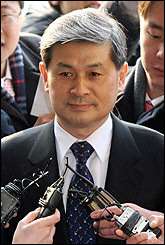
Recent scandals like Hwang Woo-Suk's fake stem-cell lines or Jon Sudbø's made-up cancer trials have dramatically demonstrated that fraudulent research is very easy to publish, even in the most prestigious journals. The media and many scientists tend to explain away these cases as pathological deviations of a few "bad apples." Common sense and increasing evidence, however, suggest that these could be just the tip of the iceberg, because fraud and other more subtle forms of misconduct might be relatively frequent. The actual numbers, however, are a matter of great controversy.
Estimates based on indirect data (for example, official retractions of scientific papers or random data audits) have produced largely discrepant results. Therefore, many researchers have asked scientists directly, with surveys conducted in different countries and disciplines. However, they have used different methods and asked different questions, so their results also appeared inconclusive.
To make these surveys comparable, the meta-analysis focused on behaviours that actually distort scientific knowledge (excluding data on plagiarism and other kinds of malpractice) and extracted the frequency of scientists who recalled having committed a particular behaviour at least once, or who knew a colleague who did.
On average, across the surveys, around 2% of scientists admitted they had "fabricated" (made up), "falsified" or "altered" data to "improve the outcome" at least once, and up to 34% admitted to other questionable research practices including "failing to present data that contradict one's own previous research" and "dropping observations or data points from analyses based on a gut feeling that they were inaccurate."
In surveys that asked about the behaviour of colleagues, 14% knew someone who had fabricated, falsified or altered data, and up to 72% knew someone who had committed other questionable research practices.
In both kinds of surveys, misconduct was reported most frequently by medical and pharmacological researchers. This suggests that either the latter are more open and honest in their answers, or that frauds and bias are more frequent in their fields. The latter interpretation would support growing fears that industrial sponsorship is severely distorting scientific evidence to promote commercial treatments and drugs.
As in all surveys asking sensitive questions, it is likely that some respondents did not reply honestly, especially when asked about their own behaviour. Therefore, a frequency of 2% is probably a conservative estimate, while it remains unclear how the figure of 14% should be interpreted.
More information: Fanelli D (2009) How Many Scientists Fabricate and Falsify Research? A Systematic Review and Meta-Analysis of Survey Data. PLoS ONE 4(5): e5738. doi:10.1371/journal.pone.0005738, http://dx.plos.org/10.1371/journal.pone.0005738
-
No stem-cell misconduct by Pa. researcher
Feb 10, 2006 |
not rated yet |
0
-
Scientists resolve to crack down on fraud
Dec 10, 2008 |
not rated yet |
0
-
Americans Love Competition - Is It Pushing Scientists Too Far
Apr 19, 2006 |
not rated yet |
0
-
Authors, journal editors respond to possible cases of plagiarism identified by UT Southwestern
Mar 05, 2009 |
not rated yet |
0
-
New guidelines will help detect and study counterfeit medicines
Mar 24, 2009 |
not rated yet |
0
-
Engineers build first sub-10-nm carbon nanotube transistor
Feb 01, 2012 |
5 / 5 (21) |
19
-
Something old, something new: Evolution and the structural divergence of duplicate genes
Jan 31, 2012 |
4.6 / 5 (7) |
1
-
The hidden nanoworld of ice crystals: Revealing the dynamic behavior of quasi-liquid layers
Jan 30, 2012 |
5 / 5 (2) |
1
-
Stock market network reveals investor clustering
Jan 27, 2012 |
4.1 / 5 (21) |
8
-
Of microchemistry and molecules: Electronic microfluidic device synthesizes biocompatible probes
Jan 26, 2012 |
not rated yet |
0
-
Best/Worst U.S. Presidents
Jan 31, 2012
-
The authencity of Joan of Arc
Jan 06, 2012
- More from Physics Forums - History & Humanities
More news stories
Unlike Patriots, NFL slow to embrace 'Moneyball'
(AP) -- It's advice that sounds like heresy on the gridiron: Go for it on fourth down. Try more onside kicks. Running backs don't matter much.
9 hours ago |
4.5 / 5 (2) |
0
Media portrayal of race in sports reveals biases in corporate world
The U.S. may have its first black president and the Fortune 500 its first black female chief executive, but African American CEOs account for a mere one percent of the chiefs of those 500 largest companies.
Other Sciences / Economics & Business
11 hours ago |
not rated yet |
0
Firms' own social networks better for business than Facebook
(PhysOrg.com) -- Using Facebook and Twitter may be good for a company's bottom line, but firms can rake in even bigger profits if they have their own virtual brand community, says a University of Michigan ...
Other Sciences / Economics & Business
15 hours ago |
1 / 5 (1) |
0
Marriage therapist says high-conflict couples have work to do before saying 'I do'
(PhysOrg.com) -- A Kansas State University marriage therapist has Valentine's Day advice for couples contemplating commitments and engagement rings: Mix romance with a generous portion of reality.
Other Sciences / Social Sciences
14 hours ago |
not rated yet |
0
Class size matters to those who struggle most
Research shows that class size does matter; and that it matters most for socio-economically disadvantaged learners, the very groups that the Government says it is most concerned about, says Massey University Professor of ...
Other Sciences / Social Sciences
15 hours ago |
5 / 5 (1) |
0
Amazon fungi found that eat polyurethane, even without oxygen
(PhysOrg.com) -- Until now polyurethane has been considered non-biodegradable, but a group of students from Yale University in the US has found fungi that will not only eat and digest it, they will do so even in the absence ...
Scientists chart high-precision map of Milky Way's magnetic fields
(PhysOrg.com) -- Scientists at the Naval Research Laboratory (NRL) are part of an international team that has pooled their radio observations into a database, producing the highest precision map to date of ...
Whole exome sequencing identifies cause of metabolic disease
Sequencing a patient's entire genome to discover the source of his or her disease is not routine yet. But geneticists are getting close.
Hearing metaphors activates brain regions involved in sensory experience
When a friend tells you she had a rough day, do you feel sandpaper under your fingers? The brain may be replaying sensory experiences to help understand common metaphors, new research suggests.
Renowned physicist invents microscope that can peer at living brain cells
(PhysOrg.com) -- Ever since scientists began studying the brain, theyve wanted to get a better look at what was going on. Researchers have poked and prodded and looked at dead cells under electron microscopes, ...
New kind of high-temperature photonic crystal could someday power everything from smartphones to spacecraft
A team of MIT researchers has developed a way of making a high-temperature version of a kind of materials called photonic crystals, using metals such as tungsten or tantalum. The new materials which ...
May 29, 2009
Rank: 4.6 / 5 (8)
What an absolute crock. In any field where you have to produce results to get money REGARDLESS OF THE SOURCE you have the potential for this kind of problem.
Are they saying that you don't have to produce good results to get government grants?? If so, I'd say THAT'S more troubling than fabricating data to get the money. People who automatically assume money goes through some magical fairy tale cleansing because it filters through some bureaucrat's hands are naive in the EXTREME. That the people who did this research would even suggest such puerile nonsense is both ironic and hysterical.
May 29, 2009
Rank: 4.6 / 5 (7)
In the commercial sector, I frequently see "scientists" grossly exagerating the probable promise of a new idea in need of investors. Often its a useless, impossible idea touted as the next best thing since sliced bread. Some have become multi-millionaires by doing it. This includes selling useless patents. My advice to investors: Don't just look at how rich the scientist is, look at how rich his past investors are.
I frequently see it happen to garner govt money, as well (SBIRs, grants, DOD, etc.).
Investors and taxpayers will never wake up, though, as long as their tummies are full, they are happy and optimistic.
May 29, 2009
Rank: 4.3 / 5 (3)
It is very sad and has led to distrust, rightfully so, of not only results but research initiatives. Incentives count unfortunately, currently the incentives are focused on political/market in too many sectors which should be free of these distortions, while ignoring the 1200 pound gorilla in the room.
May 29, 2009
Rank: 3.7 / 5 (9)
Recently the Steig paper on Antarctic "warming" has been demolished.
May 29, 2009
Rank: 3.3 / 5 (7)
I regret to say that to the statement that "fraud is rampant in all areas" of science that I am familiar with, including astronomy, astrophysics, solar physics , climatology, planetology, nuclear and particle physics.
Congress caused this development when it turned the responsibility for review of budgets and programs of NASA, NSF, DOE, etc to NAS (National Academy of Sciences) - a private, self-perpetuating group of once talented scientists that has evolved into a group of self-serving scientists that use their positions of power to perpetuate their own inflated egos.
Sorry to speak so bluntly about my experiences over the past 50 years, since I started researching the origin of the solar system in 1960.
With kind regards,
Oliver K. Manuel
http://myprofile....anuelo09
May 29, 2009
Rank: 3.9 / 5 (7)
May 29, 2009
Rank: 4.8 / 5 (5)
As a recent graduate, I know how hard it is to read through, in their entirety, sometimes more than a hundred references for a paper you want to submit... but it seems like researchers need to start budgeting more time for the paperwork.
May 29, 2009
Rank: 4 / 5 (6)
Apparently, we aren't worried that political agenda-driven research funding by government agencies and foundations might be generating falsified or misleading research results and reports.
What nonsense!
May 29, 2009
Rank: 4 / 5 (3)
That is particularly scary when you consider medical research. Jail them!
May 29, 2009
Rank: 3 / 5 (2)
May 29, 2009
Rank: 4.3 / 5 (6)
May 29, 2009
Rank: 3.7 / 5 (6)
May 30, 2009
Rank: 2.3 / 5 (6)
May 30, 2009
Rank: 3.8 / 5 (4)
History is a fine teacher, science has often been held hostage throughout the centuries to fuzzy academic philosophical ideologies, religious ideologies and political ideologies. Unfortunately, private/profit and govt/political interests have infiltrated even the directives of research more profoundly than ever in my lifetime. They fool only themselves; however, anyone with half-a-synapse understands the massive imbalances and delusions. Both paradigms are false so a new one must be created; the question is will this be enabled to. Will people be enabled to create, innovate, study without these interests to tie both hands behind their backs and put blinders over their eyes?
Intellectual evolution is now required.
May 30, 2009
Rank: 1 / 5 (2)
May 30, 2009
Rank: 4.2 / 5 (5)
I couldn't agree more, and I think the first step is realizing that there is a problem. I think this is happening today.
It seems that more and more people are becoming aware of these issues. I think they're also beginning to realize that despite their huge intellects and all the great things they've done for humanity that scientists are, after all, only human. The old "argument from authority" as a means of control and manipulation may be slowly coming to an end with respect to this issue. This at least is heartening and may begin to allow us to see a better way of organizing our resources for scientific purposes.
May 30, 2009
Rank: 1.5 / 5 (2)
Scientist today may not depend on good results with their lives; i've argued to Eric Drexler, Chris Pheonix, Mike Treder, and posted on their incrowd controlled messageboards that humanity cannot be bound up on one planet because irrationality will take over(I've pointed out mathematical science abstractions is creativity of ideas or structural forms; and, how, irrationalists and fear mongers essentially use vague ideas to smooth over their contorted ideas; and, they can't handle it . . .emotionally; i've e-mailed Eric Drexler twice over the last two years after years of trying Chris Phoenix . . . and his responce is 'no responce'! I guess he's decided against being a foreighted person! He just plays his incrowdy games behind the scene . . . hence being essentially nazy, gangster like). They've completelly ignored and who knows what else what I've said.
If science and humanity(humanity is the technologically dependent and hence scientifically dependent species) is to survive, it must be allowed to expand out into space getting away from our irrationalist past; out there, people will have to think clearly to survive and use nanotechnologies wisely.
May 31, 2009
Rank: 1.7 / 5 (6)
May 31, 2009
Rank: 2.6 / 5 (7)
On the other hand, this could have a huge impact on medical research. 2% could encompass all of the research on a particular drug, or on several drugs (so people would be taking something that has no beneficial effect, and probably many bad effects).
May 31, 2009
Rank: 4.6 / 5 (5)
Jun 01, 2009
Rank: 4.2 / 5 (5)
Global Warming is the other elephant in this discussion. Here again, we see statistics used a substitute for science, and as a result anyone with an agenda is contracting statisticians to create their preferred version of reality. And sure enough, should you happen to eavesdrop on any debate on global warming, and you won't hear the first thing about geology, astronomy or thermodynamics. All you'll hear is one set of statistical assumptions being argued against another. A joke.
And of course this is all above and beyond the old fashioned scientific misconduct where Ph.Ds steal patents from naieve graduate students. Though these new modes of misconduct are quickly gaining ground, this one has a long and illustruous history of soiling the scientific landscape. As an aspiring 21 year old chemist, I had 3 snatched myself from an old geezer who could barely keep from crapping his pants, but was still wiser in the ways fo the world than I. Oh the good ol days. At least I got the chance to do real science in the process.
This is what happens in a world where the appearance of something holds more merit than the actual thing. Grants, hedge funds, advertizers and the media have all conspired to levy scientific validity in terms of dollars and cents. Problem is what looks good now, will come back to haunt us tenfold when it proves to be the failure it is. Look no further than your president to see the proof of that...
Jun 06, 2009
Rank: 2.7 / 5 (3)
Oh, sure, there is exaggeration, there is ignorance, there is willful blindness occasionally. But it basically works, and even under severe competitive pressure people stay remarkably honest.
Scientists are only human, and I really do not like the need to hype one's results in order to get grant money. I really do not need to tie everything to government research agendas like "homeland security". It distorts things and introduces an incentive to be dishonest.
But, I am always pleasantly surprised when I talk to people. They want to be honest, to do it right, to really learn something. For those who are interested, there's an expanded comment at http://kochanski....g/?p=123 .
Jun 06, 2009
Rank: not rated yet
This is so laughable.
And to think, the basis of REAL science is to ask questions.
Jul 23, 2009
Rank: not rated yet