Computer modeling shows strategies to rein in epidemics need to be retooled for rural populations
An infectious disease striking a large city may seem like a disastrous scenario -- millions of people sharing apartment buildings, crammed on buses and trains and brushing past one another on crowded sidewalks.
A group of Kansas State University engineers is finding that a truly disastrous epidemic scenario could also take place in the wide-open spaces of the Great Plains. Caterina Scoglio, associate professor of electrical and computer engineering, is leading an Epicenter research project called SGER: Exploratory research on complex network approach to epidemic spreading in rural regions.
Scoglio is working with Todd Easton, associate professor of industrial and manufacturing systems engineering; Robert Kooij, adjunct associate professor of electrical and computer engineering; and Walter Schumm, professor of family studies and human services.
With funding from the National Science Foundation, they are using academic models to study the spread of diseases in rural areas. Their goal is to identify optimal strategies to forecast and control disease outbreaks in rural areas.
"What are used as mitigation strategies in cities will not be so effective in rural areas," Scoglio said. "In cities, people have a lot of informal contact with one another but looser ties."
This means that during a disease outbreak, urban residents are less likely to interact with sick neighbors and therefore less likely to contract or spread a disease. On the other hand, Schumm found that 35 percent of rural residents would be willing to visit other people in the community during a major epidemic, citing the results of a rural survey recently conducted as part of the project.
"In a rural setting, you're maybe more likely to watch out for all of your neighbors, and your neighbors may also be your uncles, aunts and other family members," Easton said.
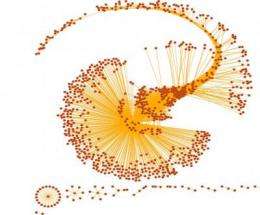
Easton's research group ran a computer simulation on a hypothetical disease outbreak in a rural town in which on Day 1 everyone is healthy. By Day 20, they found that everyone would have contracted the disease.
"We found that person-to-person contact is most important," Easton said. "Having a population with two times as many interpersonal contacts is more dangerous than a disease that is twice as virulent. This shows that the government's ability to limit travel during an epidemic is very important."
Not only does their research show that rural residents may be more likely to maintain normal levels of social contact than urban residents, but the researchers said that the decreased access to hospitals and physicians also make rural areas especially vulnerable during an epidemic.
The computer models suggest that vaccines be administered to people who have contact with the largest network of friends, family, co-workers and neighbors. Scoglio said that it would be equally important to vaccinate people who don't have many contacts themselves but who are a common link between two well-connected communities.
The researchers don't see technology like cell phones and Web calling reducing person-to-person contact among rural residents during an epidemic in the way it would for urban residents. For one thing, Easton said, rural populations tend to be older and may not have adopted some technologies as rapidly. Also, high-speed internet connections and cellular phone service can be limited in rural areas, encouraging more interpersonal interactions in a major epidemic event.
Source: Kansas State University (news : web)


