Discoveries shed new light on how the brain processes what the eye sees
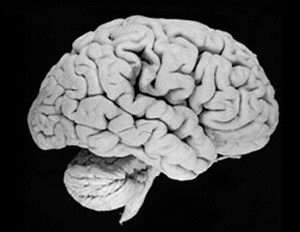
Researchers at the Center for Molecular and Behavioral Neuroscience (CMBN) at Rutgers University in Newark have identified the need to develop a new framework for understanding "perceptual stability" and how we see the world with their discovery that visual input obtained during eye movements is being processed by the brain but blocked from awareness.
The process of seeing requires the eyes to move so light can hit the photoreceptors at the center of each retina, which then pass that information to the brain. If we were cognizant of the stimulus that passes before the eyes during the two to three times they move every second, however, vision would consist of a series of sensations of rapid motion rather than a stable perception of the world. To achieve perceptual stability, current theory has held that visual information gained during an eye movement is eliminated, as if cut off by a camera's shutter, and removed from processing.
As published in Current Biology (http://www.cell.com/current-biology), significant new research conducted by assistant professor Bart Krekelberg and post-doctoral researcher Tamara L. Watson now shows that theory of saccadic suppression is incorrect and what the brain is doing instead is processing information gained during eye movement but blocking it from being reported.
"Rather than completely suppressing inputs during eye movements, the brain is processing that as information it does not need to report back to awareness," says Krekelberg.
The findings were obtained by making use of a visual illusion in which the presentation of a horizontal line makes a subsequent circle look like an ellipse. In Watson and Krekelberg's study, the line was presented to research participants immediately before an eye movement. Under current theory, the line would be eliminated from visual processing and one would expect participants to report a subsequently presented circle to look like a circle. While the research participants did not recall seeing the line, the image they reported seeing was not a circle but rather an ellipse. In other words, the participants experienced the illusion, even though they were not aware of the line that causes the illusion.
"Although they did not recall seeing the line, the brain apparently did process the line," says Watson. "What this shows is that perceptual stability is not accomplished by suppressing stimuli encountered during an eye movement, or removing them from processing, but rather that those signals are prevented from reaching awareness at a later stage of processing. Some suppression is also happening, but suppression is not enough to explain perceptual stability; it is not the whole story."
One reason why the brain does not discard visual input during eye movements could be that it provides useful information about eye movements. "We speculate that the visual signals generated by eye movement may be important for determining how much and how fast the eye moved so the brain can maintain perceptual stability," says Watson. "It may be that these signals are useful for improving perceptual stability as long as they do not enter into awareness."
The findings also show that a new approach is needed to gain additional understanding into the cognitive and neural functions involved in visual processing and perceptual stability. Until now, research largely has focused on pinpointing those areas of the brain that show lower activity during an eye movement. "What we are seeing now is that things are much more complex than we suspected," says Krekelberg. "We shouldn't just be looking at areas of reduced activity in the brain during eye movement, but for areas that may change their processing to make use of the input that arises during eye movements."
Providing a better understanding of those changes in processing could pave the way for earlier detection and more effective treatments for those who suffer from deficits associated with eye movements. For example, schizophrenic patients sometimes report a lack of perceptual stability. And while dyslexia traditionally has been interpreted as a deficit in language development, it also has been found to be associated with deficits in the control of eye movements.
Source: Rutgers University (news : web)


