Researchers discover pathway with implications for obesity
June 3, 2009 By Krishna Ramanujan Researchers discover pathway with implications for obesity

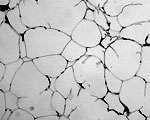
Mature fat cells, known as adipocytes. Image: Ling Qi

(PhysOrg.com) -- Cornell scientists have discovered how two related proteins and their roles in a key molecular pathway are critical to creating obesity-causing fat cells.

Targeting the proteins, known as IRE1alpha and XBP1, could hopefully lead to drug therapies to fight obesity, which affects one in three adults and contributes to heart disease, diabetes, some cancers and high blood pressure.

"We're trying to understand the mechanisms underlying the development of ," said Ling Qi, Cornell assistant professor of nutritional sciences and senior author of the paper, published in the June 3 issue of the journal (Vol. 9, No. 6). "The overall goal of my group is to find therapeutic strategies for treatment of obesity and obesity-associated complications."

The creation of fat cells involves a two-step process: Stem cells first develop into precursors of fat cells called pre-adipocytes, and then these cells develop into mature fat cells, called adipocytes.

The new study focuses on this second phase in which the pre-adipocytes experience a low level of stress in the , the organelle where new proteins are made and folded and then transported out for use by the cell. The stress caused by an accumulation of mis- or un-folded proteins is critical for the transition from pre-adipocytes to mature fat cells, the researchers found.

To counter the stress, cells activate IRE1alpha, a protein that resides in the endoplasmic reticulum and that senses unfolded proteins as a part of a cellular called the unfolded protein response. Qi and his colleagues created cells lacking IRE1alpha and demonstrated that these cells were unable to develop from pre-adipocytes into adipocytes. This evidence suggests that IRE1alpha is a key component of the pathway that leads to fat cell development, Qi said.

Activated IRE1alpha then converts the protein XBP1 into a new form. In its new configuration, XBP1 moves into the cell's nucleus, where it turns on genes that work to resume normal protein folding and balance to the endoplasmic reticulum. The researchers also found that loss of XBP1 interferes with the conversion of pre-adipocytes into mature fat cells.

The research is the first to show that the endoplasmic reticulum and the IRE1alpha-XBP1 pathway are involved in the genesis of fat cells, Qi said.

"The unfolded protein response keeps the balance of endoplasmic reticulum homeostasis," said Haibo Sha, the paper's lead author and a postdoctoral associate in Qi's lab. "If there are defects in the endoplasmic reticulum, then pre-adipocytes will not be able to differentiate into the adipocytes."

While lack of physical activity and overeating can lead to obesity, genetic mutations also can cause the condition. The researchers hope that drugs that target XPB1 or IRE1alpha may lead to treatment for obesity in the future, Qi said.

Provided by Cornell University (news : web)


print this article email this article download pdf blog this article bookmark this article     Stumble it Digg this share on Facebook retweet share on Reddit add to delicious
Rate this story - not rated yet


June 3, 2009 all stories

Comments: 0

not rated yet
  • Stumble this up

  • Digg this

  • share this

  • hide
  • Related Stories

  • Unfolded proteins may protect cells from dying
    created Dec 26, 2006 | popularity not rated yet | comments 0
  • Red pepper: Hot stuff for fighting fat?
    created Mar 05, 2007 | popularity not rated yet | comments 0
  • Not all fat is created equal
    created Aug 27, 2008 | popularity not rated yet | comments 0
  • White tea -- the solution to the obesity epidemic?
    created May 01, 2009 | popularity not rated yet | comments 0
  • Human virus makes fat stem cells fatter
    created Oct 25, 2006 | popularity not rated yet | comments 0


  • hide
  • Relevant PhysicsForums posts

  • Improving the brain through chemistry
    created 20 hours ago
  • Sleep / REM Sleep and homeostasis
    created Nov 07, 2009
  • The Biceps Reflex
    created Nov 05, 2009
  • Consequenses of striking a Vein and an artery?
    created Nov 05, 2009
  • More from Physics Forums - Medical Sciences

Other News

Developmental delay could stem from nicotinic receptor deletion

Medicine & Health / Genetics

created 6 hours ago | popularity 4.5 / 5 (2) | comments 0

The loss of a gene through deletion of genetic material on chromosome 15 is associated with significant abnormalities in learning and behavior, said a consortium of researchers led by Baylor College of Medicine in a report ...


Expanding drug treatment: Is US ready to step up? (AP)

Expanding drug treatment: Is US ready to step up?

Medicine & Health / Other

created 2 hours ago | popularity not rated yet | comments 0

(AP) -- Based on the rhetoric, America's war on drugs seems poised to shift into a more enlightened phase where treatment of addicts gains favor over imprisonment of low-level offenders. Questions abound, ...


House passes health care bill on close vote (AP)

Landmark health bill passes House on close vote

Medicine & Health / Health

created 14 hours ago | popularity 3.7 / 5 (9) | comments 2

(AP) -- The Democratic-controlled House narrowly passed far-reaching health care legislation, handing President Barack Obama a hard-won victory on his chief domestic priority though the road ahead in the ...


Children who often drink full-fat milk weigh less

Medicine & Health / Health

created Nov 03, 2009 | popularity 5 / 5 (4) | comments 5

Eight-year-old children who drink full-fat milk every day have a lower BMI than those who seldom drink milk. This is not the case for children who often drink medium-fat or low-fat milk. This is one conclusion of a thesis ...


Turn On, Tune In, Develop?

Turn On, Tune In, Develop? Researchers Examine How Brain Benefits From Musical Training

Medicine & Health / Neuroscience

created Nov 06, 2009 | popularity 5 / 5 (11) | comments 4

For most people music is an enjoyable, although momentary, form of entertainment. But for those who seriously practiced a musical instrument when they were young, perhaps when they played in a school orchestra ...