A real-time diagnosis for a treatable cancer
According to the American Cancer Society, colorectal cancer, America's third leading type of cancer, is also one of the most preventable. One-third of all colorectal cancer deaths could be avoided by simple screening, they say. But colonoscopies, though highly effective, can also be painful, and current diagnostic techniques are time-consuming and sometimes inaccurate.
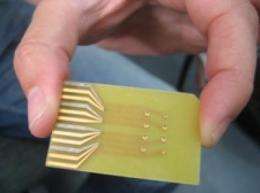
Sefi Vernick, a doctoral student of the Department of Physical Electronics at Tel Aviv University, believes he has an answer that may lead to earlier diagnosis - and to saving lives. Utilizing the "lab-on-a-chip" technology first developed by his supervisor Prof. Yossi Shacham, Vernick attached a functioning miniature laboratory the size of a common computer chip to the end of the common endoscope used in colonoscopy examinations, providing a highly-accurate (and far less painful) biopsy done in real time.
"What we're talking about is taking tiny little samples from polyps as the colonoscopy is being done, and getting the answer right away," says Vernick. "This tool allows us to both visualize and remove polyps and screen for cancer in real time. It's point-of-care diagnostics - we can do it in a physician's office, which is much more convenient than a hospital visit."
"Bio"-Marks the Spot
Colorectal cancer is especially difficult to diagnose in its early stages - usually, people are in advanced stages when the cancer is discovered, and the diagnostic process itself requires the removal of entire polyps as well as a laboratory assessment that may take weeks.
Vernick's lab-on-a-chip solution works by recognizing tell-tale biomarkers that lab technicians cannot see with the naked eye. Cancer biomarkers are molecular changes detectable in the tumor or in the blood, urine, or other body fluids of cancer patients. These biomarkers are produced either by the tumor itself or by the body in response to the presence of cancer. The most commonly-used biomarker tests used today are the off-the-shelf pregnancy test and the test used by diabetics to monitor blood-sugar levels.
With his tool, Vernick can scan up to four different biomarkers for colon cancer, an extraordinarily effective method for finding elusive colon cancer malignancies.
The chip is essentially an electrochemical biosensor programmed to recognize and bind to colorectal cancer biomarkers with high specificity. "Following this bio-recognition event, the electrodes on the chip transduce the signal it receives into an electric current, which can be easily measured and quantified by us," says Vernick.
Testing for Colon Cancer in the Living Room
In addition to the lab-on-a-chip technology, Vernick and his fellow researchers believe they are well on the way to establishing a blood test for colon cancer, which, when used together with colonoscopies, offers a comprehensive package of colon cancer detection.
"When you combine all these methods together, you increase the level of confidence in the results, eliminating false positives and negatives which are dominant today in tests for colorectal cancer," says Vernick. This research, which is funded in part by American-Israeli businessman and philanthropist Lester Crown, is to be commercialized as a complete method of cancer detection, combining blood screening and biopsy.
The ultimate goal would be for patients to have the ability to test themselves at home. "Glucose sensors used by diabetics are the best example today of a hand-held home biosensor test," says Vernick. In the future, he would like to offer patients a similar technology for colorectal cancer detection, in partnership with their physicians. "A person could submit the results of a home test directly online or to their doctor. This is my ultimate goal," he says.
Source: Tel Aviv University (news : web)


