What really prompts the dog's "guilty look"
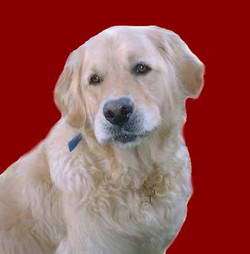
What dog owner has not come home to a broken vase or other valuable items and a guilty-looking dog slouching around the house? By ingeniously setting up conditions where the owner was misinformed as to whether their dog had really committed an offense, Alexandra Horowitz, Assistant Professor from Barnard College in New York, uncovered the origins of the “guilty look” in dogs in the recently published “Canine Behaviour and Cognition” Special Issue of Elsevier’s Behavioural Processes.
Horowitz was able to show that the human tendency to attribute a “guilty look” to a dog was not due to whether the dog was indeed guilty. Instead, people see ‘guilt’ in a dog’s body language when they believe the dog has done something it shouldn’t have - even if the dog is in fact completely innocent of any offense.
During the study, owners were asked to leave the room after ordering their dogs not to eat a tasty treat. While the owner was away, Horowitz gave some of the dogs this forbidden treat before asking the owners back into the room. In some trials the owners were told that their dog had eaten the forbidden treat; in others, they were told their dog had behaved properly and left the treat alone. What the owners were told, however, often did not correlate with reality.
Whether the dogs' demeanor included elements of the "guilty look" had little to do with whether the dogs had actually eaten the forbidden treat or not. Dogs looked most “guilty” if they were admonished by their owners for eating the treat. In fact, dogs that had been obedient and had not eaten the treat, but were scolded by their (misinformed) owners, looked more “guilty” than those that had, in fact, eaten the treat. Thus the dog’s guilty look is a response to the owner’s behavior, and not necessarily indicative of any appreciation of its own misdeeds.
This study sheds new light on the natural human tendency to interpret animal behavior in human terms. Anthropomorphisms compare animal behavior to human behavior, and if there is some superficial similarity, then the animal behavior will be interpreted in the same terms as superficially similar human actions. This can include the attribution of higher-order emotions such as guilt or remorse to the animal.
The editor of the special issue, Clive D.L. Wynne of the Department of Psychology, University of Florida, explained, “this is a remarkably powerful demonstration of the need for careful experimental designs if we are to understand the human-dog relationship and not just reify our natural prejudices about animal behavior.” He pointed out that dogs are the oldest domesticated species and have a uniquely intimate role in the lives of millions of people. Recent research on dogs has indicated more human-like forms of reasoning about what people know than has been demonstrated even in chimpanzees.
Source: Elsevier


