Genome-wide map shows precisely where microRNAs do their work
MicroRNAs are the newest kid on the genetic block. By regulating the unzipping of genetic information, these tiny molecules have set the scientific world alight with such wide-ranging applications as onions that can’t make you cry and therapeutic potential for new treatments for viral infections, cancer and degenerative diseases. But the question remains: How do they work?
In research to appear in the June 17 advance online issue of Nature, Robert B. Darnell, head of the Laboratory of Molecular Neuro-oncology, and his team at Rockefeller University provide a long-awaited key clue to answering that question. By using a technique that molecularly cements proteins to RNAs, the team has decoded a map of microRNA-messenger RNA interactions in the brain, an advance that holds promise for biology and human disease, for example by silencing trouble-making genes linked to disease.
MicroRNAs rewrote the rules of gene expression in 2001 when they were found to bind to messenger RNA and shut down protein production, a process called RNA interference. By 2006, when the Nobel Prize in medicine was given for the discovery of RNA interference, scientists around the globe had even narrowed down microRNAs’ primary site of action to somewhere around the end of the RNA transcript. What scientists couldn’t nail down was the exact string of nucleotides to which the microRNAs bind along a messenger RNA transcript.
“To understand exactly how microRNAs work, you want to know their precise targets,” says Darnell, who is a Howard Hughes Medical Institute investigator and Robert and Harriet Heilbrunn Professor at Rockefeller. “You want a map that tells you which messenger RNAs each microRNA targets and exactly where they are binding.”
The problem was that on any given messenger RNA, there are many sites to which a single microRNA can theoretically bind, and there are hundreds of microRNAs in every cell. Prior techniques — primarily relying on computer predictions — weren’t very good at sorting through the morass of predictions to identify the real sites, explains Darnell. The trick to getting such a map was to freeze a snapshot of microRNAs directly bound to messenger RNA in living cells. Working specifically in mouse brain tissue, that’s what Darnell and his team did using a technique the lab developed called high throughput sequence-crosslinking immunoprecipitation, or HITS-CLIP.
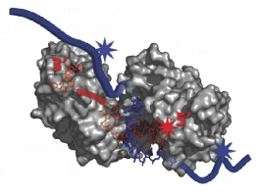
In order to shut down a gene before it is translated, microRNAs must be guided to their target messenger RNAs via a protein called Argonaute. The Argonaute-microRNA-messenger RNA complex now forms a sandwich structure where the microRNA is compressed in the middle. By using their technique to fuse Argonaute to these two RNAs, the team was then able to identify the bound microRNA and its precise target sites across all messenger RNAs expressed in the mouse brain.
The researchers, including first author Sung-Wook Chi, a graduate fellow in the Tri-Institutional Computational Biology Program, Julie Zang, a biomedical fellow, and Aldo Mele, a research assistant, found that on average, about two microRNAs bind to each messenger RNA. They also found that microRNAs bind to nucleotides not only at the terminal end of a messenger RNA, but also at other regions including sequences coding for proteins and sequences once thought to be “junk RNA,” providing new insights into microRNA biology.
“It is thought that RNA is the molecule that can explain the gap between the complexity of cellular functions and our limited number of genes,” says Darnell. “We now have a platform to evaluate the degree to which microRNAs contribute to this complexity with an extraordinary amount of precision.”
Source: Rockefeller University (news : web)


