Wildlife faces cancer threat
While cancer touches the lives of many humans, it is also a major threat to wild animal populations as well, according to a recent study by the Wildlife Conservation Society (WCS).
A newly published paper in the July edition of Nature Reviews Cancer compiles information on cancer in wildlife and suggests that cancer poses a conservation threat to certain species. The WCS authors highlight the critical need to protect both animals and people through increased health monitoring.
"Cancer is one of the leading health concerns for humans, accounting for more than 10 percent of human deaths," said Dr. Denise McAloose, lead author and Chief Pathologist for WCS's Global Health program. "But we now understand that cancer can kill wild animals at similar rates."
In certain situations, cancer threatens the survival of entire species. The Tasmanian devil, the world's largest carnivorous marsupial, is at risk of extinction due to a cancer known as devil facial tumor disease. This form of contagious cancer spreads between individual Tasmanian devils through direct contact (primarily fighting and biting). To save the species from this fatal disease, conservationists are relocating cancer-free Tasmanian devils to geographically isolated areas or zoos.
Many species living within polluted aquatic environments suffer high rates of cancerous tumors, and studies strongly suggest links between wildlife cancers and human pollutants. For example, the study cites the case of beluga whales in the St. Lawrence River system. These whales have an extraordinarily high rate of intestinal cancer, which is their second leading cause of death. One type of pollutant in these waters—polycyclic aromatic hydrocarbons (or PAHs)—is a well-known carcinogen in humans, and PAHs are suspected carcinogens for beluga whales as well. Fish in other industrialized waterways, including brown bullhead catfish and English sole, also exhibit high levels of cancer.
Virus-induced cancers can affect the ability of some wildlife populations to reproduce. Genital tumors in California sea lions on North America's western coast occur at much higher rates than previously documented. Oceanic dolphin species, such as the dusky dolphin and Burmeister's porpoise (both found in the coastal waters of South America), are also showing higher rates of genital carcinomas.
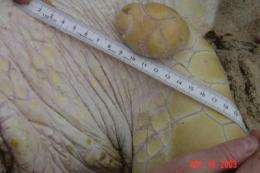
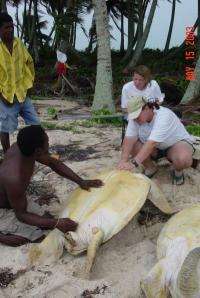
Other virus-induced cancers can affect the feeding ability or eyesight of wildlife. Green sea turtles—a migratory species in oceans across the globe—suffer from fibropapillomatosis, a disease that causes skin and internal organ tumors. A virus is suspected as the cause these tumors, and environmental factors such as human-manufactured carcinogens might exacerbate their severity or prevalence.
Monitoring the health of wildlife can illuminate the causes of cancer in animal populations; thereby, better safeguarding animals and humans against possible disease. Evaluating cancer threats in wildlife populations requires the collaborative efforts of biologists, veterinarians, and pathologists as well as the earnest engagement of governments and international agencies. The paper concludes that more resources are necessary to support wildlife health monitoring.
"Examining the impact of cancer in wildlife, in particular those instances when human activities are identified as the cause, can contribute to more effective conservation and fits within the One World-One Health approach of reducing threats to both human and animal health," said Dr. William Karesh, Vice President and Director of WCS's Global Health Program.
Source: Wildlife Conservation Society (news : web)


