Who moved my 'Delete' key? Lenovo did. Here's why.
June 25, 2009 By JESSICA MINTZ , AP Technology Writer Who moved my 'Delete' key? Lenovo did. Here's why. (AP)

Enlarge

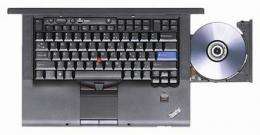
In this product image released by Lenovo, the Lenovo Thinkpad T400S Laptop keyboard, is shown. (AP Photo/Lenovo)

Lenovo put nearly a year of research into two design changes that debuted on an updated ThinkPad laptop this week. No, not the thinner, lighter form or the textured touchpad - rather, the extra-large "Delete" and "Escape" keys.

It may seem like a small change, but David Hill, vice president of corporate identity and design at Lenovo, points out, "Any time you start messing around with the keyboard, people get nervous."

Computers get smaller and faster every year, but keyboard design remains largely stuck in the 19th century. When Beijing-based Lenovo, which bought IBM Corp.'s personal-computer business in 2006, looked into improving the keyboard on the new ThinkPad T400s, a $1,600-and-up for businesspeople, it knew it had to proceed with caution.

To understand Lenovo's concern, turn the clock back to the 1800s.

Back then, fast typing would jam typewriters, so a keyboard layout that slowed down flying fingers was devised. The commonly used "A" key, for example, was banished to the spot under the relatively uncoordinated left pinky.

Typewriter technology evolved. Mainframe computing led to function keys and others of uncertain use today. The PC era dawned. Yet many laws of keyboard layout remain sacred, like the 19-millimeter distance between the centers of the letter keys.

Tom Hardy, who designed the original IBM PC of 1981, said companies have tried many times to change the sizes of keys. That first PC had a smaller "Shift" key than IBM's popular Selectric typewriter did, and it was placed in a different spot, in part because the industry didn't think computers would replace typewriters for high-volume typing tasks.

IBM reversed course with the next version to quiet the outcry from skilled touch-typists.

"Customers have responded with a resounding, 'Don't fool with the key unless you can you can improve it,'" said Hardy, now a design strategist based in Atlanta.

PC makers relearned this lesson in the past year, as netbooks - tiny, cheap laptops - have become popular with budget-conscious consumers. Early models boasted screens measuring as little as 7 inches on the diagonal, requiring shrunken keyboards that many people found to be too small. Some even repeated IBM's mistake by cutting the size of the "Shift" key.

The computer makers have largely shifted focus to 10-inch or larger netbooks, so that there'd be room for near-standard keyboards or better.

Push-back from consumers hasn't stopped companies from testing and even manufacturing keyboards with unconventional designs over the years, in some cases demonstrating that people could learn to type faster than on standard QWERTY keyboards, so-called because of the arrangement of the top row of letters. During Hardy's time at IBM, researchers came up with ball-shaped one-handed keyboards that he said were faster than standard ones.

"A lot of those things never passed the business planners and the bean counters because they were concerned about manufacturing something that was just basically an experiment," Hardy said.

Ones that did get made have remained niche.

Paul Bradley, an executive creative director at the global design group Frog Design, said makers of ergonomic keyboards that also improved typing speed were counting on concern over carpal tunnel syndrome during the dot-com boom of the 1990s to drive demand, but the market never materialized.

If ever there were a time to make radical changes to the keyboard, now might be it. As evidence, Bradley noted the high tolerance many younger people show for tapping out cell-phone messages on tiny keypads using only their thumbs.

Lenovo is on a more conservative course. In designing the new ThinkPad, it installed keystroke-tracking software on about 30 employees' computers (They volunteered). On average, they used the "Escape" and "Delete" keys 700 times per week, yet those were the only "outboard" keys, or non-letter keys, that hadn't been enlarged.

Lenovo made those two keys about twice as long in the vertical direction to fit the way people reach up, rather than to the side, and then deliberately whack those keys, said Hill, the Lenovo executive who was at IBM for nearly 20 years before the 2006 sale to Lenovo. The new design cuts down on accidental taps of the "End" and "Insert" keys, too.

The new keyboard isn't perfect. Hill called "Caps Lock" a frustrating hangover from typewriter days, a key that can introduce garble, emulate shouting or foil password entries without the user noticing.

"I think maybe sometime in the future, we should maybe entertain removing it," he said. "It's one of those things you kind of have to approach with caution. There might be some people out there who just really like their `Caps Lock' key for whatever reason."

©2009 The Associated Press. All rights reserved. This material may not be published, broadcast, rewritten or redistributed.


Rate this story - 4.1 /5 (15 votes)

Rank Filter

Move the slider to adjust rank threshold, so that you can hide some of the comments.


Display comments: newest first

  • Bob_B - Jun 25, 2009
    • Rank: 2.1 / 5 (7)
    Since China owns Lenozo, they will have all the spyware you can imagine on them. Trojan Horse anyone?
  • akak - Jun 25, 2009
    • Rank: 4.6 / 5 (9)
    Retaining the caps lock key is a crime against humanity
  • PinkElephant - Jun 25, 2009
    • Rank: 3 / 5 (7)
    I personally am a big fan of Microsoft Natural keyboards. Talk about "unconventional" layout... but to me, it's far superior to the normal "flat" boards out there. I realize fitting something like that into a laptop that must fold flat is a bit of a technical conundrum, but with a few springs and hinges it ought to be doable :-) Whichever laptop achieves it first, shall have my hard-earned dollars!
  • ler177 - Jun 25, 2009
    • Rank: 3.1 / 5 (7)
    Along with the DEL key, they should also enlarge the CTL and ALT keys for greater Windows compatibility.

  • hooloovoo - Jun 25, 2009
    • Rank: 5 / 5 (3)
    @PinkElephant. The problems with your spring and hinge idea is that it would involve springs and hinges. When designing a machine that needs to be reliable it is necessary to cut moving parts down to an absolute minimum. The more moving parts you have the more things there are to fail. Why do you think we're moving towards solid state hard disks?
  • PinkElephant - Jun 26, 2009
    • Rank: 5 / 5 (2)
    Oh please, hooloovoo. If we can build cars that can go 100,000 miles before the first major tune-up, we can build a couple extra parts into a keyboard...

    But it does bring me to another point: why aren't these things modular? Why can't I easily swap out the screen, the keyboard, the touchpad, the speakers on my laptop? Why is it all built-in/baked-in to a single monolith, so that if one part breaks or proves inadequate, I have to toss the entire thing?

    Yup, laptop design could definitely use a few advancements...
  • diva4d - Jun 26, 2009
    • Rank: 4.5 / 5 (2)
    As a programmer I still use CAPS LOCK quite a bit for capitalising keywords, etc... Am I doing something wrong? ;S
  • jeffsaunders - Jun 26, 2009
    • Rank: 4.5 / 5 (2)
    Caps Lock is essential but it should feel different when it is locked.
  • JZippy - Jun 26, 2009
    • Rank: 4 / 5 (4)
    My first computer was an Atari 400. It had a flat membrane keyboard. I learned to type some key combos very quickly by using sliding moves instead of the pecking motion.

    Anybody type on a keypunch machine, with round keys and the inverted numeric pad?

    The IBM AT keyboard was one of the best ever. Great tactical feedback and excellent key positioning.

    On one of my newer keyboards, I had to physically remove the scroll lock key, because some 'engineer' decided the Home key was in the wrong spot.

    Ah keyboards... very fast for word processing and then somebody had to add the mouse. When it comes to productivity and typing the mouse is a killer.
  • denijane - Jun 26, 2009
    • Rank: 4.5 / 5 (4)
    Not everyone uses Windows, so I don't see a reason why my notebook should have Windows compatibility. For example, my "start" key doesn't serve for anything at all. Why it should be there anyway? Even when I used Windows I didn't use it.

    Same goes for Capslock-absolutely useless key-never used it, don't see a reason to do it.

    Oh, yeah, another key I never use is pause/break. What does it serve for, anyway?


    It's good they think of a way to perfect the keyboard. I just hope they wont do it just for the sake of one OS.
  • Dinotron - Jun 26, 2009
    • Rank: 5 / 5 (1)
    @ denijane,
    Here's your answer regarding the pause/break key:
    http://en.wikiped...reak_key
  • superhuman - Jun 26, 2009
    • Rank: 1 / 5 (1)
    Don't fool with the key layout even if you can improve it!

    We use too many keyboards nowadays.
  • denijane - Jun 26, 2009
    • Rank: 5 / 5 (1)
    @Dinotron- aw,thank you. So it had some kind of purpose, huh? :) They should make an online survey how often people use such keys and if the usage is like once a month, I think it's safe to go. After all, you can easily replace one key combination with another...
  • El_Nose - Jun 26, 2009
    • Rank: 5 / 5 (2)
    I use pause /break -- comes in REALLY handy if your computer crashes - Linux or Windows doesn;t matter .

    I like the 104 key layouts -- but the only key i never use is Scroll Lock -- I have only used one program that needed it -- maybe two if you count the OLD word perfects but thats it

    As a programmer i appreciate Caps Lock -- but maybe we could make it smaller on a laptop i hit it accidentally all the time --
  • kerry - Jun 26, 2009
    • Rank: 4 / 5 (1)
    @PinkElephant:

    Lenovo actually does have "modular" keyboards, in a sense. The keyboard is detachable from the rest of the computer. So if your current one doesn't work (maybe you spilled a drink on it or something), you can swap it out with another one. The screen is a different story, though. You would void the warranty if you tried changing that yourself.
  • Paradox - Jun 26, 2009
    • Rank: 4 / 5 (1)
    Retaining the caps lock key is a crime against humanity

    Only if you just to type sentences. There are several uses for the caps key, I use it often in programming.
  • BrianH - Jun 26, 2009
    • Rank: not rated yet
    The Dvorak layout was designed to make typing motions more natural and quicker. You can d/l a software patch that switches your k/b to the layout, and it's not too hard to learn.


    As for ergonomics and Carpal, I had serious carpal for a while, and ever since have rigged my k/b to slope down and away to minimize wrist-cocking, as recommended. Supposedly the best arrangement is a k/b split into 2 vertical pads, so the wrists/hands are oriented up-down. (BTW, 100mg/day B6 for 2 weeks, plus time to taper off, cured my carpal. Relubricates the tendon channel/tunnel, or SLT. I use it again when ever I feel the twinges and burning coming back.)

    Back to k/bs, there are versions with wells for the fingers to sit in, with slight pressure on sides of the the wells determining letter choice. Very fast and comfortable, supposedly.
  • FPar - Jun 27, 2009
    • Rank: not rated yet
    FWIW, I'm really happy with this keyboard:
    the "Freestyle" from http://www.kinesis-ergo.com/

    The only thing not so great is the lack of a numpad, but for typing it's super comfortable.
  • sauceman - Jun 28, 2009
    • Rank: not rated yet
    Over the next few decades, keyboards are going to be a thing of the past. With new technology such as Speach-to-Text and some of the crazy new "mind-reading" technology they're proposing, new forms of input devices are bound to evolve relatively soon.
  • donjoe0 - Jun 28, 2009
    • Rank: not rated yet
    Yes it is used: Humanized's "Enso Launcher" works by holding down Caps Lock while typing your command and releasing it to launch the command. And it's hard too see how you could position a different key so it could be used more comfortably than this (i.e. allowing you to type commands while holding it down with your pinky).
  • CreepyD - Jun 29, 2009
    • Rank: not rated yet
    Speech to text will never take off, can you imagine everyone sitting in an office at work talking into their PC's to type?
    For me, Scroll Lock is the only key I never use.
  • dbren - Jun 29, 2009
    • Rank: not rated yet
    I'd still like to strangle the guy who decided to put the key where the key traditionally was. Twenty years and I still can't get used to it. Obviously not a vi user.
  • dbren - Jun 29, 2009
    • Rank: not rated yet
    That's the "CAP LOCK" and "ESCAPE" keys. This software must think everything enclosed in greater-than and less-than symbols is an html tag.
  • Egnite - Jun 30, 2009
    • Rank: not rated yet
    Each to thier own, pick an interface your happy with and customize it to your liking! Extra big keys, wow that must take all of 1 second to adjust to.

    This is front page news imo!! wtf..
  • frajo - Jul 12, 2009
    • Rank: not rated yet
    I need the Scroll Lock key quite often for my KVM switch.

June 25, 2009 all stories

Comments: 25

4.1 /5 (15 votes)

  • hide
  • Related Stories

  • 53-keys New Standard Keyboard
    created Jan 23, 2005 | popularity not rated yet | comments 0
  • Breakthrough Keyboard Technology for Smaller Handsets
    created Sep 19, 2004 | popularity not rated yet | comments 0
  • G19 keyboard goes way beyond typing
    created Mar 25, 2009 | popularity not rated yet | comments 0
  • Braille keyboard provides new features
    created Mar 11, 2006 | popularity not rated yet | comments 0
  • Samsung Incorporates E-Ink Panel Technology for Their Alias 2 Phone
    created May 15, 2009 | popularity not rated yet | comments 0


  • hide
  • Relevant PhysicsForums posts

  • how to welding thin SS foil (0.002")?
    created Feb 08, 2010
  • Civil Engineering is hazardous to your career prospects
    created Feb 06, 2010
  • hot water circulator, kitchen faucet, ? mixing
    created Feb 06, 2010
  • Static or dynamic pressures in duct
    created Feb 06, 2010
  • Nuclear Engineering in Australia??
    created Feb 06, 2010
  • Building Gravitational Wave Experiment
    created Feb 05, 2010
  • More from Physics Forums - General Engineering

Other News

Student Builds Spider Robot From Spare Parts

Student Builds Spider Robot From Spare Parts (w/ Video)

Electronics / Robotics

created 5 hours ago | popularity 5 / 5 (6) | comments 3

Picture a spider-like robot that teaches itself to walk, can adapt when damaged and watches its maker as he moves around the room. That might sound terrifying.


US technology titans IBM and Intel have rolled out powerful new computer chips designed for business networks

Intel, IBM roll out new computer network chips

Electronics / Hardware

created 17 hours ago | popularity 5 / 5 (4) | comments 1

US technology titans IBM and Intel have rolled out powerful new computer chips designed for businesses continually demanding more from networks and data centers.


Seagate Ships 10,000 RPM 600 GB 2.5-inch Hard Drive

Electronics / Hardware

created 3 hours ago | popularity 3 / 5 (2) | comments 0

Seagate today announced worldwide shipments of its Savvio 10K.4 hard disk drive (HDD), the world's highest-capacity and most reliable 2.5-inch enterprise-class drive.


Millimeter-scale, energy-harvesting sensor system developed

Millimeter-scale, energy-harvesting sensor system developed

Electronics / Hardware

created Feb 08, 2010 | popularity 4.8 / 5 (12) | comments 5 | with audio podcast

(PhysOrg.com) -- A 9-cubic millimeter solar-powered sensor system developed at the University of Michigan is the smallest that can harvest energy from its surroundings to operate nearly perpetually.


Robonaut 2: NASA, GM Create Cutting Edge Robotic Technology

Robonaut 2: NASA, GM Create Cutting Edge Robotic Technology

Electronics / Robotics

created Feb 04, 2010 | popularity 4.5 / 5 (13) | comments 8 | with audio podcast

(PhysOrg.com) -- Robonaut is evolving. NASA and General Motors are working together to accelerate development of the next generation of robots and related technologies for use in the automotive and aerospace ...