Engineers developing bullet proof vests from cement
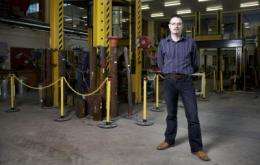
June 29, 2009 Leeds engineers developing bullet proof vests from cement

Enlarge

Dr. Purnell is actively seeking other researchers, engineers, scientists, designers or even sculptors and artists who also have ideas for new uses for cement. Credit: Simon and Simon Photography

Engineers at the University of Leeds are working on a new type of body armour made from cement.

The new vests will combine super-strong cement with recycled carbon fibre materials to make a material tough enough to withstand most types of bullets.

The cement vest project, still at the early research stage, is being carried out the School of Civil Engineering at the University.

Dr Philip Purnell, who is leading the team, said: "By using cement instead of alumina we are confident we can deliver a cost-effective level of protection for many people at risk. It should be good enough for people like security guards, reporters and aid workers who are worried about the odd pot shot being taken at them.
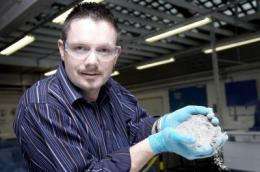
Leeds engineers developing bullet proof vests from cement
Enlarge

Dr. Purnell is actively seeking other researchers, engineers, scientists, designers or even sculptors and artists who also have ideas for new uses for cement. Credit: Simon and Simon Photography

"The fact is many of the armoured vests sold today are over-engineered for the threats they face. Cement based body armour would not only create a whole new market but it would also take some of the pressure off the demand for hi-spec alumina models so that people like soldiers, who really need this kit, can get it."

Currently available hi-spec body armour is constructed with alumina plates - the raw material used to make aluminium - which is heated to 1600 degrees Celsius for up to two weeks in a process called 'sintering' in order to make them ultra hard.

Enhanced combat body armour (ECBA) as supplied to UK troops uses sintered alumina plates. In the past UK and US soldiers serving in Iraq and Afghanistan have faced shortages of ECBA as production has struggled to keep up with soaring global demand.

Cement vests are just one of a range of novel uses for the 2000 year old material that the Leeds engineers are investigating in a three year project called 'Cementing the future'. Other ideas include based pump-less fridges, a new type of catalytic converter, and improved bone replacements.

Source: University of Leeds (news : web)


print this article email this article download pdf blog this article bookmark this article     Stumble it Digg this share on Facebook retweet share on Reddit add to delicious
Rate this story - 3.5 /5 (6 votes)

Rank Filter

Move the slider to adjust rank threshold, so that you can hide some of the comments.


Display comments: newest first

  • Birger - Jun 30, 2009
    • Rank: 1 / 5 (1)
    Is it just the hardness that is useful, or are the vests benefiting from the way grains "lock" together under pressure? For instance, sand blocks high-velocity bullets more efficiently than low-velocity bullets.
  • COCO - Jul 07, 2009
    • Rank: not rated yet
    can you swim in them?

June 29, 2009 all stories

Comments: 2

3.5 /5 (6 votes)
  • Stumble this up

  • Digg this

  • share this

  • hide
  • Related Stories

  • Study shows new body armour can benefit from nanotechnology
    created Aug 29, 2006 | popularity not rated yet | comments 0
  • Novel experiments on cement yield concrete results
    created Apr 02, 2007 | popularity not rated yet | comments 0
  • New kind of cement absorbs pollution
    created May 16, 2006 | popularity not rated yet | comments 0
  • EPA to limit mercury from cement plants
    created Apr 22, 2009 | popularity not rated yet | comments 0
  • Nanoengineered concrete could cut CO2 emissions
    created Jan 29, 2007 | popularity not rated yet | comments 0


  • hide
  • Relevant PhysicsForums posts

  • Aspiring Engineering major looking for general answers
    created Nov 19, 2009
  • Calculating max load of square tube (steel)
    created Nov 19, 2009
  • Passive Chemical Heating
    created Nov 19, 2009
  • Shortening Boat Trailer
    created Nov 18, 2009
  • More from Physics Forums - General Engineering

Other News

Analysts say AmEx is most interested in the so-called peer-to-peer services of Revolution

American Express takes aim at PayPal with Revolution

Technology / Internet

created 1hour ago | popularity not rated yet | comments 0

With its deal to buy Revolution Money, American Express is taking aim at the growing market for online and alternative payments, in a challenge to recognized leader PayPal, analysts say.


China is the world's largest emitter of the greenhouse gases blamed for global warming

China harnesses mountain wind power

Technology / Energy

created 4 hours ago | popularity 5 / 5 (1) | comments 0

In the mountains above the southwestern Chinese town of Dali, dozens of new wind turbines dot the landscape -- a symbol of the country's sky-high ambitions for clean, green energy.


Hackers leak e-mails, stoke climate debate

Technology / Internet

created 15 hours ago | popularity 4.4 / 5 (20) | comments 17

(AP) -- Computer hackers have broken into a server at a well-respected climate change research center in Britain and posted hundreds of private e-mails and documents online - stoking debate over whether some scientists have ...


Ubisoft steps up videogame fitness with virtual coach

Technology / Software

created 4 hours ago | popularity not rated yet | comments 0

French videogame powerhouse Ubisoft will have a virtual fitness coach whipping Wii users into shape starting Tuesday.


plug-in hybrid electric vehicle

Pulling the plug on hybrid myths

Technology / Energy

created Nov 19, 2009 | popularity 3.8 / 5 (12) | comments 17

(PhysOrg.com) -- Whether you call them myths, urban legends, fables or old wives' tales, there's a lot of misinformation out there about plug-in electric hybrid vehicles. These vehicles, abbreviated PHEVs, ...