People sometimes seek the truth, but most prefer like-minded views
July 1, 2009 People sometimes seek the truth, but most prefer like-minded views

Enlarge

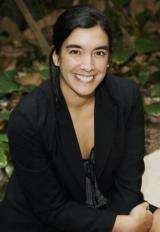
University of Illinois psychology professor Dolores Albarracin and her colleagues found that people who are unsure of their own beliefs are less likely to entertain opposing views. Credit: Photo by L. Brian Stauffer, U. of I. News Bureau.

We swim in a sea of information, but filter out most of what we see and hear. A new analysis of data from dozens of studies sheds new light on how we choose what we do and do not hear. The study found that while people tend to avoid information that contradicts what they already think or believe, certain factors can cause them to seek out, or at least consider, other points of view.

The analysis, reported this month in , published by the American Psychological Association, was led by researchers at the University of Illinois and the University of Florida, and included data from 91 studies involving nearly 8,000 participants. It puts to rest a longstanding debate over whether people actively avoid that contradicts what they believe, or whether they are simply exposed more often to ideas that conform to their own because they tend to be surrounded by like-minded people.

"We wanted to see exactly across the board to what extent people are willing to seek out the truth versus just stay comfortable with what they know," said University of Illinois psychology professor Dolores Albarracín, who led the study with University of Florida researcher William Hart. The team also included researchers from Northwestern University and Ohio University.

The studies they reviewed generally asked participants about their views on a given topic and then allowed them to choose whether they wanted to view or read information supporting their own or an opposing point of view.

The researchers found that people are about twice as likely to select information that supports their own point of view (67 percent) as to consider an opposing idea (33 percent).
Certain individuals, those with close-minded personalities, are even more reluctant to expose themselves to differing perspectives, Albarracín said. They will opt for the information that corresponds to their views nearly 75 percent of the time.

The researchers also found, not surprisingly, that people are more resistant to new points of view when their own ideas are associated with political, religious or ethical values.

"If you are really committed to your own attitude - for example, if you are a very committed Democrat - you are more likely to seek congenial information, that is, information that corresponds with your views," Albarracín said. "If the issues concern moral values or politics, about 70 percent of the time you will choose congenial information, versus about 60 percent of the time if the issues are not related to values."

Perhaps more surprisingly, people who have little confidence in their own beliefs are less likely to expose themselves to contrary views than people who are very confident in their own ideas, Albarracín said.

Certain factors can also induce people to seek out opposing points of view, she said. Those who may have to publicly defend their ideas, such as politicians, for example, are more motivated to learn about the views of those who oppose them. In the process, she said, they sometimes find that their own ideas evolve.

People are also more likely to expose themselves to opposing ideas when it is useful to them in some way, Albarracín said.

"If you're going to buy a house and you really like the house, you're still going to have it inspected," she said. Similarly, no matter how much you like your surgeon, you may seek out a second opinion before scheduling a major operation, she said.

"For the most part it seems that tend to stay with their own beliefs and attitudes because changing those might prevent them from living the lives they're living," Albarracín said. "But it's good news that one out of three times, or close to that, they are willing to seek out the other side."

More information: "Feeling Validated Versus Being Correct: A Meta-Analysis of Selective Exposure to Information" appears in volume 135, No. 4 of Psychological Bulletin. The co-authors: Albarracin; Hart, Inge Brechan and Lisa Merrill, of the University of Florida; Alice H. Eagly, of Northwestern University; and Matthew J. Lindberg, of Ohio University.

Source: University of Illinois at Urbana-Champaign (news : web)


print this article email this article download pdf blog this article bookmark this article     Stumble it Digg this share on Facebook retweet share on Reddit add to delicious
Rate this story - 4.2 /5 (13 votes)

Rank Filter

Move the slider to adjust rank threshold, so that you can hide some of the comments.


Display comments: newest first

  • Doug_Huffman - Jul 01, 2009
    • Rank: 1 / 5 (7)
    "Perhaps more surprisingly, people who have little confidence in their own beliefs are less likely to expose themselves to contrary views than people who are very confident in their own ideas, Albarracín said."

    Doom for the American Constitutional Republic. Balack Hussein Obama said so.
  • JustEgoTripping - Jul 01, 2009
    • Rank: 4.7 / 5 (3)
    This is common sense. From just being a person on this planet, and observing social interactions, its painfully clear that people fear change - which is instigated when new ideas/views/perspectives/beliefs are given attention.
  • am_Unition - Jul 01, 2009
    • Rank: not rated yet
    Did a control f for "confirmation bias" and was quite surprised to come up empty-handed.

    JustEgoTripping - You get it. Great Flaming Lips reference, btw.
  • shavera - Jul 01, 2009
    • Rank: 3.9 / 5 (8)
    I didn't agree with the premise in the title, so I didn't read the article.
  • ler177 - Jul 01, 2009
    • Rank: 5 / 5 (2)
    Those who know the least speak the loudest
  • docknowledge - Jul 01, 2009
    • Rank: not rated yet
    I disagree entirely...whoops...no, I want to be like everybody else. Would everybody else please tell me what to think? Thx.
  • rrrn - Jul 02, 2009
    • Rank: not rated yet
    "Perhaps more surprisingly, people who have little confidence in their own beliefs are less likely to expose themselves to contrary views than people who are very confident in their own ideas, ...": Not surprisingly: see all kind of dictators like the Nazis or the Neo-Nazis of contemporary Austria, the Netherlands, France, Hungary ...
  • Birger - Jul 02, 2009
    • Rank: not rated yet
    During turbulent periods some may be attracted by extremist belief systems that promise certainty,
    but there is *also* evidence that when people are exposed to a crisis they become more likely to accept novel ideas (which makes evolutionary sense).
    -For instance, under ordinary circumstances many Americans might have been sceptic to a president from a minority group, but during the current economical meltdown this factor is no longer considered a big deal.
    Thus, we have some in-built safety factors to encourage us to embrace the unfamiliar.
  • aphemix - Jul 04, 2009
    • Rank: not rated yet
    I didn't agree with the premise in the title, so I didn't read the article.
    I lol'd

July 1, 2009 all stories

Comments: 9

4.2 /5 (13 votes)
  • Stumble this up

  • Digg this

  • share this

  • hide
  • Related Stories


  • hide
  • Relevant PhysicsForums posts

  • Sleep / REM Sleep and homeostasis
    created 9 hours ago
  • The Biceps Reflex
    created Nov 05, 2009
  • Consequenses of striking a Vein and an artery?
    created Nov 05, 2009
  • computing with real neurons
    created Nov 05, 2009
  • Priapism & Viagra
    created Oct 31, 2009
  • Antioxidants bad for your health?
    created Oct 31, 2009
  • More from Physics Forums - Medical Sciences

Other News

Decision day for health care in the House (AP)

Decision day for health care in the House

Medicine & Health / Health

created 5 hours ago | popularity not rated yet | comments 0

(AP) -- President Barack Obama is trying to close the deal in the House on his health care overhaul, facing a make-or-break vote that's certain to be seen as a test of his presidency.


Island village hit by suspected swine flu (AP)

Island village hit by suspected swine flu

Medicine & Health / Diseases

created 6 hours ago | popularity 5 / 5 (1) | comments 1

(AP) -- Suspected swine flu is sweeping a traditional Eskimo whaling village on a remote Alaska island - prompting an urgent medical mission to deliver help.


Higher carotid arterial stenting rates associated with poorer clinical outcomes

Medicine & Health / Other

created 6 hours ago | popularity not rated yet | comments 0

Among eligible Medicare beneficiaries, increased use of carotid arterial stenting (CAS) procedures to treat carotid stenosis--the narrowing of the carotid artery--is associated with higher rates of mortality and adverse clinical ...


Obesity causes 100,000 US cancers every year: study

Medicine & Health / Cancer

created 22 hours ago | popularity 1 / 5 (1) | comments 0

Obesity causes more than 100,000 incidents of cancer in the US every year, the American Institute for Cancer Research said in estimates published Friday.


Chocolate

Chocolate rich in flavanols may protect the skin from UV

Medicine & Health / Health

created Nov 06, 2009 | popularity 5 / 5 (8) | comments 3

(PhysOrg.com) -- A new study has discovered for the first time that dark chocolate rich in flavanols may provide significant protection from the harmful effects of ultraviolet light.