Human cardiac master stem cells identified
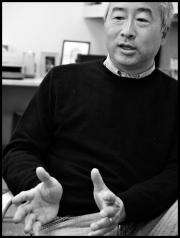
(PhysOrg.com) -- Harvard Stem Cell Institute researchers at Massachusetts General Hospital have identified the earliest master human heart stem cell from human embryonic stem cells - ISL1+ progenitors - that give rise to a family of cells that form the essential portions of the human heart.
The discovery, by a group led by Kenneth Chien, director of both HSCI’s Cardiovascular Disease Program and the MGH Cardiovascular Research Center, is particularly important because the cells were found in regions of the heart known as hot spots for congenital heart disease.
These latest findings, published today in the journal Nature, build upon and expand earlier work by Chien’s team and others in mice.
What is truly groundbreaking about the study, and has enormous implications in terms of the future treatment of heart disease, Chien says, is that “the study provides a new way of understanding heart disease at it appears in children and in adults. Congenital heart disease is the most common birth defect in children worldwide, and the studies imply that congenital heart disease could be a stem cell disease.” A number of congenital cardiac diseases appear to begin in these cells, and genes that affect the cells are known to cause heart disease in children, he added.
By identifying and manipulating the pathways along which these cells grow and differentiate, Chien says, researchers might be able to influence congenital heart disease significantly, converting severe forms of the disease to those with a better prognosis.
In adult heart disease, the major cause of morbidity is heart failure, where the implantation of human heart progenitors such as these might prove more therapeutically valuable than already differentiated heart muscle cells. “When people think of cardiovascular regenerative medicine, they think of end stage heart failure and humans needing a transplant,” Chien says. “This study has importance for both this adult form of heart disease as well as those in children, where understanding how embryonic heart stem cells build the heart may ultimately impact therapy.”
“This is a wonderful and important study for several reasons,” said Doug Melton, co-director of HSCI and co-chair of Harvard’s interschool Department of Stem Cell and Regenerative Biology. “Finding a cell that can make all the parts of the heart, including the contracting muscle, the smooth muscle and the vessels, brings us much closer to the possibility of repairing human hearts with new cells. In addition, this human progenitor cell will likely become the standard starting point for all researchers to aiming to investigate human heart development and genetic diseases of the cardiovascular system,” Melton added.
Because these cardiac progenitor cells are extremely rare in the adult heart, the researchers don’t believe they play a role in the regeneration of the fully developed adult organ. However, researchers do believe these cells have a potential role in the fetal and immediate post-natal heart to prevent congenital heart disease.
Chien’s group was particularly focused on answering the question of how the human heart expands from its small fetal size to its adult-form dimensions. “The human heart at birth is more than a thousand times bigger than the adult mouse heart, yet the size of the initial embryos are close in size. Humans are just a heck of a lot bigger than mice, and every organ is bigger. How is that achieved?”
There are two possible answers to the question:
The first is that various independent cell lineages give rise to each of the heart structures. “The pacemaker, the valves, all these things arise, and then those cells replicate, and that replication accounts for the marked expansion,” Chien explains.
Or, the answer might be what Chien calls “a stem cell paradigm, in which a single form of progenitor cells replicate, and massively expand the pool of heart cell precursors, and then differentiate into the different structures. “The way that you could distinguish between those two possibilities,” he says, “is by looking for large numbers of those progenitors at a later stage of human cardiogenesis [in contrast with what you see in the mouse].”
To identify and track the fate of human embryonic-stem-cell-derived ISL1+ progenitors, Chien and his team genetically tagged a human embryonic stem cell line. The researchers were then astonished that when they looked at the developing tissue they observed a heart “loaded” with progenitor ISL1+ stem cells. The biggest concentration of them was observed at a location associated with congenital heart disease, particularly in the outflow track, the aorta.
The team observed not only a large number of progenitor ISL1+ stem cells, but also distinctive intermediate cell types that give rise to all of the components of the heart.
As Chien sees it, “a stem-cell-mediated process clearly exists for expansion of the human heart, particularly in regions that are affected by congenital heart disease,” which he and his colleagues believe implicates heart ILS1+ stem cell progenitors in undergrowth or mal-growth of heart structures.
Currently the team is studying three types of disease that affect children: Duchenne muscular dystrophy, specific chromosomal disorders such as DiGeorge and Down syndromes, and rare genetically based congenital heart diseases. In each of these case, Chien argues, mouse models are not enough: “They are not likely to fully recapitulate the human disease.”
For Chien and his colleagues, this study also underscores the importance of continuing to use human embryonic stem (ES) cells in research, and not just induced pluripotent stem cells (iPS), which are created in the lab by forcing gene expression. “Manipulating human ES cells genetically, by gene targeting, you can create human models of human disease directly in a simplified format, in human ES cells,” Chien says. “I think the iPS cells are going to be good for some diseases, but not all. I’m not sure they will be good for heart diseases.”
The heart cells that come out of iPS cells may not be as strong, he says. “If you get iPS cells from a patient with congenital heart disease, what do you use as a control? Another patient?” Chien adds, “The degree of variation in the iPS cell lines is significant. So how do you even compare this cell to itself? These are still early days for human heart iPS-derived cells.”
A renewable resource, ES cells may represent an alternative to adult cell-based therapy down the road, especially, says Chien, since the ability of most adult heart progenitor cells (as well as other non-heart adult cells such as bone marrow-, fat-, and endothelial-progenitor cells) to convert to authentic heart muscle over an extended period of time remains unclear.
Provided by Harvard Universtiy


