MicroRNAs hold promise for treating diseases in blood vessels
(PhysOrg.com) -- A newly discovered mechanism controls whether muscle cells in blood vessels hasten the development of both atherosclerosis and Alzheimer's disease, according to an article published online today in the journal Nature.
The study was led by the Gladstone Institute of Cardiovascular Disease (GICD) in San Francisco, with key contributions from the Aab Cardiovascular Research Institute at the University of Rochester School of Medicine and Dentistry.
Thanks to stem cells, humans develop from a single cell embryo into a complex being with about 250 unique cell types. As the fetus develops, cells divide and multiply (proliferate) in many generations and specialize (differentiate) with each generation until millions of functional cells result (bone, nerve, blood, skin, muscle, etc.). To serve specific roles in the body, some stem cells also switch back and forth between primitive, rapidly proliferating precursors and their mature, functioning, non-proliferating counterparts, a quality called "plasticity."
Among the most "plastic" of cells are vascular smooth muscle cells (VSMC), which form in layers around blood vessels, and by contracting or relaxing, regulate blood pressure. Because VSMC surround blood vessels that are continually becoming clogged by atherosclerosis, they must be ever ready to grow along with the vessel as it attempts, by growing, to remain open to blood flow despite fatty deposits and inflammation. If these efforts fail, heart attack or stoke may occur. Each time a vessel grows to avoid a clog, the VSMC surrounding it must grow too by reverting to their high-growth precursor form. Once a vessel reaches its growth limit, however, the growth that once kept vessels open begins adding to clogs by thickening vessel walls.
Past studies in Rochester have shown that transition of VSMC from fast-proliferating stem cells to mature cells and back is largely controlled by two proteins, myocardin and serum response factor (SRF), as part of a regulatory network that influences many genes. SRF anchors to certain snippets of DNA, while myocardin turns on the genes to which SRF sticks. Most of the genes turned on by myocardin/SRF in VSMC are needed for normal function. When levels of myocardin decrease, as they do for some reason in vascular diseases like atherosclerosis, VSMC no longer work normally and vessel thickening ensues. For this reason the field has sought urgently to learn how myocardin levels are controlled, but without success.
Enter a research team led by Deepak Srivastava, M.D, director of GICD, world leaders in the characterization of microRNAs (miRNAs). These small, single-stranded molecules of ribonucleic acid (RNA), discovered in the Victor Ambros lab in 1993, fine-tune protein levels in all cells of the body. The GICD team discovered that miRNAs control VSMC differentiation and growth.
Gene expression is the process where information encoded in genes is converted into proteins, the workhorse molecules that make up the body's structures and carry its signals. While genes are encoded in chains of deoxyribonucleic acids (DNA), they are copied into chains of messenger ribonucleic acids (mRNA) that are "read" by cellular machines that build proteins. microRNAs bind to messenger RNAs, usually targeting them for breakdown or rendering them unfit to serve as templates for protein production.
The current study found that two miRNAs in particular, miR-143 and miR-145, are part of a molecular switch that determines whether VSMC persist as high-growth precursors or mature into functioning muscle cells. miR-143 was found to block the expression of factors that promote proliferation by VSMC precursors. Surprisingly, miR-145 activated the expression of myocardin, which maintains VSMC in their mature form over their high-growth form.
In a mouse model, expression of miR-143 and miR-145 was reduced to almost nothing where disease-related proliferation of VSMC had thickened blood vessel walls. These findings suggest that miR-143 and miR-145 - in partnership with myocardin - maintain the normal balance between mature VSMC and their precursors. Thus, researchers believe the drop in miR-143 and miR-145 levels seen in disease settings contributes greatly to vessel wall thickening, but that theory will need to be confirmed by further studies.
In addition, Rochester investigators found that myocardin and SRF activate genes that may influence the rate at which the brain can remove amyloid beta, the toxic protein that builds up in blood vessels in the brains of patients with Alzheimer's disease. In a February 2009 article in the journal Nature Cell Biology, University of Rochester investigator, Berislav Zlokovic, M.D., Ph.D. found that when SRF and myocardin are active, amyloid beta accumulates in VSMC lining blood vessels. The discovery that miR-145 encourages the expression of myocardin could explain why myocardin may occur in higher levels in Alzheimer's disease, which is turning out to be a problem of "vascular plumbing."
"The finding that a microRNA controls levels of myocardin, the master regulator of VSMC identity and function, forms the starting point in efforts to design new classes of treatment for vascular diseases that represent leading causes of death," said Joseph M. Miano, Ph.D., associate professor within the Aab Cardiovascular Research Institute at the University of Rochester Medical Center, and a study author. He and Srivastava trained together under the direction of renowned muscle biologist Eric Olson at M.D. Anderson Cancer Center in the early 1990s. Miano was also a co-author of the paper on Alzheimer's with Zlokovic. "One of the most important of potential applications for this work would be to deliver miR-145 into vessel walls as a way to normalize levels of myocardin, which would counter vessel wall thickening."
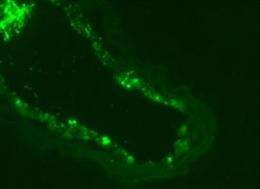
Rochester provided GICD with samples of blood vessels containing lesions with dramatically reduced levels of myocardin. GICD then looked at levels of miR-143 and miR-145 in this disease setting. The team in Rochester also did experiments to show that local delivery of miR-145 in mouse blood vessels leads to elevated expression of myocardin and its target genes.
Source: University of Rochester (news : web)


