Takeo Doi, scholar on Japanese psyche, dies
July 6, 2009 By YURI KAGEYAMA , Associated Press Writer Takeo Doi, scholar on Japanese psyche, dies (AP)

Enlarge

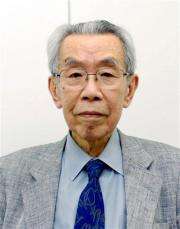
In this undated photo shows Takeo Doi, a scholar credited with analyzing the Japanese psyche as thriving on a love-hungry dependence on authority figures, in Tokyo. Doi has died Sunday, July 5, 2009 from illnesses related to old age, his family said Monday. He was 89. (AP Photo/Kyodo News)

(AP) -- Takeo Doi, a scholar who wrote that the Japanese psyche thrived on a love-hungry dependence on authority figures, has died, his family said Monday. He was 89.

Doi, who died Sunday from illnesses related to old age, wrote the 1971 book, "The Anatomy of Dependence," which introduced the idea of "amae" - a childlike desire for indulgence - as key to understanding the Japanese mind.

Doi's work was a hit in Japan but has been widely studied abroad in translation. Ezra Vogel, social sciences professor emeritus at Harvard University, has praised Doi's book as "the first book by a Japanese trained in psychiatry to have an impact on Western psychiatric thinking."

Doi argued that amae, while also observed by other nationalities, was more pronounced and elaborate among Japanese, and was key in defining everywhere, including at the office, at schools and in marriages.

His work stemmed from what he called his "culture shock" when he went to study in the U.S. in the 1950s and saw the difference between how Americans and Japanese act, including his patients. He was struck by how there was no precise way to translate amae into English, although the behavior was common in puppies and human babies.

"I set about using my idea that amae might be vitally important in understanding the Japanese mentality," Doi wrote in his book. "I soon became convinced that it provided a clue to all kinds of things that had hitherto been obscure."

Doi used amae as a starting point for explaining other common Japanese traits, such as self-effacement and the widespread perception of a duality between appearances and a hidden internal reality.

Doi taught at the International Christian University in Tokyo between 1980-82, and he also counseled students and faculty members. Before that, he served as professor at his alma mater, the University of Tokyo, from 1971 to 1980.

He was working as a special adviser to the PHP Research Institute up to his death, the private think-tank said.

Funeral services are for just the family, and details of a separate memorial service have yet to be decided, said Megumi Doi, his daughter. Doi is survived by his wife, two sons and two daughters, she said.

©2009 The Associated Press. All rights reserved. This material may not be published, broadcast, rewritten or redistributed.


print this article email this article download pdf blog this article bookmark this article     Stumble it Digg this share on Facebook retweet share on Reddit add to delicious
Rate this story - 3.5 /5 (2 votes)


July 6, 2009 all stories

Comments: 0

3.5 /5 (2 votes)
  • Stumble this up

  • Digg this

  • share this

  • hide
  • Related Stories


  • hide
  • Relevant PhysicsForums posts

Other News

Implant-based cancer vaccine is first to eliminate tumors in mice

Implant-based cancer vaccine is first to eliminate tumors in mice

Medicine & Health / Cancer

created 13 hours ago | popularity 4.9 / 5 (19) | comments 4

(PhysOrg.com) -- A cancer vaccine carried into the body on a carefully engineered, fingernail-sized implant is the first to successfully eliminate tumors in mammals, scientists report this week in the journal ...


Brain's endocannabinoid signaling pathway kept in check by two enzymes

Medicine & Health / Research

created 11 hours ago | popularity 5 / 5 (2) | comments 0

(PhysOrg.com) -- A research team has shown that blocking the degradation of two naturally occurring cannabinoids in the endocannabinoid signaling pathway of the brain produces marijuana-like behavioral effects in mice, according ...


Scale of justice

fMRI scans used in murder trial sentencing

Medicine & Health / Other

created 21 hours ago | popularity 1 / 5 (1) | comments 4

(PhysOrg.com) -- Functional Magnetic Resonance Imaging (fMRI) scans have been used, possibly for the first time, in the sentencing phase of a murder trial in Chicago in the US.


Scientists find emotion-like behaviors, regulated by dopamine, in fruit flies

Medicine & Health / Neuroscience

created 15 hours ago | popularity 5 / 5 (3) | comments 0

Scientists at the California Institute of Technology have uncovered evidence of a primitive emotion-like behavior in the fruit fly, Drosophila melanogaster. Their findings, which may be relevant to the relationship betwee ...


Study sheds light on brain's fear processing center

Medicine & Health / Research

created 15 hours ago | popularity 5 / 5 (3) | comments 1

Breathing carbon dioxide can trigger panic attacks, but the biological reason for this effect has not been understood. A new study by University of Iowa researchers shows that carbon dioxide increases brain acidity, which ...