Researchers identify genes that cause melanoma
July 6, 2009 Moles hold the key to melanoma genes

People with two copies of both gene variants have double the risk of melanoma

Scientists from the Queensland Institute of Medical Research (QIMR) have found two new genes that together double a person's risk of developing melanoma.

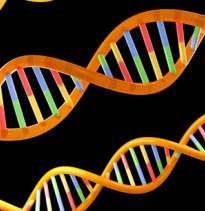
As part of an international study, a team at QIMR, led by Professors Nick Hayward and Grant Montgomery, studied the of almost 6,000 people together with their mole count. Specific changes in two genes were found to make people more susceptible to developing moles. The researchers went on to show, in another 4,000 people, the same two genes increased the risk of developing - the most deadly form of .

"These are the first genes found to increase melanoma risk by influencing the number of moles a person has," explained Professor Hayward. "This finding improves our understanding of the genetics of melanoma and therefore the that lead to its development."

"It has long been known that having a large number of moles is the biggest risk factor. Therefore we predicted we would find genes linking moles and melanoma. We now have conclusive that having a large number of moles increases an individual's risk of developing melanoma."

The study found that people who carry one of these two gene variants have a 25% increased chance of developing melanoma, while for individuals carrying both variants their risk is doubled.

"In the long term, this research will be useful in developing screening techniques, and will also allow us to identify potential new and ultimately develop new therapies to treat melanoma," said Professor Hayward.

Moles are normal but people should seek advice from their doctor if they observe any changes in size, colour or shape. People with lots of moles are at a higher risk of developing melanoma and should therefore take extra care to avoid overexposure to .

Australia has the highest incidence of melanoma in the world with more than 10,000 new cases and 1000 people dying from the disease every year. Queensland has the highest incidence of any state with seven Queenslanders diagnosed with melanoma every day. More than one in 20 Queenslanders is expected to develop melanoma during their lifetime.

The study was published today in Nature Genetics.

Source: Research Australia (news : web)


print this article email this article download pdf blog this article bookmark this article     Stumble it Digg this share on Facebook retweet share on Reddit add to delicious
Rate this story - 5 /5 (1 vote)


July 6, 2009 all stories

Comments: 0

5 /5 (1 vote)
  • Stumble this up

  • Digg this

  • share this

  • hide
  • Related Stories

  • Family history of melanoma linked to Parkinson's disease
    created Feb 16, 2009 | popularity not rated yet | comments 0
  • Researchers close in on new melanoma gene
    created May 19, 2008 | popularity not rated yet | comments 0
  • Scientists identify interacting proteins key to melanoma development, treatment
    created May 06, 2008 | popularity not rated yet | comments 0
  • Beach vacations may increase future skin cancer risk in children
    created Feb 03, 2009 | popularity not rated yet | comments 0
  • Does too much sun cause melanoma?
    created Jul 23, 2008 | popularity not rated yet | comments 0


  • hide
  • Relevant PhysicsForums posts

Other News

Severe reactions to swine flu vaccine in Canada: WHO

Medicine & Health / Medications

created 11 minutes ago | popularity not rated yet | comments 0

An unusual number of severe allergic reactions to swine flu vaccinations have been recorded in Canada, where a batch of the vaccine from GlaxoSmithKline has been recalled, the WHO said on Tuesday.


United Nations: HIV outbreak peaked in 1996

Medicine & Health / HIV & AIDS

created 21 minutes ago | popularity not rated yet | comments 0

(AP) -- The number of people worldwide infected with the virus that causes AIDS - about 33 million - has remained virtually unchanged for the last two years, United Nations experts said Tuesday.


Control of blood clotting by platelets described; provides medical promise

Medicine & Health / Research

created 57 minutes ago | popularity not rated yet | comments 0

Cell fragments called platelets are essential to promote blood clotting. Virginia Tech faculty members and students have discovered novel molecular interactions at the surface of platelets that control blood clotting.


It's time for a 'third wave' of malaria activism to tackle drug shortages

Medicine & Health / Diseases

created 16 minutes ago | popularity not rated yet | comments 0

In this week's PLoS Medicine, the journal's editors call for concerted international action to address the crisis of malaria drug shortages across Africa.


Metobolomics uncovers key indicators of nonalcoholic fatty liver disease

Medicine & Health / Diseases

created 56 minutes ago | popularity not rated yet | comments 0

A recent metobolomics study by researchers from Virginia Commonwealth University Medical Center in Richmond found that impaired peroxisomal oxidation of polyunsaturated fatty acids (PUFA) is associated with the progression ...