Finding fear: Neuroscientists locate where it is stored in the brain
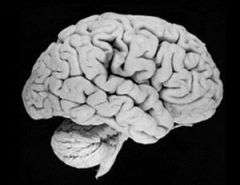
Fear is a powerful emotion and neuroscientists have for the first time located the neurons responsible for fear conditioning in the mammalian brain. Fear conditioning is a form of Pavlovian, or associative, learning and is considered to be a model system for understanding human phobias, post-traumatic stress disorder and other anxiety disorders.
Using an imaging technique that enabled them to trace the process of neural activation in the brains of rats, University of Washington researchers have pinpointed the basolateral nucleus in the region of the brain called the of amygdala as the place where fear conditioning is encoded.
Neuroscientists previously suspected that both the amygdala and another brain region, the dorsal hippocampus, were where cues get associated when fear memories are formed. But the new work indicates that the role of the hippocampus is to process and transmit information about conditioned stimuli to the amygdala, said Ilene Bernstein, corresponding author of the new study and a UW professor of psychology.
The study is being published Monday, July 6, in PLoS One, a journal of the Public Library of Science.
Associative conditioning is a basic form of learning across the animal kingdom and is regularly used in studying how brain circuits can change as a result of experience. In earlier research, UW neuroscientists looked at taste aversion, another associative learning behavior, and found that neurons critical to how people and animals learn from experience are located in the amygdala.
The new work was designed to look for where information about conditioned and unconditioned stimuli converges in the brain as fear memories are formed. The researchers used four groups of rats and placed individual rodents inside of a chamber for 30 minutes. Three of the groups had never seen the chamber before.
When control rats were placed in the chamber, they explored it, became less active and some fell asleep. A delayed shock group also explored the chamber, became less active and after 26 minutes received an electric shock through the floor of the chamber. The third group was acclimated to the chamber by a series of 10 prior visits and then went through the same procedure as the delayed shock rats. The final group was shocked immediately upon being introduced inside the chamber.
The following day the rats were individually returned to the chamber and the researchers observed them for freezing behavior. Freezing, or not moving, is the most common behavioral measure of fear in rodents. The only rats that exhibited robust freezing were those that received the delayed shock in a chamber which was unfamiliar to them.
"We didn't know if we could delay the shock for 26 minutes and get a fear reaction after just one trial. I thought it would be impossible to do this with fear conditioning," said Bernstein. "This allowed us to ask where information converged in the brain."
To do this, the researchers repeated the procedure, but then killed the rats. They then took slices of the brains and used Arc catfish, an imaging technique, which allowed them to follow the pattern of neural activation in the animals.
Only the delayed shock group displayed evidence of converging activation from the conditioned stimulus (the chamber) and the unconditioned stimulus (the shock). The experiment showed that animals can acquire a long-term fear when a novel context is paired with a shock 26 minutes later, but not when a familiar context is matched with a shock.
"Fear learning and taste aversion learning are both examples of associative learning in which two experiences occur together. Often they are learned very rapidly because they are critical to survival, such as avoiding dangerous places or toxic foods," said Bernstein.
"People have phobias that often are set off by cues from something bad that happened to them, such as being scared by a snake or being in a dark alley. So they develop an anxiety disorder," she said.
"By understanding the process of fear conditioning we might learn how to treat anxiety by making the conditioning weaker or to go away. It is also a tool for learning about these brain cells and the underlying mechanism of fear conditioning."
Source: University of Washington (news : web)


