Work in mice will contribute to the study of hereditary diseases that lead to blindness
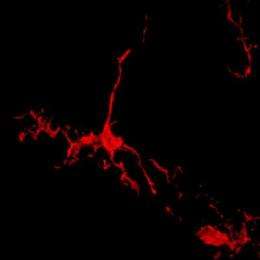
Researchers of the University of Granada (Spain) have used a technique consisting of the induction of neuronal degeneration neuronal for intense light exposure in the mouse's retina that will be helpful for the study of retinitis pigmentosa (RP), a group of hereditary diseases which lead to blindness and affect more than one million persons a year all over the world.
In addition, the results of this research work could be very useful for the detection of new factors or molecules originated by microglial cells and related to degenerative processes of the retina.
The doctoral thesis of Ana María Santos Carro, researcher of the Department of Cell Biology of the University of Granada, is based on the study of microglial cells, a type of cell of the Nervous System that develop a phagocytic or purifying role against damages or infections in such system. Her work has analysed the distribution of microglial cells in la retina of the mouse during all its development, both embryonic and postnatal and adult, and has studied the response of these cells to a neurodegenerative process induced in the retina by intense light exposure.
Parkinson and Alzheimer
The researcher of the UGR insists that "it is important to get to know the response of the microglial cells against neurodegenerative, because such cells are practically involved in all the diseases and damages of the nervous system, including Parkinson and Alzheimer, and knowing their behaviour in pathologic situations could be helpful in the design of therapeutic strategies".
Microglial cells are the resident population of macrophages in the central nervous system (CNS) and play a relevant role in the immune defence. The research group of the UGR "Embryology of the Nervous System" has been studying for years the origin, distribution and migratory characteristics of these cells, both in situations of normal development of the healthy CNS and in response to damages or injuries using as a model of study the retina of birds and mammals.
The doctoral thesis of Ana María Santos Carro has been supervised by Professors Miguel Ángel Cuadros Ojeda, Julio Navascués Martínez and José Luis Marín-Teva.
Part of the results of this research work has been recently published in the specialized Journal of Comparative Neurology. Likewise, some of the results obtained have been presented in oral communications and posters in different national and international scientific meetings: VIII European Meeting on Glial Cell Functions in Health and Disease (Londres), VII European Meeting on Glial Cell Functions in Health and Disease (Amsterdam), IV Meeting of the Spanish Glial Network (Madrid), etc.
Source: University of Granada


