Ouch! Abrupt opioid withdrawal increases pain sensitivity
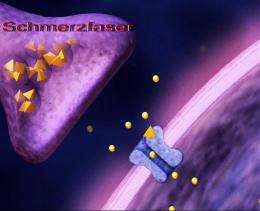
(PhysOrg.com) -- The abrupt withdrawal of morphine-like analgesics - opioids - can increase sensitivity to pain. Experiments have now shown that this effect is caused by a memory-like process, the long-term potentiation of synaptic strength in the spinal cord. The study, which was supported by the Austrian Science Fund (FWF), also found ways of avoiding this increase in pain sensitivity. These pioneering results have now been published in the prestigious journal Science.
Opioids are the oldest and most effective analgesics. They are often used, for example, during operations or when other forms of treatment fail. This is because opioids - unlike other analgesics - bind to opioid receptors, which are highly effective in depressing the activity of nerve cells responsible for transmitting information about pain. On abrupt withdrawal, e.g. after surgery, this can lead to an abnormal, excessive increase in pain sensitivity. A research project conducted by the Department of Neurophysiology at the Center for Brain Research at the Medical University of Vienna has now been able to explain what causes this phenomenon.
Painful "cold withdrawal"
The abrupt withdrawal ("cold withdrawal") of opioids leads to "long-term potentiation" (LTP) of synaptic strength in the spinal cord's pain pathways. This in turn leads to sustained and increased sensitivity to pain. In the brain, LTP is a physiological mechanism for learning and memory. An activity-dependent increase in synaptic transmission between the nerve cells at their contact points, the synapses, can be very long-lasting. For example in the spinal cord, pain stimuli can trigger LTP and lead to a long-lasting "pain memory". This study proves for the first time that opioids also leave a "memory trace" in the pain system if they are withdrawn abruptly. "We were rather taken aback ourselves by the results," said project manager Professor Jürgen Sandkühler. "Until now, we had assumed that only strong or sustained pain could induce LTP in the pain system." On making this discovery, Prof. Sandkühler and his team set about deciphering the molecular mechanisms of this process. Dr. Ruth Drdla and Matthias Gassner, the two main authors of the study, were able to show that abrupt withdrawal - similar to a pain stimulus - increases the concentration of calcium ions in the spinal cord's nerve cells.
Excessive calcium ions
Calcium ions are important intracellular messengers that activate numerous enzymes and consequently also lead to LTP. With memory LTP, calcium ions flow into the brain's nerve cells via NMDA receptor channels. Therefore, the research team conjectured that blocking these calcium channels could also prevent LTP in the spinal cord. "To test our theory, we used selective blockers that only close off NMDA receptor-type calcium channels," explains Prof. Sandkühler. The results showed that these blockers, which are also available as drugs, did indeed reliably prevent LTP on the withdrawal of opioids. "However, the blocker has to be administered in good time before the start of the withdrawal," adds Prof. Sandkühler. The team also made another discovery that is important for the treatment of pain: If the opioid is reduced slowly and in a controlled
manner instead of being withdrawn abruptly, it is quite straightforward to prevent the LTP caused by opioid withdrawal and, therefore, the onset of withdrawal symptoms.
This latter result of the FWF-supported project in particular shows that fundamental medical research can indeed provide concrete recommendations for everyday medicine. These new findings mean that essential opioids can be applied even more reliably in the treatment of pain - without any nasty surprises once they are withdrawn.
More information: Ruth Drdla, Matthias Gassner, Ewald Gingl and Jürgen Sandkühler. Induction of synaptic long-term potentiation after opioid withdrawal, Science 325 (2009), July 10th. DOI: 10.1126/Science/1171759.
Provided by Austrian Science Fund


