July 14, 2009 weblog
Boston airport testing radar to avoid avian accidents
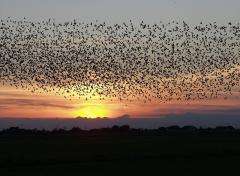
Airports have grappled with the issue of sharing the sky with members of the avian family for decades. Most recently, US Airways Flight 1549 was forced to make a water landing in the Hudson River off of New York City in January after coming into contact with a flock of geese shortly after takeoff. Recently, Logan International Airport in Boston has been testing a new radar system designed to prevent such collisions.
The Air Force and NASA already guard their jets and shuttles using a specialized radar system. DeTect Inc, of Panama City, Florida manufactures a system called Merlin Avian Radar System.
Due to the airport's proximity to the Boston Harbor, it has been long been an attractive landing spot for birds along their migratory routes. While Logan's "wildlife mitigation team" already has five full-time employees and a strict bird-strike prevention program, recent events have caused them to see if they could do more.
This search led them to DeTect and Merlin. Merlin's versatility allows for the tracking of birds as small as a starling and up to a distance of five miles. The accuracy and precision comes from the twin-blades, one horizontal and one vertical. While the horizontal radar spins, it scans the entire airport providing a complete picture. The vertical blade scans specific runways with the birds appearing as red dots. Arrows provide their flight path. Gary Andrews, DeTect's chief executive, demonstrated the system to the Associated Press, who originally reported the story.
Andrews also told the AP about the scope of the project saying, "We're not trying to pinpoint every bird down to a gnat's eyebrow... We're trying to document bird patterns for a successful response."
Merlin systems are already being used across the globe with a system at the Durban International Airport in South Africa as well as in Louisville, Kentucky. However, cost and technical considerations have limited its use. Canadian company Accipter Radar Technologies Inc. has a similar system installed at Sea-Tac Aiport near Seattle, Washington.
The radar systems have a wide variety of uses. Air traffic controllers can be warned of birds in landing and takeoff zones who can then relay altitude and directions to pilots. The activity can also be archived for use by biologists who can then better advise on what measures should be taken.
They also can archive bird activity, so biologists can analyze it and better predict when to use their low-tech countermeasures such as dogs, sirens or air cannons. Bird strikes are a common, every-day occurrence but since airplanes are built with that in mind, most never amount to anything. Every once in a while though, things happen which highlight their danger. That was the case when a US Airways jet came into contact with a flock of geese over the Hudson and the pilot was forced to make an emergency water landing.
The system works through adapting existing technology, which is designed to track larger, low-velocity targets like ships into a system that can detect smaller, high-velocity targets like birds. Matthew Klope told the AP "To really further the science, we need a better antenna." Klope is a wildlife biologist for the Navy who is stationed at Whidbey Island Air Station in Washington State.
Information overload is one thing preventing mass installation of the bird radar systems at airports. False positives such as rain clusters being mistaken for birds are another concern. The price tags for the system also cause hesitancy. Equipping an airport with the technology can cost close to $2 million.
The Air Force however overcame the price tag and has installed six Merlin systems in the U.S. since 2003. They are looking forward to expansion. Logan Airport will test Merlin and then they will also look at the Accipter system to decide which one they should use. The technology is still being refined and developed. Scientists and engineers are constantly looking into making air travel safer and more secure. This system is one more step on that ladder.
© 2009 PhysOrg.com


