The last supper of the hominids establishes the times they lived at the sites
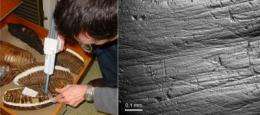
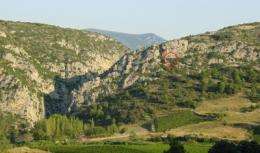
In the French cave of Arago, an international team of scientists has analyzed the dental wear of the fossils of herbivorous animals hunted by Homo heidelbergensis. It is the first time that an analytical method has allowed the establishment of the length of human occupations at archaeological sites. The key is the last food that these hominids consumed.
For many years, the mobility of the groups of hominids and how long they spent in caves or outdoors has been a subject of discussion among scientists. Now, an international team headed by researchers from the Catalan Institute of Human Paleoecology and Social Evolution (IPHES) in Tarragona has based its studies on the dental fossils of animals hunted by hominids in order to determine the vegetation in the environment and the way of life of Homo heidelbergensis.
Florent Rivals is the main author and a researcher from the Catalan Institute for Research and Advanced Studies (ICREA), attached to the IPHES in Tarragona. "For the first time, a method has been put forward which allows us to establish the relative length of the human occupations at archaeological sites as, up until now, it was difficult to ascertain the difference between, for example, a single long-term occupation and a succession of shorter seasonal occupations in the same place", he explained to SINC.
In the study, recently published in the Journal of Human Evolution, the researchers analyze the dental wear of the ungulates (herbivorous mammals) caused by microscopic particles of opaline silica in plants. These marks appear when eating takes place and erase the previous ones. This is why they are so useful.
Thanks to the "last supper phenomenon", the scientists have been able to analyze the last food consumed by animals such as the Eurasian wild horse (Equus ferus), the mouflon (Ovis ammon antiqua) and the reindeer (Rangifer tarandus). "This method allows us to confirm the seasonal nature of the occupation", Rivals added. According to the team, the microwear of the teeth is sensitive to seasonal changes in the diet.
The application has allowed the researchers to estimate the length of the occupation of the site from the Lower Paleolithic Age in the cave of Arago (France) by the number of marks on the fossils and, therefore, the variation in the diet of several species of herbivores, as "each season presented food resources which were limited and different in the environment", the paleontologist clarified.
High and low periods of occupation
After confirming the hypothesis in present-day animals whose age and date of death was known to the scientists, the researchers demonstrated that, if a group of animals is seen during a specific season (a short-term occupation), the signs of dental wear undergo little variation. But if the occupation lasts several seasons, the dental marks are more diverse.
"If the animals are hunted during long periods of occupation, more variable dental wear would be expected", Rivals declared. In the case of the French cave of Arago, the study of the dental wear confirms that it was occupied in different ways. "With this method, we were able to prove that at the site, which belonged to Homo heidelbergensis, there is evidence of differing mobility, as there were highly mobile groups and others with little mobility", the scientist confirmed.
The Spanish and German researchers have combined this application with multidisciplinary studies of archaeological sites in order to apply it to other settlements of the Mid-Paleolithic Age such as Payre (France), Taubach (Germany) and Abric Romani (Spain).
More information: Rivals, Florent; Schulz, Ellen; Kaiser, Thomas M. "A new application of dental wear analyses: estimation of duration of hominid occupations in archaeological localities" Journal of Human Evolution 56(4): 329-339 abril de 2009.
Source: FECYT - Spanish Foundation for Science and Technology


