Optical chip detects blood molecules
(PhysOrg.com) -- A portable 'lab on a chip' that can identify target molecules in blood samples has been created by European researchers. It is being used to measure fertility hormones and detect the genes associated with certain types of cancer.
Much of modern medicine relies on the testing of blood and other samples for key molecules that confirm the presence of a specific disease or other disorder. Samples need to be sent to a laboratory and it may be several days before the result comes back.
Wouldn’t it be better if the result were available within a few minutes of the sample being taken, while the patient is still there with the doctor?
That is the thinking behind the EU-funded NEMOSLAB project which is developing an integrated ‘lab on a chip’ that can simultaneously test a sample for several different molecules at the point of care.
“The question was whether we could combine silicon or other semiconductor technologies with the bioassay techniques and the diagnostic technologies,” explains project coordinator Dr Konstantinos Misiakos of the National Centre of Scientific Research in Athens. “Some of the technologies were innovative or state of the art at the time the project started, some others were more or less conventional.”
Coated waveguide
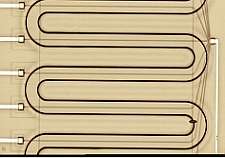
NEMOSLAB uses an optical technique to recognise the presence of selected biological molecules. Light passes down a silicon nitride waveguide - a flat rectangular pipe about 8 micrometres wide and 0.15 micrometres thick - to a detector which turns it into an electrical signal.
The waveguide is coated with a probe molecule that can recognise target molecules by binding to them. This could be an antibody, which will bind with a specific protein, or a strand of DNA that will bind with a complementary strand in the sample fluid.
“We chose the probes to be very selective for the molecules we want to detect,” says Dr Sotiris Kakabakos who is working with Misiakos. “They have been tested right on the chip but also with conventional methods which select those probes to be very specific for the analyte to be determined.”
A microfluidics system within the chip passes the sample - normally blood serum - over the waveguide. When a target molecule in the sample binds to the surface of the waveguide the optical properties are changed and the amount of light arriving at the detector also changes. The step in the signal is distinctive.
Each NEMOSLAB chip contains nine waveguides which are exposed to the sample at the same time and can be primed to detect different molecules. The entire chip is fabricated as a single unit.
An electronics package collects the signals from the waveguides and produces the results within a few minutes of the sample being introduced.
Infertility treatment
“We can’t claim the physics is new,” says Misiakos, “but the realisation of the physics into an integrated and small format through the mature silicon technology is new. Our advantage is that we have all the optical components monolithically integrated on the silicon chip.”
One of the partners, an infertility treatment centre in Dortmund, is interested in using the device to monitor hormone levels in the blood of women seeking to conceive a baby through in-vitro fertilisation. The NEMOSLAB device can test for nine different hormones at the same time.
At present, women have to travel to the clinic every day for the tests but with NEMOSLAB they could do the tests themselves at home.
The project has also developed a set of probes for detecting the BRCA1 gene which is associated with breast and ovarian cancer. Several different mutations of the gene can be sensed at the same time. This opens up the possibility of screening for a predisposition to these conditions.
Many other applications are possible, too, and not just within medicine. The portability of the device makes it ideal for environmental monitoring. It could be used in field testing for agrochemicals in water supplies and in food safety applications.
Further work
Although the NEMOSLAB results are promising, it is too early to move towards commercialisation. “We don’t believe we can commercialise the technology right away,” says Misiakos.
Further work is needed on aspects such as the sample preparation. “We cannot just put in a drop of blood to get results. It has to be treated and that is not yet integrated on the device.”
Further work is also needed on the read-out electronics so that the whole device can be made more compact. “The read-out electronics are quite small but we cannot claim that this is a hand-held device. It’s portable at this time but not hand-held as we would like.”
There are also questions to be resolved about the long-term stability of the molecular probes coating the waveguides.
The NEMOSLAB approach is not the only way of doing such tests. Other groups are working on electrochemical, microbalance and acoustic methods for detecting molecules.
“We are much more sensitive, though, compared to acoustic devices or to several electrochemical devices,” says Kakabakos. “Also we have much faster results. The unique feature is the fully integrated transducer - this is unique at a worldwide level!”
More information: www.imel.demokritos.gr/project … emoslab/nemoslab.htm
Provided by ICT Results


