July 16, 2009 weblog
General Electric Plans Net-Zero Energy Home by 2015
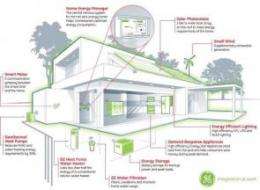
Credit: General Electric.
(PhysOrg.com) -- Using solar panels, wind turbines, appliance monitoring, and on-site energy storage, General Electric has a plan to enable homeowners to cut their annual energy consumption (from the electric grid) to zero, in some cases, and at least minimize consumption in others. GE is piloting the technology this year, and hopes to commercialize the system by 2015.
The GE Net-Zero Home Project encompasses a variety of technologies, as well as consumer incentives. The most expensive part of the project involves on-site power generation through solar panels or wind turbines, where applicable. As GE executives explained during a recent symposium at the company's Global Research Center in Niskayuna, New York, a 3,000-watt solar panel array could be enough to supply all of a home's consumption, and cost about $30,000 to install.
GE is also converting its appliances (for about $10 per appliance) to be able to communicate with a home's smart meter, allowing consumers to find out how much energy individual appliances use. The information will hopefully allow users to control appliances by using them during off-peak times (peak times are usually morning and early evening), encouraged by time-of-use pricing plans.
Homeowners would also use an energy monitoring device called Home Energy Manager, which costs about $200-250. The Home Energy Manager is designed to control and optimize on-site energy generation and consumption, such as by running the dishwasher or clothes dryer at times when the solar panels are operating, and not during peak times.
As part of the project, plug-in electric vehicles would be charged during the night. The vehicles and other storage batteries could also be used to store electricity for use during peak times.
Overall, a net-zero energy home would cost about 10 percent more than the conventional kind, but would help homeowners save money in the long run, as well as make the electricity grid more efficient. If the system is easy to use and offers financial incentives for customers, GE hopes that it can encourage involvement where everyone can benefit.
via: CNet
© 2009 PhysOrg.com


