Learning is social, computational, supported by neural systems linking people
(PhysOrg.com) -- Education is on the cusp of a transformation because of recent scientific findings in neuroscience, psychology, and machine learning that are converging to create foundations for a new science of learning.
Writing in Friday's (June 17) edition of the journal Science, researchers report that this shift is being driven by three principles that are emerging from cross-disciplinary work: learning is computational, learning is social, and learning is supported by brain circuits linking perception and action that connect people to one another. This new science of learning, the researchers believe, may shed light into the origins of human intelligence.
"We are not left alone to understand the world like Robinson Crusoe was on his island," said Andrew Meltzoff, lead author of the paper and co-director of the University of Washington's Institute for Learning and Brain Sciences. "These principles support learning across the life span and are particularly important in explaining children's rapid learning in two unique domains of human intelligence, language and social understanding.
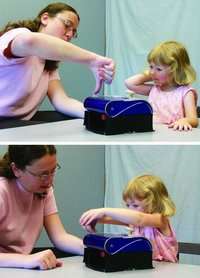
"Social interaction is more important than we previously thought and underpins early learning. Research has shown that humans learn best from other humans, and a large part of this is timing, sensitive timing between a parent or a tutor and the child," said Meltzoff, who is a developmental psychologist.
"We are trying to understand how the child's brain works - how computational abilities are changed in the presence of another person, and trying to use these three principles as leverage for learning and improving education," added co-author Patricia Kuhl, a neuroscientist and co-director of the UW's Institute for Learning and Brain Sciences.
University of California, San Diego robotics engineer Javier Movellan and neuroscientist-biologist Terrence Sejnowski are co-authors. The research was funded by the National Science Foundation and the National Institute of Child Health and Human Development. The National Science Foundation has funded large-scale science of learning centers at both universities.
The Science paper cites numerous recent advances in neuroscience, psychology, machine learning and education. For example, Kuhl said people don't realize how computational and social factors interact during learning.
"We have a computer between our shoulders and our brains are taking in statistics all the time without our knowing it. Babies learn simply by listening, for example. They learn the sounds and words of their language by picking up probabilistic information as they listen to us talk to them. Babies at 8 months are calculating statistically and learning," Kuhl said.
But there are limits. Kuhl's work has shown that babies gather statistics and learn when exposed to a second language face to face from a real person, but not when they view that person on television.
"A person can get more information by looking at another person face to face," she said. "We are digging to understand the social element and what does it mean about us and our evolution."
Apparently babies need other people to learn. They take in more information by looking at another person face to face than by looking at that person on a big plasma TV screen," she said. "We are now trying to understand why the brain works this way, and what it means about us and our evolution."
Meltzoff said an important component of human intelligence is that humans are built so they don't have to figure out everything by themselves.
"A major role we play as parents is teaching children where the important things are for them to learn," he said. "One way we do this is through joint visual attention or eye-gaze. This is a social mechanism and children can find what's important - we call them informational 'hot spots' - by following the gaze of another person. By being connected to others we also learn by example and imitation."
Infants, he said, learn by mixing self-discovery with observations of other people for problem-solving.
"We can learn what to do by watching others, and we also can come to understand other people through our own actions," Meltzoff said. "Learning is bi-directional."
The researchers believe that aspects of informal learning, the ways people, particularly children, learn outside school, need to be brought into the classroom.
"Educators know children spend 80 percent of their waking time away from school and children are learning deeply and enthusiastically in museums, in community centers, from online games and in all sorts of venues. A lot of this learning is highly social and clues from informal learning may be applied to school to enhance learning. Why is it that a kid who is so good at figuring out baseball batting averages is failing math in school?" said Meltzoff.
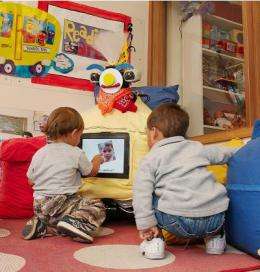
Even though it appears that babies do not learn from television, technology can play a big role in the science of learning. Research is showing that children are more receptive to learning from social robots, robots that are more human in appearance and more interactive.
"The more that interacting with a machine feels like interacting with a human, the more children - and maybe adults - learn," said Kuhl. "Someday we may understand how technology can help us learn a new language at any age, and, if we could, there are countless schools around the world in which that would be helpful."
"Science is trying to understand the magic of social interaction in human learning," said Meltzoff. "But when it does we hope to embody some of what we learn into technology. Kids today are using high-powered technology - Facebook, Twitter and text messaging - to enhance social interaction. Using technology, children are learning to solve problems collaboratively. Technology also allows us to have a distributed network from which to draw information, a world of knowledge."
Source: University of Washington (news : web)


